
Key Highlights
- Proper warehouse lighting is critical for safety, efficiency, and reducing operational costs in large-scale facilities.
- LED warehouse lighting, like high bay lights and vapor tight fixtures, provides significant energy efficiency and a long lifespan.
- Specialized lighting solutions are necessary for harsh environments like cold storage and food zones to ensure compliance and performance.
- Choosing between 4ft and 8ft fixtures can lead to substantial labor and installation cost savings for contractors.
- Key technical specifications like IP65/IP66 ratings and DLC, NSF, and UL certifications guarantee durability and safety.
- The right lighting solution optimizes the work environment by improving visibility and reducing errors.
Introduction
Effective commercial warehouse lighting is the backbone of any productive logistics or distribution center. For facility managers and contractors, selecting the right fixtures is not just about illumination; it’s about enhancing safety, maximizing efficiency, and controlling operational costs. This guide will explore the essential aspects of modern warehouse lighting, with a special focus on the demanding environments of cold storage and food zones. Making the right choice transforms your facility into a safer, more efficient, and cost-effective operation.
Overview of Commercial Warehouse Lighting in the United States
In the U.S., warehouse lighting has evolved beyond simple illumination. Today’s commercial LED lighting systems are engineered to handle the unique challenges of large spaces, from vast distribution centers to bustling industrial facilities. The right warehouse lighting fixtures create a safe and productive work environment.
Choosing the best lighting options is crucial. Modern solutions focus on delivering bright, uniform light while minimizing energy consumption and maintenance. We will explore the specific demands of specialized facilities and the key differences in lighting types.
The Unique Demands of Cold Storage and Food Zone Facilities
Cold storage and food zone facilities present unique challenges that standard lighting cannot handle. These environments require lighting solutions that can withstand extreme temperatures, moisture, and rigorous cleaning protocols. In cold storage, for instance, fixtures must perform reliably at temperatures as low as -40°C without flickering or failing.
For food processing and storage areas, safety and compliance are paramount. Lighting must not only be durable but also meet strict NSF/HACCP standards to prevent contamination. This often means fixtures must be sealed to protect against dust and water ingress, ensuring they can be washed down without risk of damage.
Warehouse operations in these specialized zones depend on consistent, high-quality light to ensure employee safety and accuracy during tasks. The high ceilings and expansive layouts of these facilities further complicate matters, demanding powerful and efficient illumination to cover every corner.
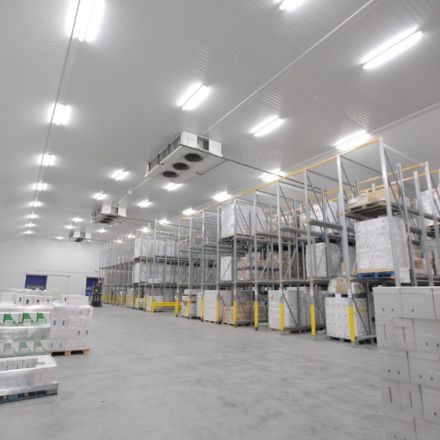

Key Differences Between General and Specialized Warehouse Lighting
General warehouse lighting is designed for standard storage and operational areas. Its primary goal is to provide adequate light output for visibility and safety in a controlled environment. These warehouse lights focus on energy efficiency and long life for typical conditions.
Specialized lighting, on the other hand, is built for harsh or regulated environments. This includes areas with extreme temperatures, high moisture levels, or specific safety requirements like food handling zones. The design and materials used are fundamentally different to ensure durability and compliance.
Key distinctions include:
- Environmental Resistance: Specialized fixtures often have high IP ratings (like IP65/IP66) for protection against dust and water, which is not always a priority for general lighting.
- Temperature Tolerance: Cold storage lighting is engineered to operate reliably in sub-zero conditions, while general lights may fail.
- Certifications: Food-grade lighting requires NSF certification to ensure it is safe for use around food products, a standard not required for general warehouse lights.
Types of Lighting Solutions for Large-Scale Warehouse Applications
When outfitting a large-scale warehouse, selecting the appropriate lighting fixtures is essential for operational success. The choice of lighting products directly impacts everything from worker safety to energy bills. High bay lighting, for example, is a cornerstone for facilities with tall ceilings, providing powerful illumination from a distance.
Working with lighting experts can help you navigate the options, from linear fixtures for aisles to specialized units for unique conditions. Let’s look at some of the most effective solutions, including high bay fixtures and vapor-tight LEDs.
High Bay and Low Bay Lighting Fixtures
High bay lights are the go-to solution for warehouses with a high ceiling height, typically over 20 feet. These powerful fixtures are designed to illuminate large, open areas from a significant distance, ensuring bright and uniform light reaches the floor. This reduces shadows between tall racking systems and improves overall visibility for workers and machinery operators.
For facilities with ceilings under 20 feet, low bay lights are more appropriate. They distribute light over a wider area, preventing hot spots and glare that can occur if high bay fixtures are used in a space with a lower ceiling. This ensures a comfortable and safe work environment in areas like workstations or packing zones.
Both high bay and low bay warehouse lighting fixtures have seen a major shift to LED technology. LED versions offer superior energy efficiency, a much longer lifespan, and better light quality compared to older technologies. This translates to lower operating costs and a safer, more productive warehouse.

Vapor Tight Linear LED Fixtures: What Makes Them Ideal?
Vapor tight linear LED fixtures are heavy-duty lighting solutions designed for the toughest warehouse environments. Their sealed enclosures make them impervious to moisture, dust, and corrosive elements, which is why they are perfect for areas like loading docks, washdown zones, and cold storage.
What makes these fixtures stand out is their durability and performance. Unlike traditional metal halide lights, LED vapor tight fixtures provide instant, flicker-free uniform illumination. This enhances safety and visibility in critical areas where workers are constantly moving. Their robust construction ensures they can handle the daily rigors of an industrial setting.
The advantages of vapor tight LED warehouse lighting include:
- Protection: They feature high IP ratings (IP65/IP66), certifying them as dust-tight and resistant to water jets.
- Efficiency: They deliver exceptional brightness while consuming significantly less energy.
- Longevity: Their long lifespan drastically reduces the need for frequent and costly replacements.

Essential Technical Specifications for Warehouse Environments
When selecting a lighting system for your warehouse, technical specifications are not just numbers—they are assurances of performance and safety. Certifications and ratings like IP65, IP66, DLC, and UL indicate a fixture’s suitability for specific industrial applications. A high lumen output is essential, but durability is just as critical.
Understanding these specs helps you choose lighting that will withstand the demands of your facility, whether it’s dust, moisture, or the need for proven energy efficiency. Let’s examine what these ratings and certifications mean for your operations.
Understanding IP65/IP66 Ratings and Their Importance
IP ratings, or Ingress Protection ratings, are crucial for any lighting fixtures installed in demanding warehouse environments. This two-digit code classifies the degree of protection a fixture’s enclosure provides against foreign objects (like dust) and moisture. For areas exposed to the elements, such as loading docks or washdown zones, a high IP rating is non-negotiable.
An IP65 rating ensures the fixture is completely dust-tight and can withstand low-pressure water jets from any direction. Stepping up to an IP66 rating means the fixture can resist powerful water jets, making it suitable for even more intense cleaning routines or outdoor exposure without risk of failure.
Choosing fixtures with the correct IP rating prevents damage from environmental factors, eliminates dark spots caused by failed lights, and ensures longevity even in extreme temperatures.
| Rating | Protection Against Solids (First Digit) | Protection Against Liquids (Second Digit) |
|---|---|---|
| IP65 | 6 (Dust Tight) | 5 (Protected against low-pressure water jets) |
| IP66 | 6 (Dust Tight) | 6 (Protected against high-pressure water jets) |
Certifications: DLC, NSF, and UL Listings Explained
Certifications provide third-party validation that lighting products meet specific standards for safety, performance, and efficiency. For commercial warehouses, three key certifications to look for are DLC, NSF, and UL. A UL (Underwriters Laboratories) Listing means the product has been tested and certified to meet national safety standards, protecting against electrical and fire hazards.
The DLC (DesignLights Consortium) certification identifies high-quality, energy-efficient lighting products. Choosing DLC-listed fixtures often makes your project eligible for local utility rebates, leading to significant energy savings and a faster return on investment. This mark is a reliable indicator of performance and efficiency.
For food storage and processing facilities, NSF International certification is essential. An NSF-certified fixture is guaranteed to be non-toxic, corrosion-resistant, and easy to clean, preventing food contamination. This is a mandatory requirement for maintaining compliance in food-grade environments.
Optimizing Lighting for Energy Efficiency and Cost Savings
A primary goal for any facility manager is to reduce operating expenses without sacrificing performance. Lighting often represents a significant portion of a warehouse’s energy costs. By optimizing your lighting system for energy efficiency, you can achieve substantial cost savings. This involves more than just swapping bulbs; it’s about adopting smarter technology.
Switching to fixtures that consume less energy is the first step. Modern solutions not only lower your electricity bills but also reduce long-term maintenance needs, further decreasing your overall energy consumption and operational budget.
Benefits of Switching to LED Lighting in Warehouses
Upgrading to LED lighting is one of the most impactful investments a warehouse can make. The primary benefit is a dramatic improvement in energy efficiency. LEDs use up to 75% less energy than traditional lighting sources like metal halide or fluorescent bulbs, leading to immediate and significant reductions in electricity bills.
Beyond energy savings, LEDs boast an exceptionally long lifespan, often exceeding 50,000 hours. This drastically lowers maintenance costs and the labor associated with frequent bulb replacements, which can be particularly challenging and expensive in facilities with high ceilings. This reliability means less operational downtime and a safer work environment.
Key advantages of an LED upgrade include:
- Instant-On Performance: LEDs provide full brightness instantly, without the warm-up time required by older technologies.
- Improved Light Quality: LEDs offer better color rendering and uniform light distribution, reducing eye strain for workers.
- Compatibility with Controls: LEDs integrate seamlessly with lighting controls like motion sensors and dimmers for even greater efficiency.
How LED Fixtures Minimize Operating Costs and Maintenance
LED fixtures are instrumental in driving down the day-to-day operating costs of a warehouse. Their superior energy efficiency directly translates to lower monthly energy costs. Because they generate far less heat than their traditional counterparts, they can also reduce the load on HVAC systems in climate-controlled areas, leading to further cost savings.
The biggest impact on operational budgets often comes from reduced maintenance. The long life of LED fixtures means that the cycle of purchasing, storing, and installing replacement bulbs and ballasts is virtually eliminated. For a large facility, this reduction in labor and material costs is substantial.
This low-maintenance profile ensures that your lighting system remains consistent and reliable. You avoid the safety risks and productivity losses associated with burned-out lights, ensuring your team can work efficiently without interruption. Ultimately, LED fixtures provide a predictable, long-term solution that maximizes uptime and minimizes expense.
Specialty Considerations for Cold Storage and Food Warehouses
Cold storage and food warehouses operate under stringent conditions that demand specialized lighting. Standard fixtures often fail in these environments due to extreme temperatures or strict sanitation requirements. It is crucial to select lighting that is engineered for these challenges to ensure operational continuity and compliance.
From maintaining light stability in freezing temperatures to meeting NSF and HACCP standards for food safety, the right lighting is a critical component of a well-run facility. Let’s examine the specific needs for these specialty applications.
Ensuring Light Stability at -40°C in Cold Storage Areas
Lighting in cold storage areas faces a significant challenge: extreme temperatures. Standard lighting fixtures can flicker, dim, or fail completely when exposed to sub-zero conditions. For facilities operating at temperatures as low as -40°C, ensuring light stability is essential for both safety and productivity.
Specialized LED lighting fixtures are designed to thrive in these harsh environments. They are constructed with components and drivers that are rated for low-temperature performance, guaranteeing instant, consistent, and uniform illumination without any warm-up period. This reliability is critical in a busy freezer warehouse where visibility cannot be compromised.
By investing in fixtures engineered for cold storage, you prevent the frequent failures and high maintenance costs associated with using inadequate lighting. You ensure that your team has clear visibility to read labels, operate machinery safely, and perform tasks accurately, maintaining the flow of warehouse operations.
Meeting NSF and HACCP Compliance in Food Storage Zones
In food storage zones, lighting fixtures are more than just a source of light; they are a component of your facility’s hygiene and safety system. To prevent contamination, lighting must comply with strict standards set by organizations like NSF International and follow Hazard Analysis Critical Control Point (HACCP) principles.
NSF-certified lighting fixtures are designed to be “shatterproof” and are constructed from materials that are non-toxic and corrosion-resistant. Their smooth, crevice-free design eliminates areas where dust, debris, or bacteria can accumulate. This makes them easy to clean and sanitize, which is a requirement in any washdown environment.
By installing NSF-compliant lighting, you ensure your facility meets food safety regulations and is prepared for health inspections. These specialized fixtures help protect against product contamination, uphold your operational integrity, and provide excellent energy efficiency and light quality for your food zones.
Comparing 4ft vs. 8ft Fixtures for Facility Upgrades
When planning a warehouse lighting upgrade, the choice between 4ft and 8ft fixtures can have a significant impact on your project’s bottom line. While both offer excellent illumination, their differences in length affect the overall lighting layout, installation time, and total cost. Careful consideration of these factors ensures you select the most efficient option.
For contractors and facility managers, balancing upfront material costs with labor savings is key. The right choice depends on the specific needs of the space, from application flexibility in large areas to achieving the quickest installation possible.
Labor and Installation Savings for Contractors
For contractors, installation time is money. This is where the choice between 4ft and 8ft lighting fixtures becomes a critical business decision. By using 8ft fixtures, you can often halve the number of units that need to be installed to cover the same area. This directly translates to significant labor savings.
Installing one 8ft fixture is much faster than installing two 4ft fixtures. It requires fewer mounting points, fewer electrical connections, and less time on the lift for each run. This streamlined process allows contractors to complete projects faster, reduce their labor costs, and move on to the next job more quickly.
While the upfront cost of an 8ft fixture may be higher than a single 4ft fixture, the total project cost is often lower due to these installation efficiencies. This makes 8ft fixtures an attractive proposition for large-scale upgrades where maximizing labor productivity is a top priority.
Application Flexibility in Large Logistics and Distribution Centers
In large logistics and distribution centers, achieving a clean and efficient lighting layout is paramount. The choice between 4ft and 8ft fixtures offers different levels of application flexibility to meet the demands of these expansive spaces.
8ft fixtures are particularly advantageous in long, uninterrupted aisles and open storage areas. Their length helps create continuous lines of light, minimizing the “scalloping” effect on racks and ensuring uniform illumination from top to bottom. This leads to a cleaner aesthetic and better visibility. However, 4ft fixtures provide greater granularity for a more customized lighting layout.
This flexibility allows lighting designers to:
- Use 8ft fixtures for long, straight runs to reduce fixture count and installation time.
- Deploy 4ft fixtures in smaller, segmented areas or around obstructions.
- Combine both lengths to optimize the lighting control system for different zones.
- Adapt the layout easily if the use of the space changes in the future.
Frequently Asked Questions (FAQ)
Understanding the nuances of commercial warehouse lighting can lead to better decisions and performance. Many inquiries revolve around optimal lighting solutions for high ceilings and large spaces, particularly regarding the use of high bay lights and low bay lights. Questions often arise about energy efficiency and the impact of beam angles on light distribution, which can significantly influence maintenance costs and long-term savings. Additionally, inquiries about the advantages of LED fixtures over fluorescent lighting for various environments, including cold storage and inspection areas, are common among facility managers.
What maintenance is required for LED warehouse lighting fixtures?
LED warehouse lighting fixtures are designed for low maintenance. Their long lifespan eliminates the need for frequent bulb replacements. Routine maintenance typically involves periodic cleaning to remove dust and debris that can accumulate on the fixture and reduce light output, ensuring continued efficiency for your warehouse operations.
Can commercial warehouse lighting be integrated with automation systems?
Yes, modern commercial warehouse lighting integrates seamlessly with automation systems. Smart lighting features like occupancy sensors and daylight harvesting can be connected to a central control system. This allows for automated adjustments based on activity, natural light levels, and operational schedules, maximizing energy savings and efficiency.
Are there specific regulations for commercial warehouse lighting in the U.S.?
Yes, there are several regulations and standards. OSHA provides minimum illumination requirements for safety. Additionally, certifications like UL ensure electrical safety, while NSF standards are mandatory for food-grade environments. Following these regulations is crucial for compliance, worker safety, and avoiding potential liabilities.
Conclusion
In conclusion, selecting the right commercial warehouse lighting is essential for optimizing both operational efficiency and safety in large-scale logistics and distribution centers. The integration of LED Vapor Tight Linear Fixtures not only meets the rigorous demands of loading docks and washdown areas but also significantly reduces installation labor costs when comparing 4ft and 8ft options. Additionally, ensuring compliance with NSF/HACCP standards and maintaining performance in extreme cold storage conditions highlight the importance of investing in quality fixtures. By upgrading to energy-efficient lighting, facility managers can achieve substantial cost savings while enhancing visibility and productivity. Upgrade your warehouse efficiency—Contact Brandon Lighting for a bulk quote and IES layout design today.




Leave A Comment