Architectural Geometric & Linear Pendant Forms: Spec-Grade Modular Lighting Systems
What is Geometric and Linear Form Lighting?
Defining Geometric Forms in Modern Light Design
Geometric form lighting represents a pivotal evolution in architectural illumination, where the luminaire transcends traditional utility to become an integral structural element. By utilizing precise mathematical silhouettes—such as triangles, hexagons, squares, and multi-directional branching layouts—modern geometric lighting introduces sharp lines, architectural symmetry, and dynamic focal points into commercial and high-end project interiors. Rather than blending invisibly into the ceiling plane, these suspended systems act as luminous structural sculptures that define the character and boundaries of an architectural space.
Understanding Linear Lighting Form Factors
Linear lighting form factors refer to the physical footprint, profile scale, and continuous running capabilities of an extrusion system. Moving far beyond the legacy rectangular boxes of the past, contemporary linear forms feature ultra-slim, low-profile aluminum extrusions paired with high-performance optics. These advanced form factors allow architects and lighting designers to run seamless, uninterrupted bands of light across expansive open ceilings, charting complex architectural layouts without visual fragmentation or unsightly light gaps at the joins.
Regular vs. Irregular Architectural Forms
In spec-grade commercial projects, lighting forms are generally categorized into two design methodologies:
-
Regular Architectural Forms: Balanced, symmetrical, and fully enclosed structures such as perfect light rings, squares, and equilateral polygons. These are ideal for establishing order, calm, and centralized focus in boardrooms, corporate lobbies, and structured learning spaces.
-
Irregular Architectural Forms: Asymmetrical configurations, non-standard angles, and free-form interlocking networks built from customized X, Y, or T junctions. These forms deliver high visual energy and artistic tension, making them the premier choice for tech hubs, open-plan offices, and experiential hospitality environments looking to break the monotony of traditional grid ceilings.
Why Geometric and Linear Lights Are Trending
Simple Forms and Strong Visual Presence
In contemporary architecture, simplicity carries the maximum visual weight. Minimalist geometric and linear forms possess a striking presence precisely because they lack superfluous ornamentation. A single, crisp linear suspension run or a cleanly executed hexagon pendant cluster draws the human eye immediately, anchoring the room’s volume. This strong visual presence allows interior designers to achieve a premium, high-impact aesthetic while keeping the overall design language uncluttered, clean, and forward-looking.
The Rise of Structural and Sculptural Design Language
Modern building design increasingly blurs the line between functional lighting and structural art. High-end project specifications are shifting away from concealed downlights toward a structural and sculptural design language, where the light fixture mimics or accentuates the building’s framing. By grouping, layering, or intersecting linear profiles mid-air, light is treated as a malleable medium that tracks with exposed ductwork, aligns with structural columns, and complements raw building materials like concrete, glass, steel, and timber.
Enhancing Active Lifestyles with Minimalist Aesthetics
Corporate workspaces, educational institutions, and modern living environments are shifting toward wellness-oriented, active, and flexible layouts. Clean geometric linear lighting supports this psychological shift by promoting spatial clarity and reduction of visual noise. The fluid lines of a curved linear system or the sharp organization of a grid system enhance focus in collaborative office environments, energize high-end fitness facilities, and complement the sleek, high-efficiency aesthetics preferred by modern professionals.
Types of Geometric and Linear Lighting Fixtures
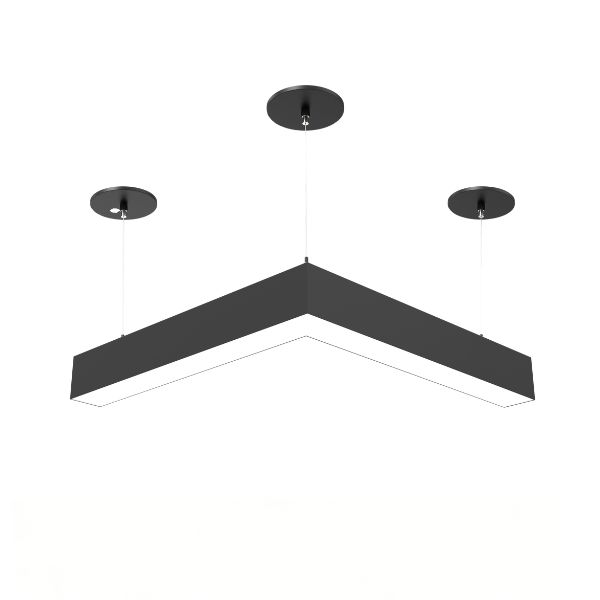
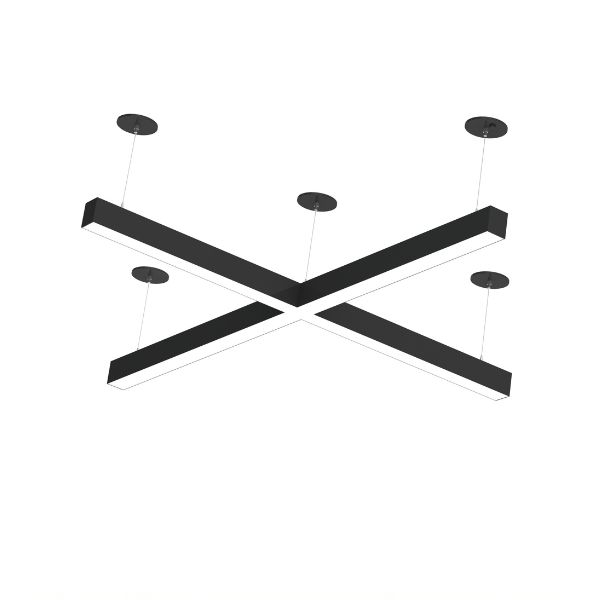
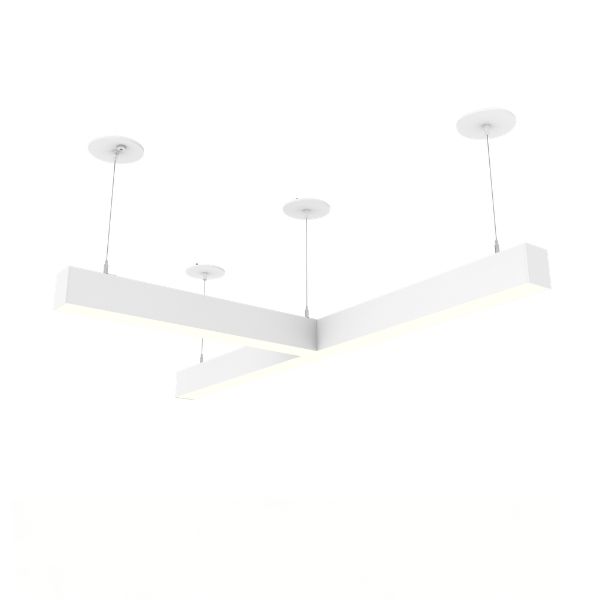
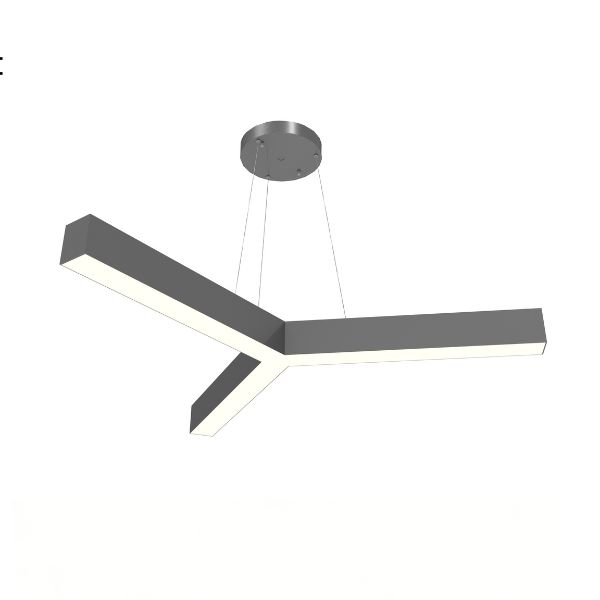
1. Alphabet Pendant Forms: X/Y/T/L Suspending Layouts
-
Form Definition: Interconnecting suspended linear extrusions using precision-machined 90-degree L-shaped corner modules, 3-way T-junctions, and 4-way X-crossings, all supported by heavy-duty aircraft cables.
-
Design Application: This system allows designers to suspend intricate “light tracks” mid-air, floating below exposed ductwork or high ceilings. It is perfectly specified for mapping out traffic flow above open-office workstation clusters, highlighting main corridor crossroads, and defining zoning areas without physical walls.
-
Optic & Mounting Advantage: Features clean, adjustable aircraft cable suspension paired with light-blocked mechanical joins that guarantee zero light leakage at suspended intersections.
2. Polyhedral Pendant Forms: Suspended Enclosed Polygons
-
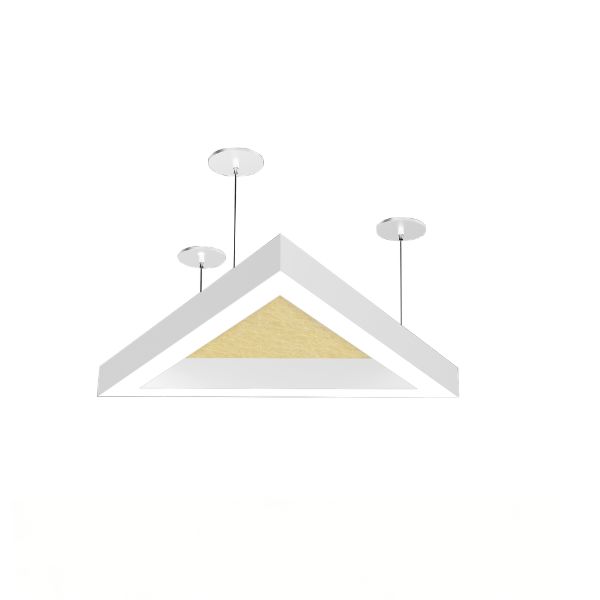
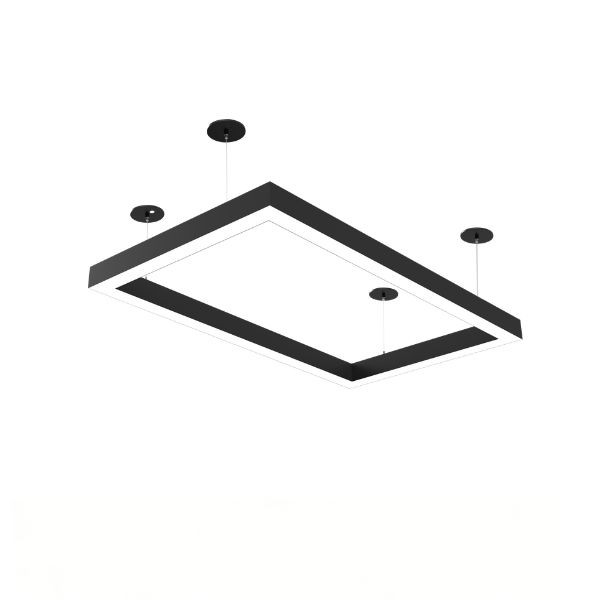
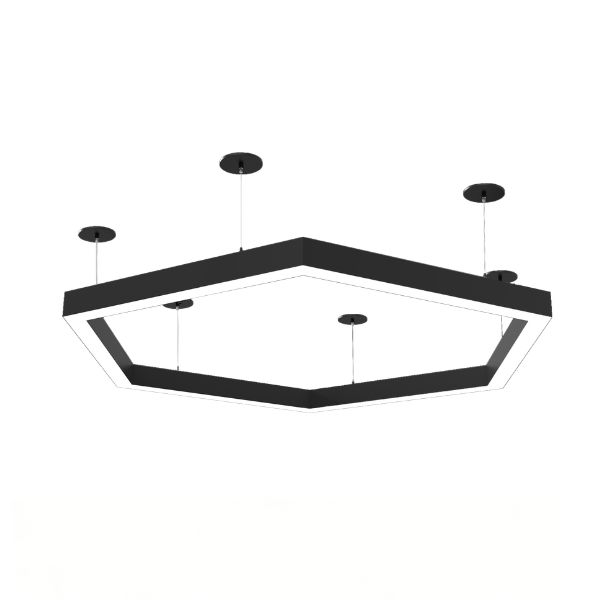
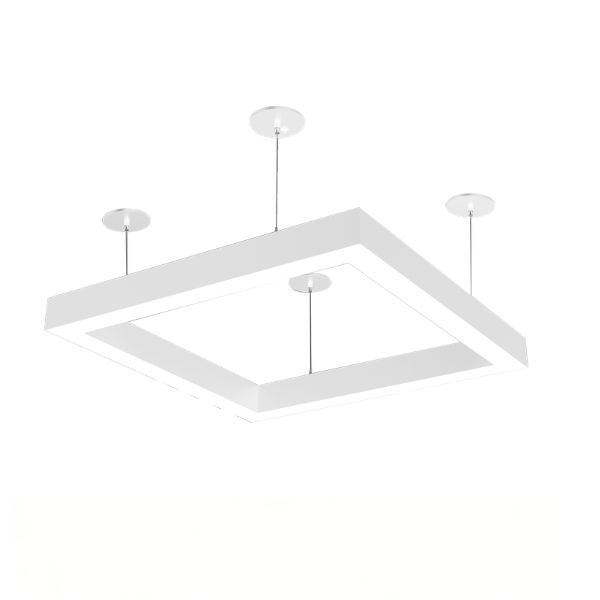
Form Definition: Connecting linear pendant profiles at precise angles to create perfectly enclosed, floating geometric shapes, including suspended Triangles, Squares, Rectangles, and large-scale Hexagons (honeycomb clusters).
-
Design Application: Suspended polyhedral forms are highly popular in collaborative workspaces, boutique fitness studios, and modern libraries. Hung individually as a bold centerpiece or staggered at varying heights, they break up expansive vertical voids, introducing sharp mathematical symmetry and high visual impact.
3. Curved & Circular Pendant Forms
-
Form Definition: Leveraging advanced precision-bending technology on architectural aluminum extrusions to assemble seamless suspended light rings (circles), rounded rectangles, or continuous, flowing S-shaped wave silhouettes.
-
Design Application: Floating curved pendants are the premier choice for luxury hospitality reception desks, circular boardroom tables, and grand double-height entryways. The fluid, organic curves soften the rigid angles of contemporary architecture, establishing an upscale, welcoming spatial rhythm.


4. Suspended Hub-and-Spoke Custom Systems
-
Form Definition: Anchored by Brandon’s proprietary multi-directional suspended hub connectors, this system radiates linear pendant “spokes” of varying lengths from a central core or adapts to complex architectural grid lines based on custom CAD layouts.
-
Design Application: Engineered exclusively for avant-garde, spec-driven projects seeking an artistic, sculptural statement. This ultra-flexible suspended system gives lighting designers absolute freedom to create endless design possibilities, creating dramatic clusters and customized spatial tension.


Spatial Dynamics and Forms
Centralized and Radial Lighting Forms
Centralized and radial lighting layouts utilize symmetrical geometric forms—such as continuous light rings or Hub-and-Spoke modular systems radiating outward from a single point—to command absolute authority over a room. This dynamic arrangement automatically defines the geometric center of a space, pulling the human eye inward. It is highly effective in grand entryways, circular seating areas, and double-height lobbies where a singular, commanding suspended focal point is required.
Interlocking and Grid Lighting Forms
Interlocking and grid patterns represent the ultimate integration of lighting and structural architecture. By utilizing specialized 90-degree L-joins, 3-way T-junctions, and 4-way X-crossings, specifiers can knit linear suspended luminaires into continuous, interlocking webs of light. This structural approach defines pathways, zones collaborative sub-spaces within massive open-plan corporate offices, and creates a highly organized, high-tech architectural ceiling plane that aligns with modern workflow patterns.
Spatial Tension and Clustered Layouts
For avant-garde spaces aiming for an artistic edge, clustered layouts introduce captivating spatial tension. By overlapping multiple linear pendants at staggered suspension heights or grouping irregular geometric forms at contrasting angles, designers can evoke a sense of controlled, sculptural chaos. This technique manipulates perceived volume and depth, transforming standard commercial interiors into memorable, experiential environments.
Top Design Applications and Room Scenarios
Linear Suspension Lighting in High-End Culinary & Amenity Spaces
In upscale commercial kitchens, corporate cafeterias, and hospitality presentation spaces, a continuous linear suspension fixture is the premier choice over island counters. It replaces a cluttered row of individual small pendants with a singular, clean architectural line. This form provides perfectly uniform, shadow-free task illumination across the entire work surface while aligning flawlessly with the linear geometry of modern cabinetry, counters, and spatial structural lines.
Sculptural Geometric Statements for Large-Scale Open Spaces
For open-concept commercial lounges, tech company common areas, and grand multi-story lobbies, standard troffers fall flat. Large-scale geometric statements—like overlapping multi-tier hexagons, suspended triangles, or massive architectural rings—act as the structural centerpiece of the room. They fill the vertical void of vaulted or high ceilings, complementing modern furniture lines and acting as a sophisticated conversational element even when turned off.
Functional Linear Illumination for Executive Hubs and Offices
As the line between corporate headquarters and premium remote work environments blurs, professional-grade lighting is paramount. A sleek, dimmable linear pendant provides wide, uniform, and glare-free illumination directly onto the workstation, reducing eye strain during extended screen work. Its minimalist aesthetic keeps executive hubs looking organized, professional, and free from bulky, traditional desk fixtures.
Choosing the Right Geometric and Linear Lighting for Your Space
Selecting the Correct Scale and Visual Weight
The success of geometric lighting depends entirely on proportion. A fixture that is too small disappears into the volume of a room, while an oversized form overwhelms it. Specifiers must calculate both the physical dimensions (profile width and overall footprint) and the visual weight (aperture thickness and finish density). For high-ceilinged, expansive commercial spaces, wide-profile architectural forms are required; for intimate spaces, micro-linear pendant profiles maintain a delicate, sophisticated balance.
Integrating Smart Lighting Controls and Systems
To fully unlock the potential of complex geometric installations, integration with advanced control protocols is essential. Brandon Lighting’s architectural systems support universal dimming standards—including 0-10V, DALI, and smart wireless ecosystems—enabling independent control over direct (downward) and indirect (upward) light circuits. This allows facility operators to alter the spatial mood seamlessly, transitioning from bright, high-energy task lighting during the day to a subtle, indirect ambient glow for evening corporate events.
Matching Fixture Finishes with Interior Architecture
The final layer of architectural integration is the luminaire’s material finish. Standard architectural matte black, clean textured white, and brushed aluminum finishes allow fixtures to either blend invisibly into the ceiling grid or contrast sharply against it. For bespoke hospitality or high-end executive projects, our Make-to-Order model ensures that custom powder-coating and anodized metallic finishes match the exact material palette of the surrounding architectural hardware and interior surfaces perfectly.
Request Factory-Direct Quotes & Spec-Grade Pricing
Supplying Premium UL-Listed Linear Fixtures Since 2010