
Key Highlights
- Effective lighting solutions support merchandising, circulation, and visual comfort across large retail spaces.
- LED linear strip fixtures are a strong fit for aisle-based general lighting in supermarkets and big-box formats.
- Architectural linear lighting helps premium stores combine clean aesthetics with accurate color rendering.
- LED high bays address high ceilings with strong lumen output, high efficacy, and reliable coverage.
- Field-adjustable fixtures improve energy efficiency while reducing inventory complexity and installation friction.
- Strong specifications, photometrics, and code-ready product selection matter in every retail project.
Introduction
Lighting in retail stores is a specification decision, not just a design choice. You need lighting solutions that support product visibility, shopper comfort, code compliance, and operating efficiency at scale. LED lighting now gives contractors, distributors, and architects better control over color temperature, output, and layout performance than older ceiling lights or incandescent lights. This guide explains how to match fixture type to store format and why Brandon Lighting offers a practical path for large commercial rollouts.
Key Lighting Objectives for Retail Store Design
Every retail project starts with the right amount of light for the task. General lighting must support sightlines, merchandise visibility, and safe movement while fitting the design needs of a project. That means choosing lighting fixtures that deliver stable output, appropriate color temperature, and dependable distribution.
Just as important, visual comfort affects how people experience retail spaces. Commercial LED linear lighting enhances store environments by improving uniformity, reducing glare, and giving you greater control over light direction. The next sections focus on merchandising and shopper movement.
Optimizing Visual Merchandising with Lighting
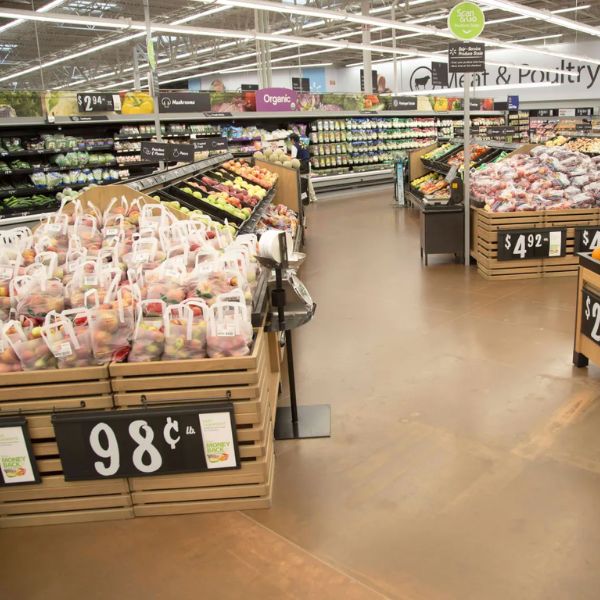
Product presentation depends on contrast, color accuracy, and controlled beam placement. In retail spaces, poorly aimed lighting fixtures flatten surfaces and mute product detail. Well-planned lighting solutions do the opposite. They define focal areas, support vertical illumination, and make displays easier to read from multiple angles.
Commercial linear systems are an excellent choice when you need predictable light direction across long runs. Suspended or surface linear lights can provide direct downlighting, indirect lighting, or combined distributions. That gives specifiers more control over shelving, endcaps, and perimeter features without relying on mixed fixture families.
For grocery, apparel, or specialty displays, consistent output matters as much as style. A continuous row of properly selected linear fixtures helps maintain visual order, supports brand presentation, and reduces the patchy appearance often seen with uneven spacing. That precision strengthens merchandising performance.
Achieving Comfort and Navigation for Shoppers
Shoppers stay oriented when aisles, pathways, and transitions are evenly lit. The amount of light should feel intentional, not harsh. When lighting fixtures create bright spots or dark gaps, navigation suffers and product scanning becomes harder, especially in larger stores.
A balanced layout improves visual comfort by combining direct and indirect lighting where needed. Direct light supports tasks and product visibility. Indirect lighting softens the ceiling plane and helps reduce eyestrain typically associated with strong direct downlighting. Fixture height and spacing also influence how comfortable the environment feels.
Color temperature should align with the store concept and merchandise category. Warmer tones may support hospitality-driven zones, while cooler settings can sharpen perceived cleanliness and clarity. Best practice is to use photometrics, target uniformity, and select controllable linear systems that match aisle width, shelf height, and shopper circulation.
Commercial LED Linear Strip Fixtures for General Retail Lighting
For large-format retail, LED linear strip fixtures remain one of the most practical tools for general lighting. They provide broad coverage, straightforward installation, and strong energy efficiency compared with older types of lighting. That makes them useful in stores where long operating hours drive electricity bills and service demands.
Brandon Lighting’s Commercial LED Linear Strip Fixtures are especially effective for aisle lighting. Field-adjustable models such as the Brandon 4-4-4 Series help teams reduce maintenance costs, simplify stocking, and match output to application needs. Next, look at where these fixtures perform best.
Application of LED Linear Strip Lights in Supermarkets and Big-Box Stores
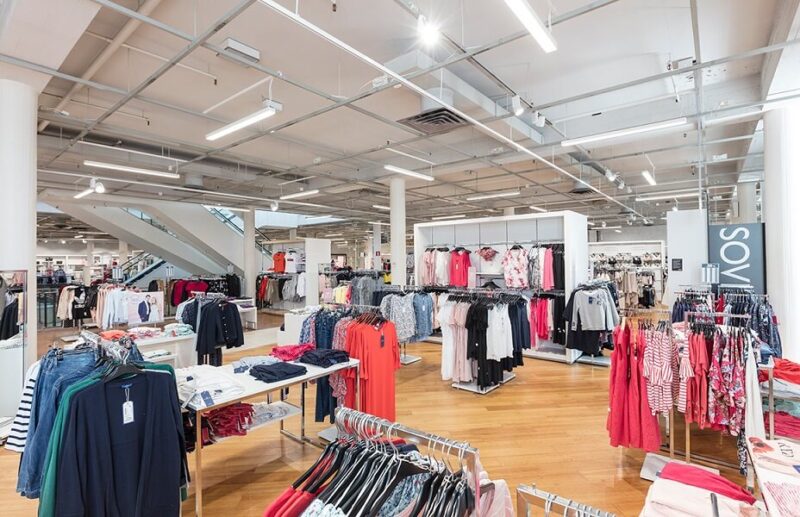
In supermarkets and big-box stores, aisle lighting has to do more than illuminate the floor. It must provide the amount of light needed for shelf reading, product comparison, and cart movement over long linear paths. LED linear strip fixtures are well suited to that demand because they create orderly, repeatable coverage.
Brandon Lighting’s LED Linear Strip Lights support brightness levels that can be tuned to different departments and ceiling conditions. Optional flat lens configurations with precise distribution angles help direct light where it is needed, which is valuable in wide aisles, promotional lanes, and open freezer approaches.
Key specification points include:
- Field-selectable output for matching necessary lumens to aisle conditions
- Multiple color temperature settings for different retail zones
- Distribution options that improve shelf visibility
- Long linear form factors that simplify row-based layout planning
Field-Adjustable Features for Inventory and Installation Efficiency
Distributors and contractors benefit when one fixture can cover multiple project conditions. A field-adjustable product reduces SKU pressure and lowers the risk of ordering the wrong configuration. That matters in phased rollouts, tenant revisions, and value engineering exercises where exact output may shift late in the process.
The Brandon 4-4-4 Series addresses this well. With 4 selectable CCTs, 4 wattages, and 4 light distributions, it gives crews flexibility in the field without changing fixture families. A dip switch approach can simplify setup and help installers dial in necessary lumens for each area.
Practical advantages include:
- Lower inventory burden across distributor stock
- Faster installation decisions on site
- Better alignment with changing ceiling heights and layouts
- Reduced friction when matching output to actual conditions
Architectural Linear Lighting for Boutique and Premium Spaces
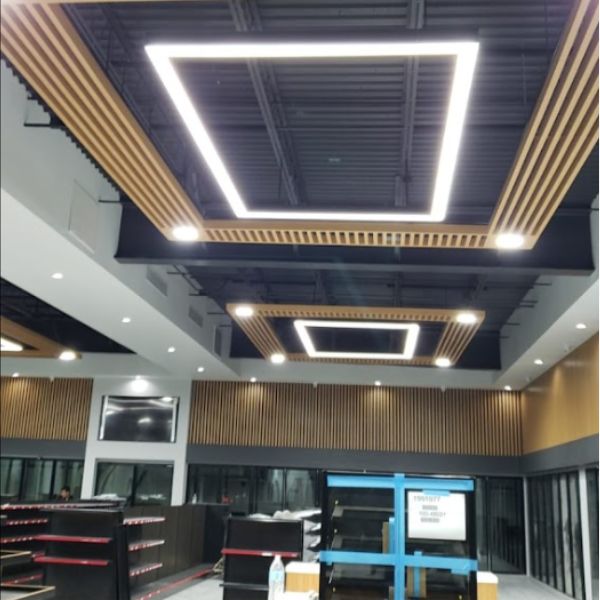
When the retail concept is design-led, fixture appearance becomes part of the architecture. Architectural linear lighting suits boutique spaces and premium spaces because it supports cleaner sightlines, refined detailing, and stronger integration with the ceiling or suspension strategy.
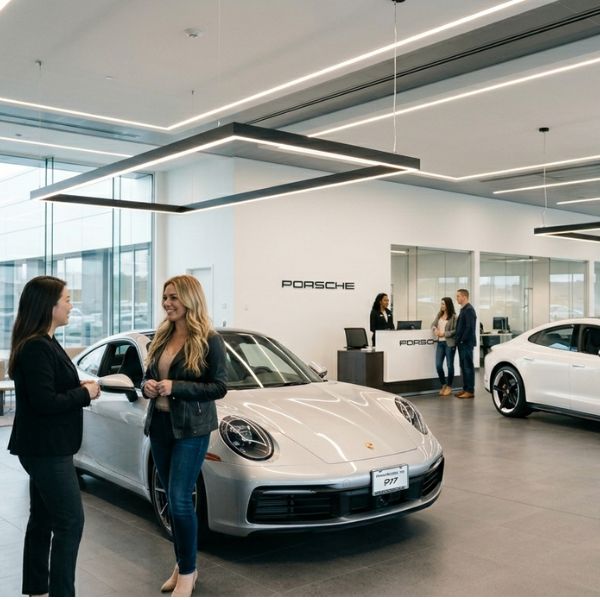
Brandon Lighting’s Linear Architectural Lights are built for these conditions. Continuous run systems, continuous slot trimless linear options, and suspended profiles allow specifiers to match fixture form to design features or even geometric designs. The next sections focus on color quality and mounting expression.
Enhancing Product Presentation with CRI > 90
High-end merchandise needs accurate color rendering. In fashion, cosmetics, and premium apparel, weak color quality can distort fabric tone, finish, and texture. That affects product presentation and can undermine the store concept. For these environments, CRI > 90 is often the right benchmark.
Brandon Lighting’s Architectural Linear Lighting supports high color rendering so materials read closer to their intended appearance. Combined with the right color temperature, these lighting solutions can sharpen contrast while keeping the space comfortable and visually controlled.
| Retail Need | Recommended Lighting Approach |
|---|---|
| Premium apparel color accuracy | Linear Architectural Lights with CRI > 90 |
| Clean ceiling integration | Continuous slot trimless linear layouts |
| Refined suspended expression | Slim linear suspension lights |
| Tuned ambience by zone | Select color temperature to suit merchandise and finish palette |
Sleek Suspended Designs and Trimless Continuous Run Options
Fixture form influences how a premium store feels. Sleek suspended designs can define circulation lines, create visual rhythm, and reinforce ceiling height. In other settings, a trimless continuous run can disappear into the architecture and leave attention on the merchandise.
Brandon Lighting’s linear suspension lights support both strategies. You can specify suspended runs for open-ceiling boutiques or continuous slot trimless linear systems for minimal ceiling expressions. Customized lengths and mounting styles are important here because retail footprints, soffits, and focal zones rarely follow standard dimensions.
Useful specification options include:
- Continuous run layouts for seamless visual lines
- Suspended mounting for open and expressive ceilings
- Corner connectors or cross connectors for geometric shapes
- Custom fixture length and finish coordination for project-specific layouts

LED High Bays for Warehouse-Style Retail Environments
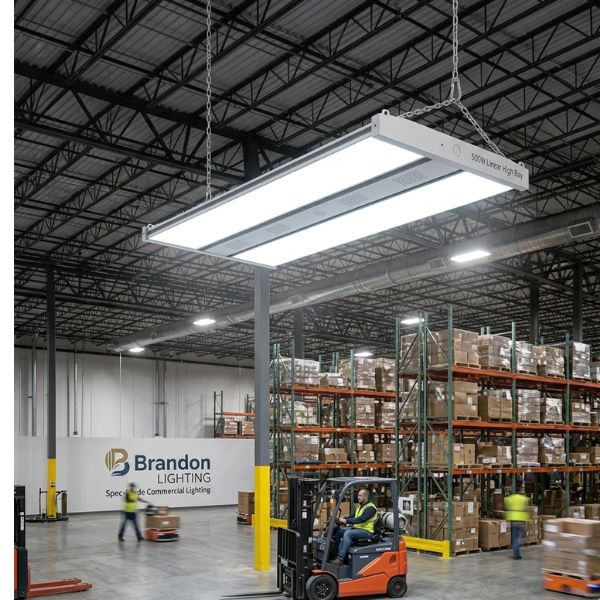
Not every retail project is low ceiling or design boutique. In warehouse-style retail, home improvement centers, and hypermarkets, you need fixtures that can perform across large ceilings and wide open floor plates. Standard decorative approaches are not enough.
Brandon Lighting’s Linear High Bays are designed for these industrial spaces. They provide the high lumen output, high efficacy, and reliability needed for ceilings above 15 feet. In these environments, performance starts with output and continues with layout accuracy and service life.
Benefits of High Efficacy and Lumen Output in Large Ceilings
High ceilings absorb light quickly, so fixture performance has to be calculated, not guessed. Strong lumen output is essential for maintaining usable foot-candles at the task plane in bulk retail environments. Without it, aisles feel dim, signage loses impact, and floor visibility drops.
That is why high efficacy matters. A fixture delivering more lumens per watt helps lower energy consumption while still meeting the necessary lumens for merchandising and circulation. This is one of the main benefits of LED systems in large commercial applications: they support output goals with less energy and more control.
Brandon Lighting’s LED High Bays fit this requirement well. For warehouse-style retail, they provide industrial-grade illumination that scales across broad plans. When selected with proper spacing and photometrics, they can improve uniformity, reduce overlighting, and control operating cost over long schedules.
Industrial Reliability and Photometric Layout Support
Large retail footprints make service calls expensive. In industrial spaces, fixture reliability is not just a product feature. It affects lift scheduling, labor planning, and store uptime. That is why industrial reliability should be evaluated alongside output, efficacy, and controls.
LED systems also provide energy efficiency advantages over traditional lighting because they use less energy, convert less power to heat, and typically support lower maintenance costs over time. For retailers operating long daily schedules, those factors can reduce electricity bills and improve the building’s carbon footprint.
Brandon Lighting strengthens that value with photometric layout support. Accurate IES-based planning helps teams verify spacing, foot-candles, and fixture counts before procurement. That improves confidence in specification, supports value engineering, and helps avoid expensive changes after installation.
Best Practices for Designing Retail Lighting Layouts
Good retail lighting layouts start with fixture purpose, not fixture preference. You need to define where general lighting, merchandising emphasis, and circulation support are required, then select lighting fixtures that can deliver those roles with consistent output and manageable glare.
From there, visual comfort depends on spacing, mounting style, and distribution choice. Continuous runs, direct downlighting, and wall washer strategies each solve different problems. The following sections cover two practical specification methods that improve retail performance and reduce layout guesswork.
Specifying Continuous Run Lighting for Uniformity
Continuous run lighting improves lighting uniformity because it reduces the bright-dark pattern that often appears when fixtures are spaced as isolated points. In large commercial areas, that means cleaner aisle presentation, better shelf readability, and stronger visual order from one bay to the next.
Specification still matters. Every system has a maximum run length based on voltage and product design, so the run strategy should be verified early. For architects and contractors, this is where photometric review and a free layout consultation can prevent late-stage revisions and mismatched expectations.
Key planning checks include:
- Confirm maximum run length before finalizing long aisles
- Align run direction with shelving and circulation paths
- Verify output and distribution with photometric targets
- Use Brandon Lighting support for layout guidance and IES review
Balancing Direct Downlight and Wall Washer Approaches
Direct downlighting sends most of the output to the task plane. It is typically used for aisle lighting, checkout zones, and open floor illumination where merchandise visibility and floor brightness are the priority. It is efficient and easy to model, but it should be controlled carefully to protect shopper comfort.
A wall washer, by contrast, distributes light toward vertical surfaces. That makes it useful for perimeter displays, branded walls, and presentation zones where vertical illumination carries more value than floor emphasis. In many projects, the best result comes from mixing these approaches rather than relying on one alone.
Indirect lighting can further soften the environment when glare control is critical. With proper light directional control, linear systems can support downlight-only, uplight-only, or combined distributions. That flexibility helps specifiers match fixture behavior to each retail zone instead of forcing one distribution everywhere.
Conclusion
In conclusion, selecting the right lighting for retail environments is crucial for optimizing customer experience and enhancing product visibility. Implementing solutions like Commercial LED Linear Strip Fixtures, Architectural Linear Lights, and Linear High Bays ensures that you meet both aesthetic and functional requirements while maintaining compliance with industry regulations. With over 15 years of experience in OEM/ODM exports to North American markets, Brandon Lighting stands out as a reliable B2B partner. Our commitment to quality is reflected in our UL, cUL, and DLC certifications, along with our dual-origin manufacturing strategy, ensuring stability in your supply chain. For tailored support and free photometric layouts, get in touch with us today to elevate your retail lighting design to new heights.
Frequently Asked Questions
What are the energy efficiency advantages of LED linear fixtures in retail stores?
LED linear fixtures improve energy efficiency by delivering the required output with less energy than older sources. That can reduce electricity bills, support a lower carbon footprint, and decrease maintenance costs because LED systems typically last longer and need fewer service interventions in retail environments.
Can commercial LED linear lighting be customized for specific store requirements?
Yes. Commercial linear systems can offer broad customization options, including fixture length, mounting style, distribution, and custom finishes. For design-driven layouts, corner connectors and cross connectors can also support continuous runs, geometric forms, and project-specific ceiling expressions in premium retail spaces.
How does lighting compliance affect fixture selection in large retail projects?
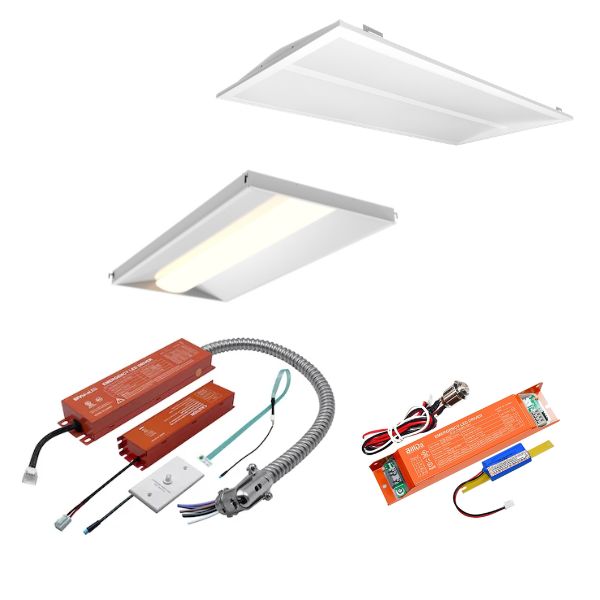
Lighting compliance directly affects approval, procurement, and turnover. Fixtures should be reviewed against government energy regulations, local code requirements, and contract compliance standards early in design. For some public or federally influenced projects, Buy American Act considerations may also shape final fixture selection.

Leave A Comment