
Key Highlights
- Emergency lighting fixtures help commercial buildings keep exit routes visible during power outages and power loss.
- Battery backup, including built-in NiMH systems, supports 90+ minutes of illumination for safe evacuation.
- Exit lights and emergency exit signs guide people through exit pathways, direction changes, and exit discharge areas.
- Different types of emergency lighting include exit signs, egress lighting, and combo units with lamp heads.
- UL Listed and other safety standards help you select reliable emergency lighting that fits local jurisdictions and building codes.
Introduction
In commercial buildings, an emergency lighting system is a life-safety necessity that supports safe egress when normal power fails. You need reliable emergency lighting that turns on fast, stays on long enough for safe passage, and clearly marks exit routes. Exit lights, exit sign lighting, and pathway illumination reduce confusion and help prevent panic. This guide explains emergency lighting fixtures, common configurations, and what to look for so your facility can meet emergency lighting requirements with confidence.
Understanding Emergency Lighting Fixtures
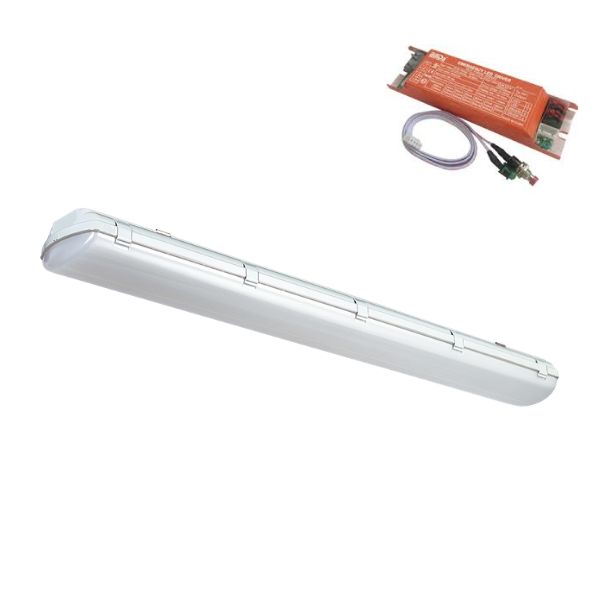
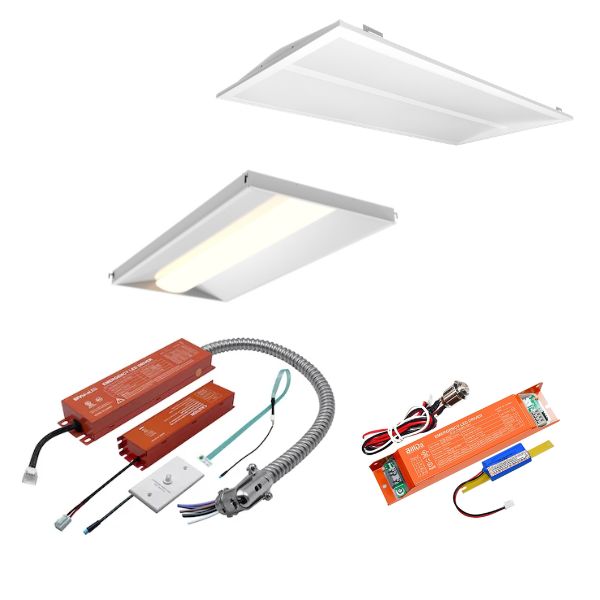
Emergency lighting fixtures are compact units placed along exit routes to support safe evacuation during power outages. When an event of a power outage happens, battery backup activates automatically so exit lighting continues to guide occupants to an emergency exit and the exit discharge.
So, how do emergency lighting fixtures work during a power outage? They monitor normal power from the main power supply and switch to internal backup when power loss is detected, keeping exit sign visibility and pathway illumination available for reliable emergency lighting.
Importance of Emergency Lighting in Commercial Buildings
In commercial buildings, the presence of emergency lighting supports orderly movement when visibility drops or power loss occurs. Exit lights and emergency exit signs provide clear direction at corridors, stairwells, entryways, and above exit doors so people can follow exit routes without hesitation.
Without dependable exit lighting, the risk of injury rises as occupants try to navigate direction changes, ramps, or intersections in the dark. Reliable emergency lighting reduces confusion and supports safe evacuation in offices, retail spaces, healthcare facilities, warehouses, public buildings, and parking garages.
For building owners and business owners, code-compliant emergency lighting requirements also bring peace of mind. The main types used in commercial buildings commonly include exit signs, egress lighting along exit access routes, and combination units that pair an exit sign with emergency lamp heads.
Key Components and Functionality of Emergency Lighting Fixtures
Emergency lighting fixtures are designed to shift from normal power to emergency operation with minimal delay. When the main power supply fails, the unit changes modes so emergency exit lights and exit lights continue to illuminate exit paths and key areas.
Core parts work together to keep the emergency lighting system dependable during a power outage. Typical components include:
- Battery backup (often NiMH) that automatically activates during power loss
- Lamp heads that aim light onto exit routes and egress path areas
- An illuminated exit sign face (red or green letters, depending on local codes)
- Charging and power management that supports 90+ minutes of runtime
- Self-testing features that verify battery and lamp function on a monthly schedule
To maintain and test emergency lighting fixtures, follow building codes and keep a log for monthly checks and the required longer-duration annual test.
Types of Emergency Lighting Fixtures
Different types of emergency lighting are used to keep exit pathways readable and bright, from the exit access route to the exit discharge. You’ll see emergency exit signs above doors, exit lights in corridors and stairwells, and egress lighting that supports safe egress through the full route.
What are the main types used in commercial buildings, and what tends to be popular? Standard LED exit signs, wet-location rated exit signs, compact emergency lights with dual heads, and combo units that combine exit lighting and emergency lamp heads are common selections for businesses.
Wall-Mounted and Ceiling-Mounted Units
Wall-mounted emergency lighting and ceiling-mounted units are widely used because they fit common junction boxes and can be positioned for strong coverage of exit routes. You’ll often find them in hallways, stairwells, entryways, and above exit doors where exit paths must remain obvious.
Mounting choice affects how well occupants see direction changes. At intersections or centerline locations, a double face configuration can improve viewing angles and help guide people who approach from different directions.
Installation still needs to follow building codes and local jurisdictions. In many facilities, wall placement around 6–8 feet supports visibility, while ceiling-mounted units are used when wall space is limited or ceilings are higher. Next, it helps to look at signs, pathway lighting, and combination designs.
Exit Signs, Egress Path Lighting, and Combo Units
Exit sign products provide illuminated guidance that can remain visible up to 100 feet, helping occupants identify exit routes quickly. You’ll typically choose red lettering for many U.S. commercial settings, while green exit signs are often selected in healthcare and modern interiors.
Egress lighting focuses on safe passage along exit pathways, including corridors, ramps, and stairwells, continuing through the exit discharge outside the emergency exit door. Combo units reduce equipment count by placing exit lights and emergency lamp heads together.
For maximum safety, placement should support the full egress path and highlight key points such as:
- Above exit doors and along exit access routes
- Corridor intersections where direction changes occur
- Stairwells, entryways, and other transition areas
- Storage rooms holding critical equipment like generators or electrical systems
- Areas where occupants could confuse a dead-end with an exit route
LED Emergency Lighting Fixtures
LED emergency lighting is a common choice because it supports reliable emergency lighting with low energy use and strong visibility. A led exit sign can operate at ultra-low wattage (often under 5W) while still providing clear guidance in commercial buildings.
Battery backup is central to performance, with many LED units designed for 90+ minutes of illumination during power loss. Popular business picks include LED exit signs, wet-location rated exit signs, dual-head LED emergency lights, and exit-sign combo units that streamline installation points.
Advantages of LED Technology for Reliability and Efficiency
If you’re comparing options, the benefits of LED emergency lighting fixtures over traditional options center on efficient emergency lighting and long-term reliability. LED exit sign models can run at very low wattage while maintaining clear, consistent illumination in occupied spaces.
LED designs also support dependable emergency operation through integrated battery backup and modern power management. Many units are built to switch automatically during an event of a power outage and maintain light output long enough to meet common emergency lighting requirements.
Practical advantages you can plan around include:
- Ultra-low energy consumption (some exit signs use less than 5 watts)
- 90+ minute battery backup operation for code-aligned runtime
- Long rated life figures (commonly listed at 50,000 hours for many models)
- Strong coverage from adjustable lamp heads on emergency units and combo fixtures
These features help reduce routine upkeep while keeping exit routes consistently protected.
Comparison of LED Fixtures Versus Traditional Options
Choosing between LED emergency lighting and traditional lighting fixtures comes down to how you want to manage energy efficiency, runtime, and ongoing attention. Many LED exit signs and emergency lights are designed to minimize watts while delivering dependable performance.
Reliability during power loss is also shaped by battery backup quality and the fixture’s ability to switch modes automatically. LED product listings commonly emphasize built-in backup duration, power management, and long service life.
| Feature | LED emergency lighting | Traditional lighting fixtures |
|---|---|---|
| Energy efficiency | Ultra-low watt options (often under 5W for exit signs) | Typically higher power draw for similar guidance lighting |
| Battery backup approach | Commonly integrated NiMH battery backup | May rely on separate components or older backup designs |
| Runtime focus | Frequently specified at 90+ minutes for compliance needs | Runtime depends on the specific system and configuration |
| Rated life | Often listed around 50,000 hours for many LED models | May require more frequent lamp replacement |
| Maintenance support | Self-testing features are commonly offered | Testing may be more manual depending on equipment |
Emergency Lighting for Industrial and Hazardous Environments
Industrial emergency lighting has to handle higher risk areas, demanding spaces, and stricter fixture construction. In hazardous environments, explosion-proof lighting fixtures and wet-location units help maintain exit routes and safe egress when conditions include moisture, dust, or exposure concerns.
To choose the right emergency lighting fixture for an industrial environment, start with the site conditions and the required ratings. You’ll also need to align with safety standards recognized by local jurisdictions and agencies tied to occupational safety and health administration expectations.
Wet-Location and Explosion-Proof Lighting Fixtures
Wet-location lighting fixtures are designed for areas where humidity, spray, or weather exposure can affect standard equipment. In loading docks, outdoor stairways, and similar spaces, outdoor emergency lighting should be sealed and gasketed so exit lighting remains dependable.
Explosion-proof lighting is used in harsh environments where hazardous atmospheres require specialized construction and testing. These fixtures may be rated for Class and Division requirements and are commonly paired with strong housings, protective lenses, and robust mounting options.
When choosing for industrial locations, match the fixture to the environment by checking:
- Wet-location ratings such as IP65 or IP66 for moisture protection
- Explosion ratings for the specific hazard class/division area
- Operating temperature ranges appropriate for the space
- Battery backup duration to support emergency lighting requirements
This keeps emergency illumination aligned with both risk conditions and safe evacuation needs.
Selecting Fixtures for Harsh and Outdoor Conditions
Harsh conditions call for industrial emergency lighting built with durable housings and appropriate ratings. Outdoor emergency lighting for exterior exit discharge areas, loading zones, or exposed walkways should be selected with moisture and impact resistance in mind.
Battery backup remains a must, since exit lights still need to activate automatically during power loss. In higher-risk spaces, you may also be dealing with wide temperature swings, so confirming the fixture’s operating temperature range becomes part of basic selection.
Installation matters just as much as the product. Mounting should protect the unit from damage while keeping exit routes clearly visible, whether you’re using surface wall mounting, ceiling mounting, or pendant-style mounting options where appropriate. From here, you’ll want to confirm what building codes and certifications apply.
Regulatory Standards and Certifications for Emergency Lighting
Regulatory guidance for emergency lighting often comes from building codes and workplace safety rules that shape emergency lighting requirements. The international building code, the national fire protection association, and occupational safety expectations influence how egress lighting is designed, installed, and tested.
Your local jurisdictions still have final authority, so verification with the local AHJ is part of responsible planning. Certifications and safety standards such as UL Listed and ETL Listed are common signals that emergency lighting fixtures are tested for performance and electrical safety in typical commercial and industrial applications.
Compliance with IBC, NFPA, OSHA, and UL Requirements
Emergency lighting requirements are influenced by the international building code, the national fire protection association, and occupational safety rules connected to OSHA guidance. Together, they address means of egress, illumination expectations, and planning so occupants can reach an emergency exit safely.
NFPA guidance also emphasizes ongoing readiness through required inspections. Monthly checks and annual testing help confirm the emergency lighting system will perform as intended, and documentation supports internal accountability and workplace expectations.
For product selection, UL certification is frequently used to confirm electrical safety and performance testing, including listings for damp locations in certain cases. Since local jurisdictions and health administration expectations can vary by project, the right approach is to select fixtures that align with these frameworks and then confirm acceptance with the AHJ.
Common Certifications and Their Role in Fixture Selection
Certifications are a practical shortcut when you need to select products that match safety standards and emergency lighting requirements. When a fixture carries widely recognized marks, it suggests third-party testing has been completed for defined conditions.
Because building codes and local jurisdictions can add requirements, certifications also help you narrow down products before you verify details with your AHJ. This is especially useful when you’re choosing equipment for damp areas, warehouses, service bays, or hazardous environments.
Common certifications and labels you’ll see include:
- UL Listed (often referenced for damp-location suitability on certain models)
- ETL Listed for electrical safety and performance verification
- ROHS marking on some product lines
- DLC Premium on select models for energy efficiency and possible rebate eligibility
For industrial selection, combine certifications with the correct explosion rating, IP rating, and operating temperature range.
Installation and Placement Best Practices
Proper emergency lighting starts with correct installation and coverage of exit routes from start to finish. Emergency lighting fixtures are commonly mounted on walls or ceilings using brackets designed for standard junction boxes, and recessed options are used when you want a flush look or added tamper resistance.
In office buildings, warehouses, and parking garages, placement should maintain visibility at every transition. If you’re unsure where to start, focus on exit paths and intersections first, then expand coverage to stairwells, entryways, and critical equipment rooms before final testing.
Guidelines for Strategic Fixture Placement for Maximum Safety
To place emergency lighting fixtures for maximum safety, think like someone trying to leave quickly during power loss. Exit routes should stay readable from the occupied area through the full egress path, including any corridor turns and stair transitions.
Proper emergency lighting also reduces confusion where people might hesitate, such as dead ends or doors that are not part of the exit paths. Marking and lighting these areas supports orderly movement, especially in public buildings with visitors unfamiliar with the layout.
High-value placement points typically include:
- Above emergency exit doors and along exit access routes
- Stairwells, corridors, and intersections with direction changes
- Exit lights near ramps, escalators, and other pathway transitions
- The exit discharge area outside the door to complete safe passage
This approach keeps guidance continuous rather than fragmented.
Mounting, Wiring, and Photometric Considerations
Installation quality affects whether fixtures perform when you need them. Mounting should suit the space: surface mounting for fast deployment, recessed mounting for flush placement in suspended ceilings, and centerline mounting with double face signs where viewing from two directions is required.
Wiring must be aligned with the need for hardwired egress lighting served by the principal electrical supply, while still enabling emergency operation. This is also where understanding how fixtures work during a power outage matters: the unit senses the loss of normal power and switches to battery backup automatically.
Photometric considerations come down to aiming and coverage. Adjustable lamp heads should be pointed toward exit routes, especially in office buildings with corridor turns or door setbacks. After installation, confirm the system passes required push tests and longer-duration testing so performance matches emergency lighting requirements.
Conclusion
In summary, reliable emergency lighting fixtures are essential for ensuring safety in commercial and industrial environments. Understanding the various types of fixtures, their components, and the regulatory standards that govern them is key to making informed decisions. By selecting the appropriate lighting solutions and following best practices for installation and maintenance, you can enhance both safety and compliance within your facility. Remember, investing in quality emergency lighting not only protects lives but also minimizes potential liabilities. If you have further questions or need assistance in choosing the right fixtures for your needs, get in touch with our experts today.
Frequently Asked Questions
How do emergency lighting fixtures operate during a power outage?
During power loss, the emergency lighting system detects that normal power from the main supply is interrupted and switches automatically to battery backup. This change activates emergency exit lights, exit signs, and other egress lighting so exit routes remain visible long enough to support safe egress.
What are the recommended maintenance and testing procedures for emergency lighting?
Follow building codes and keep documentation. Perform monthly checks, including a short push test and a visual review for damage, aiming, and correct installation. Complete the required annual longer-duration test to confirm battery backup performance. Consistent maintenance supports reliable emergency lighting and inspection readiness.
Are smart or remote-controlled emergency lighting fixtures available for businesses?
Yes. Some product lines include technology such as integrated self-testing that verifies battery and lamp function on a scheduled basis, reducing manual effort for business owners. When you’re evaluating smart emergency lighting or remote-controlled fixtures, confirm the features offered on the specific model and its code acceptance.



Leave A Comment