
Key Highlights
- There are four main types of lighting in retail: ambient, task, accent, and decorative.
- Effective retail store lighting can enhance the customer experience and potentially increase sales by up to 40%.
- Ambient lighting sets the overall mood, while accent lighting draws attention to specific products.
- Task lighting improves functionality in areas like checkout counters and dressing rooms.
- Choosing the right fixtures, color temperature, and high CRI is crucial for accurate product representation.
- Energy efficiency is a key benefit of modern solutions like LED and smart lighting systems.
Introduction
Effective retail lighting design is a critical component of any successful brick-and-mortar store. More than just illuminating a space, the right types of lighting create an inviting atmosphere that attracts customers and guides them toward products. A thoughtful lighting strategy can transform the shopping experience, making your store feel warm and welcoming while highlighting your merchandise in the best possible way. Understanding how to layer different lights is essential for creating a space that is both functional and aesthetically pleasing.
Understanding the Different Types of Retail Lighting
To create an effective lighting plan, it’s important to understand the four primary types of lighting and how they work together. Each type serves a distinct purpose, from providing general illumination to highlighting specific areas. A balanced lighting design combines these elements to guide the customer’s eye and enhance the overall feel of your retail space.
So, what are the main types of lighting used in retail stores and their purposes? The key categories are ambient, task, accent, and decorative lighting. When used strategically, this layered approach allows you to control the mood, focus, and visual appeal of your store, creating a dynamic and engaging environment for shoppers.
Ambient Lighting: Defining the Store’s Atmosphere
Ambient lighting, also known as general lighting, is the foundation of your store’s illumination. Its primary role is to provide a comfortable level of brightness throughout the entire retail store, allowing customers to navigate the space safely and easily. How does ambient lighting impact the overall atmosphere in retail shops? It sets the overall mood, creating an inviting atmosphere that makes shoppers feel welcome from the moment they step inside.
This type of lighting should be bright enough to showcase products clearly without being harsh or causing glare. The goal is to create a pleasant and comfortable customer experience that encourages browsing. Effective ambient light ensures that colors do not appear washed out or dull, providing a consistent base layer of illumination.
For general circulation areas, a target of 20-40 footcandles on the floor is appropriate. You can achieve this using various fixtures, such as recessed lights or track lighting, which contribute to a well-lit and welcoming environment.
Task Lighting: Enhancing Functionality
While ambient light covers the whole store, task lighting focuses on specific areas where employees or customers perform certain activities. What is task lighting and where is it typically applied in a store setting? It is focused, direct illumination designed to make specific tasks easier and more efficient. This is a crucial element of a functional retail lighting design.
This store lighting is essential for improving visibility in key zones. By providing more concentrated light, you ensure that both your team and your shoppers can see clearly without straining their eyes. This not only improves the customer experience but also enhances operational efficiency for your staff.
Common applications for task lighting include:
- Checkout counters, where cashiers and customers handle transactions.
- Customer service desks, allowing for clear communication and paperwork.
- Dressing rooms, so shoppers can see clothing details accurately.
Accent Lighting: Drawing Attention to Key Products
Accent lighting is a powerful tool used to create visual interest and guide the shopper’s focus. Can accent lighting help highlight products in retail stores, and how? Absolutely. By using a more intense light source compared to the surrounding ambient light, it makes specific products or product displays stand out, effectively drawing attention to them.
This technique creates a visual hierarchy, directing customers to your most important merchandise, new arrivals, or promotional items. This strategic use of light adds depth and drama to your retail space, breaking up the monotony of uniform illumination and making the shopping experience more dynamic and engaging.
You can use accent lighting to:
- Highlight a mannequin displaying a key outfit.
- Spotlight high-value items in a display case.
- Emphasize unique architectural features within the store.
Decorative Lighting: Creating a Unique Brand Aesthetic
Beyond function, lighting plays a vital role in shaping your brand identity, and this is where decorative lighting shines. This type of lighting is chosen primarily for its aesthetic value, contributing to the overall style and character of your retail store. These fixtures act as artistic elements within your lighting scheme, reinforcing your brand’s personality.
Whether you’re aiming for a modern, rustic, or luxurious feel, decorative fixtures can make a significant statement. Think of chandeliers in a high-end boutique or industrial-style wall sconces in a contemporary fashion store. These elements help create a memorable and unique shopping environment that resonates with your target audience.
By carefully selecting decorative pieces like pendant lights or unique sconces, you can elevate your store’s design from purely functional to truly inspirational. This approach helps to solidify your brand identity and makes your retail space a more distinctive and appealing destination for customers.
Types of Store Lighting Fixtures and Their Uses
Once you understand the different types of lighting, the next step is to choose the right lighting fixtures. The fixtures you select, along with the light bulbs inside them, will bring your lighting design to life. Each type of fixture offers unique benefits and is suited for different applications within a retail store.
From flexible track lighting to seamless recessed options, your choices will determine how you can implement your ambient, task, and accent lighting strategies. What are the best lighting fixtures for creating an inviting retail environment? The answer often lies in a combination of different lighting options to create a layered and dynamic effect.
Track Lighting for Flexible Displays
Track lighting is one of the most versatile lighting fixtures for a retail environment. It consists of a linear track that contains electrical conductors, allowing you to attach and position individual light heads anywhere along its length. This flexibility is ideal for retail displays that change frequently, as you can easily adjust the lights to highlight new products or layouts.
This adaptability makes track lighting perfect for accentuating merchandise and creating visual interest. You can aim the heads to spotlight specific items, wash a wall with light, or provide focused task lighting over a particular area. This ability to easily reconfigure your lighting scheme keeps your retail display fresh and engaging for returning customers.
Here’s a quick look at its applications:
| Lighting Type | Application in Retail |
|---|---|
| Accent | Highlighting mannequins, featured products, or sale items. |
| Task | Illuminating specific workstations or product demonstration areas. |
| General | Can contribute to ambient light in smaller spaces or specific zones. |
Recessed Lighting for Seamless Integration
For a clean, modern look, recessed lighting is an excellent choice. These ceiling fixtures are installed directly into the ceiling, so only the trim of the light is visible. This creates a seamless integration with your store’s architecture, providing illumination without adding visual clutter.
Recessed lights are highly effective for providing general illumination. When spaced correctly, they can deliver consistent and even lighting levels across your entire retail space, forming a perfect base of ambient light. This unobtrusive design helps keep the focus on your products rather than on the light fixtures themselves.
Additionally, adjustable recessed fixtures, sometimes called gimbals or eyeballs, can be angled to function as accent or wall-washing lights. This versatility allows you to maintain a minimalist aesthetic while still being able to highlight specific features or product displays, contributing to a sophisticated and well-lit environment.

Pendant Lighting for Style and Impact
Pendant lighting fixtures hang down from the ceiling on a cord, chain, or rod, making them a prominent part of your store’s design. Because they are so visible, they serve as both a light source and a key decorative element. Pendants are perfect for adding style and making a statement in a retail environment.
These fixtures are often used to create a focal point or to add a layer of task lighting over specific areas like checkout counters, reception desks, or display tables. The style of the pendant—from industrial metal to elegant glass—can significantly influence the atmosphere and reinforce your brand’s aesthetic within the design scheme.
Incorporating pendant lighting can break up the ceiling plane and add vertical interest to your space. Whether used individually or in a cluster, these fixtures can transform a simple area into a visually impactful one, enhancing the overall shopping experience and contributing to a memorable store design.

How Lighting Design Influences Customer Behavior
Lighting design is more than just an aesthetic choice; it directly influences the customer experience and behavior. How does lighting design affect customer behavior in retail stores? A well-planned shopping environment uses light to guide customers, create a mood, and encourage them to spend more time in your retail store. The right light levels can make a space feel welcoming and comfortable, while poor lighting can be off-putting.
Humans are naturally drawn to light, and you can use this instinct to your advantage. By strategically illuminating pathways and highlighting key products, you can direct the flow of traffic and focus attention where you want it most. A thoughtful lighting plan is a silent salesperson, shaping perceptions and driving purchasing decisions.
Creating Inviting Entryways with Lighting
The entryway is your store’s first impression, and lighting solutions play a critical role in making it an inviting one. Bright, welcoming entryway lighting draws customers in from the outside and helps them transition smoothly into the shopping environment. A well-lit entrance signals that your store is open, active, and ready for business.
This initial experience sets the tone for the rest of the customer’s journey. Your lighting here should align with your brand identity, whether it’s a dramatic statement piece for a luxury brand or warm, soft lighting for a cozy boutique. A positive first impression can significantly improve the overall customer experience.
Consider these strategies for an inviting atmosphere at the entrance:
- Use a combination of ambient and accent lighting to create a bright but not overwhelming feel.
- Highlight your store’s name or logo with focused light.
- Ensure window displays are well-lit to attract passersby, especially after dark.
Highlighting Focal Zones in Retail Environments
Within any retail space, there are specific areas or focal zones that you want customers to notice first. These might include new collections, high-margin products, or promotional displays. A strategic lighting scheme is essential to draw attention to these key zones and guide the customer’s journey through the store.
By creating contrast—making these focal zones brighter than the surrounding areas—you create a natural point of interest. The human eye is automatically drawn to the brightest point in its field of vision, a principle you can leverage to highlight what’s most important. This technique effectively tells shoppers, “Look here.”
Using accent lighting such as spotlights or track lights is the most common way to achieve this effect. You can direct these fixtures to illuminate a specific display table, a feature wall, or even a single product. This targeted illumination ensures your most valuable merchandise doesn’t get lost in the broader retail space.
Balancing Light Levels for Comfort and Engagement
Achieving the right balance of light levels is crucial for creating a comfortable and engaging atmosphere. Lighting that is too dim can make a store feel gloomy and products hard to see, while lighting that is too bright can cause glare and overwhelm shoppers. The key is to create a dynamic environment with varied lighting that enhances the customer experience.
Properly balanced retail store lighting avoids visual fatigue and makes the space feel more inviting. This involves layering different types of light—ambient, task, and accent—to create depth and interest. For example, general circulation paths might have lower light levels, while product displays are brightly lit to draw the eye.
To achieve this balance, keep these points in mind:
- Use dimmers to adjust brightness depending on the time of day or natural light available.
- Create contrast to guide attention but avoid extreme differences that can be jarring.
- Consider energy savings by using efficient fixtures like LEDs and smart controls.
Key Lighting Strategies for Different Retail Store Types
Not all retail stores are the same, and your lighting strategies shouldn’t be either. The ideal approach depends heavily on the type of products you sell and the brand image you want to project. Effective retail lighting for a grocery store, for example, will have very different requirements than that of a high-end fashion boutique.
Understanding the unique needs of different retail store types is essential for creating a successful lighting plan. Are there specific lighting strategies for grocery stores compared to other retail stores? Yes, each environment requires a tailored approach, from the choice of lighting options to the illumination of specific areas.
Effective Lighting in Grocery Stores
In a grocery store, lighting design must prioritize clarity, freshness, and cleanliness. The primary goal is to make products look as appealing and fresh as possible. This typically requires bright, high-quality general lighting across the aisles to ensure customers can easily find items and read labels.
Beyond general illumination, specific product displays need special attention. For instance, the produce section benefits from lighting with a high CRI (Color Rendering Index) to make fruits and vegetables look vibrant and enticing. Similarly, lighting in the meat and bakery sections can be tailored with specific color temperatures to enhance the appearance of the products.
Energy efficiency is also a major consideration for large spaces like grocery stores, which have long operating hours. Converting to LED lighting is a popular strategy, as it not only reduces energy consumption but can also lead to increased sales by improving the overall shopping environment and product presentation.
Specialized Lighting in Boutique Retailers
Boutique retailers often focus on creating a unique and curated brand identity, and their lighting should reflect that. Unlike the uniform brightness of a large store, a boutique’s retail lighting design often uses drama and contrast to create an exclusive and intimate atmosphere. Here, lighting is as much a part of the decor as the merchandise itself.
Accent lighting is heavily used to spotlight individual products and create artistic displays, treating items like pieces in a gallery. This draws the customer’s eye to specific details and reinforces the idea of high-quality, special merchandise. Decorative lighting, such as chandeliers or custom fixtures, also plays a huge role in establishing the boutique’s unique brand identity.
The overall approach is less about general illumination and more about creating a mood. Warmer, dimmer ambient light is often combined with sharp, focused accent lights. This layered technique makes the space feel sophisticated and encourages customers to explore the carefully curated collections.
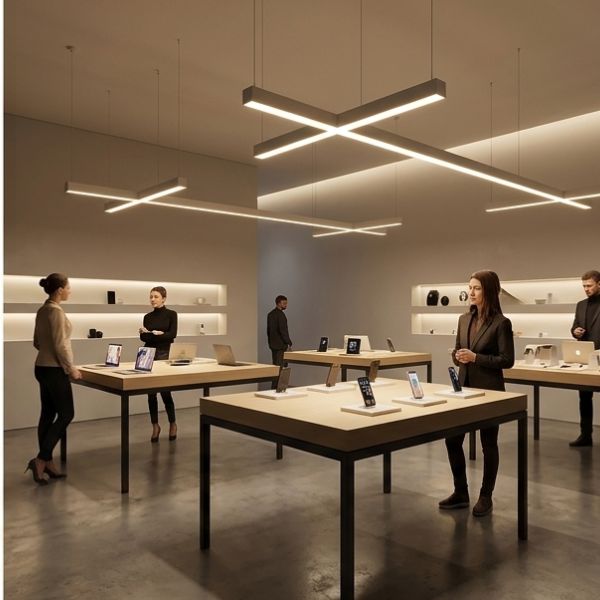
Adapting Lighting for Large Department Stores
Lighting a large department store presents a unique set of challenges. These vast spaces must accommodate a wide variety of products under one roof, from clothing and cosmetics to electronics and home goods. The retail lighting design must be flexible enough to define different departments while maintaining a cohesive feel throughout the store.
A strong foundation of general illumination is necessary for navigation, but relying on it alone would create a flat and uninteresting environment. The key is to create “stores within a store” using varied lighting levels and fixtures. Each department can have its own tailored lighting scheme that suits the products it sells.
Effective strategies for department store lighting include:
- Using different types of lighting fixtures to visually separate departments.
- Varying light levels to guide customers and create focal points within the large space.
- Implementing a mix of ambient, task, and accent lighting to serve different functions across the store floor.

Optimizing Lighting for the Best Shopping Experience
Ultimately, the goal of any retail lighting strategy is to create the best possible shopping experience. This means going beyond simple illumination and considering the nuanced details that affect how customers perceive your products and your brand. The right lighting solutions can make merchandise more appealing, a space more comfortable, and the overall experience more memorable.
How can you use lighting to enhance the shopping experience in a retail space? Focus on technical aspects like the color temperature and rendering capabilities of your light source. These factors, combined with smart placement, can dramatically improve product appearance and reduce energy consumption in key areas.
The Importance of Color Temperature in Retail Lighting
Color temperature, measured in Kelvins (K), describes the appearance of light, from warm to cool. This is a critical element in retail lighting design because it significantly affects the mood of the store and how products are perceived. Choosing the right color temperature helps create the desired atmosphere for your brand.
Warmer tones (typically 2700K-3000K) produce a cozy, inviting, and intimate feeling, often used in boutiques and high-end stores. Neutral or cool tones (3500K-4500K) create a brighter, more alert, and cleaner environment, which is well-suited for grocery stores or large department stores where clarity is key.
What role does color temperature play in retail store lighting?
- It sets the psychological mood of the space.
- It influences how the colors of your merchandise appear to customers.
- The right choice reinforces your brand identity, whether it’s warm and luxurious or cool and modern.
Maximizing High CRI for True Product Colors
The Color Rendering Index (CRI) is a scale from 0 to 100 that measures the ability of a light source to reveal the true product colors of objects compared to natural daylight. A high CRI is essential in retail because it ensures that what customers see in the store is what they see outside. A CRI of 90 or higher is generally recommended for most retail applications.
When a light source has a low CRI, colors can appear distorted, dull, or unnatural. This can be particularly problematic for fashion retailers, where color accuracy is paramount to a customer’s purchasing decision. A shopper needs to trust that the red dress they see in the store will still be the same vibrant red in the sunlight.
By investing in high CRI lighting, you present your product displays in the best possible light, allowing the quality and color of your merchandise to speak for themselves. This builds customer confidence and can reduce the rate of returns due to color discrepancies, all while improving energy efficiency with modern LED options.
Conclusion
In conclusion, the right lighting can transform a retail space, influencing not only the atmosphere but also customer behavior and sales. By understanding the different types of lighting—ambient, task, accent, and decorative—you can create an inviting and functional environment that enhances the shopping experience. Each store type requires unique strategies to optimize lighting for comfort and engagement, ensuring that customers are drawn to key products. As you consider your lighting design, remember that color temperature and CRI play crucial roles in showcasing your merchandise accurately. If you’re ready to elevate your retail space with effective lighting solutions, get in touch with our experts today!
Frequently Asked Questions
What is the ideal lighting for highlighting retail merchandise?
The ideal lighting for highlighting merchandise is accent lighting. Using fixtures like track lights or spotlights, you can draw attention to a specific retail display. This creates contrast with the surrounding ambient light, making products stand out and guiding the customer’s eye to your key items.
How do I choose the right type of store lighting for my layout?
To choose the right type of lighting, first consider your store layout and brand identity. Analyze your retail space to determine needs for general illumination, task areas, and product highlights. Then, select a combination of lighting options and fixtures that creates a layered lighting design to support all three functions effectively.
Are there energy-efficient lighting options for retail spaces?
Yes, there are many energy-efficient lighting options available. LED lighting is the leading choice for retail store lighting due to its long lifespan and low energy consumption. Smart lighting systems offer even greater energy efficiency by allowing for automated control of lighting fixtures, dimming lights when not needed.

Leave A Comment