
PIR vs. Microwave vs. Ultrasonic Sensors: 2026 Lighting Control Guide
Occupancy sensors use different technologies — including passive infrared (PIR), ultrasonic and microwave — to detect the presence or absence of occupants in a space.
What’s PIR sensor?
Passive Infrared (PIR) sensors work by detecting the presence of heat energy in confined spaces. Though used in a slightly different way for lighting applications, it’s the same core technology found in thermal imaging devices, advanced telescopes, night vision equipment and a host of other innovative tools.
Affordable and simple to install, PIR sensors are a versatile control type that can work in a wide variety of everyday settings, including single-use bathrooms, meeting rooms and storage areas. However, one drawback is that PIR sensors require a direct line of sight between the sensor and any motion in order to function properly. Because of this, it’s best to use them sparingly in open spaces, as well as areas that are restricted by barriers, walls or other large objects.
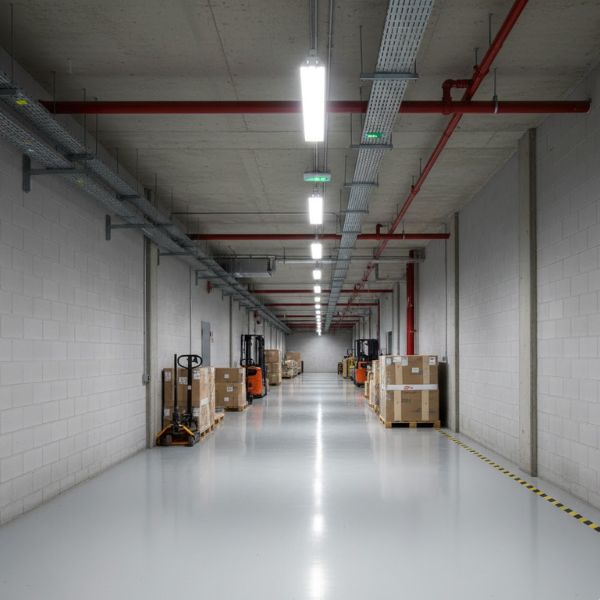
PIR sensors are very suitable for enclosed spaces, wall-switch replacements, high-ceiling areas, spaces with high air flow, areas with direct line-of-sight viewing, and spaces in which it is necessary to mask unwanted detection in certain areas. Examples of these spaces include private offices, lobbies, warehouse aisles, hallways, computer rooms, laboratories, library book stacks, conference rooms, storage closets and outdoor spaces.
Issues that might complicate their application include low levels of motion by occupants, obstacles blocking the sensor’s view, and sensors mounted on sources of vibration or within 6-8 feet of air diffusers.
What’s Ultrasonic sensors?
Ultrasonic sensors, meanwhile, are highly suitable for spaces in which a line of sight is not possible, such as partitioned spaces, and in spaces requiring a higher level of sensitivity. Examples of such spaces include restrooms, open offices, enclosed hallways and stairways.
An Ultrasonic sensor is a device that can measure the distance to an object by using sound waves. It measures distance by sending out a sound wave at a specific frequency and listening for that sound wave to bounce back. By recording the elapsed time between the sound wave being generated and the sound wave bouncing back, it is possible to calculate the distance between the sonar sensor and the object.
15 Applications Using Ultrasonic Sensors:
- Loop control
- Roll diameter, tension control, winding and unwind
- Liquid level control
- Thru beam detection for high-speed counting
- Full detection
- Thread or wire break detection
- Robotic sensing
- Stacking height control
- 45° Deflection; inkwell level detection; hard to get at places
- People detection for counting
- Contouring or profiling using ultrasonic systems
- Vehicle detection for car wash and automotive assembly
- Irregular parts detection for hoppers and feeder bowls
- Presence detection
- Box sorting using multi-transducer ultrasonic monitoring system
Issues that might complicate their application include: ceilings higher than 14 feet; high levels of vibration or air flow, which can cause nuisance switching; and open spaces that require selective coverage, such as control of individual warehouse aisles.
What’s Microwave sensors?
A microwave sensor is an electronic device that detects motion, and can be used to control luminaires. Microwaves operate differently to PIR sensors, by projecting microwaves, which bounce off surfaces and return to a sensor within the detector. By analysing this information the sensor can detect any movements within its range and do all this in less than a microsecond.
Microwave sensors that are more advanced can also detect whether an individual is moving towards or away from the sensor, or moving randomly. There are ways that some trained individuals could potentially move to avoid detection by a motion sensor.
What Are the Benefits of a Microwave Motion Sensor?
- Microwave detectors can be used in virtually any environment, including those that are not otherwise hospitable to sensors, such as high heat environments that can set of photo-electric sensors. This makes them one of the most versatile types of sensor system.
- Microwave detectors can go through walls and holes. Because of this they can cover a larger area of a home or commercial property, including fairly large outdoor areas. Because of this, they’re usually good for those who need to secure large areas of land.
- Microwave detectors can be programmed in a way to reduce the amount of false alarms without having to reduce the amount of correct positives, therefore improving accuracy while also improving upon ease of use.
- Micowave detectors are generally less expensive to purchase, even though they may be more expensive to run. They are one of the simplest systems to purchase, and also one of the oldest technologies i use.
microwave detectors also have some negatives. They do have a number of false alarms, as things such as drapery moving could potentially cause problems. The sensors require a continuous power draw, so they may be expensive to run. They also only work at intervals rather than working continuously, by sending out signals and then receiving them. That means that someone moving fast enough could potentially evade detection.
🚀 Factory-Integrated Intelligence for Your Projects
Don’t waste time and labor costs installing external sensors on the job site. Brandon Lighting offers Pre-installed & Pre-tested sensor solutions directly from our factory.
-
Bi-Level Dimming: Achieve 10%-50% standby light levels to meet California Title 24 and IECC codes.
-
120-347V Support: Sensors specifically rated for high-voltage Canadian industrial sites.
-
Plug-and-Play Design: Many of our fixtures feature easy-access sensor sockets for quick field adjustments.
📧 Consult our engineers for the best sensor configuration: info@brandon-lighting.com
What’s the difference between the PIR and Microwave sensor?
There Are Some Major Specific Differences Between The Microwave Sensors And The PIR Sensors:
- Generally, microwave sensors have much better sensibility compared to the PIR sensors.
- Microwave sensors can also perform well if there is any metalloid barrier, which the PIR sensors cannot.
- Moreover, the sensibility of PIR sensors is also compromised if the ambient temperature is more than 35 Celsius.
Following points summarize difference between microwave sensor and PIR sensor.
Microwave sensor has higher sensitivity than PIR sensor.
Microwave sensor has higher coverage range than PIR sensor.
Microwave sensor has continuous field of detection zone where as PIR sensor has slotted detection zone. Hence PIR sensor may miss out objects. Hence microwave sensors are better in security applications compare to PIR sensors.
Microwave sensors have higher false alarm rate compare to PIR sensors.
Microwave sensors are slightly costlier compare to PIR sensors.
Microwave sensors consume more energy than PIR sensors. PIR sensors consume about 0.8 to 1.0 Watt electricity and microwave sensors consume about 1.1 to 1.5 Watt.
Microwave sensors are suitable for large area security applications where as PIR sensors are suitable for smaller and compact premises.

Quick Selection: Which Sensor is Right for Your Fixture?
Choosing the right technology is key to maximizing energy savings and project ROI. At Brandon Lighting, we provide factory-integrated sensors tailored to your specific environment:
| Application | Recommended Sensor | Brandon Fixture Solution |
| High-Bay Warehouses | Microwave (Long range) | Linear High Bays / Low Bay |
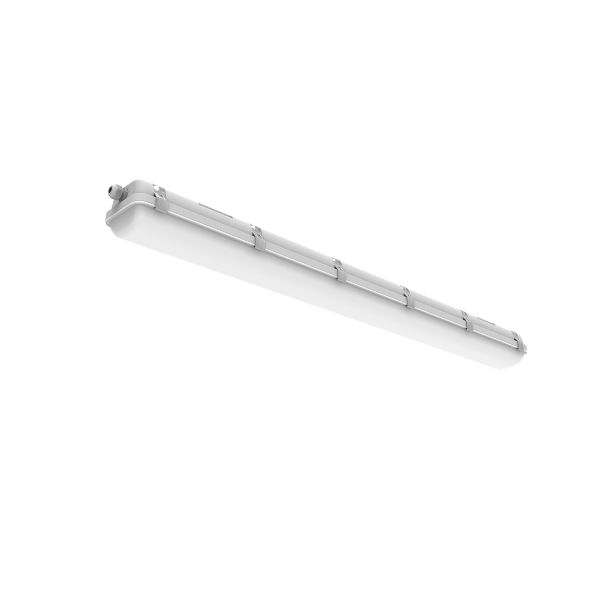
| Parking Garages | Microwave (Penetrates dust/wind) | IP65 Vapor Tight Fixtures |
| Offices & Schools | PIR (Precise detection) | LED Troffers / Flat Panels |
| Restrooms & Stairs | Ultrasonic / Dual-Tech | LED Stairwell & Wrap Lights |
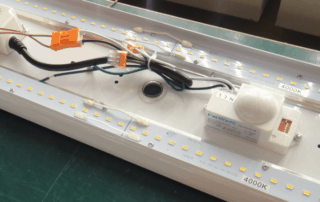
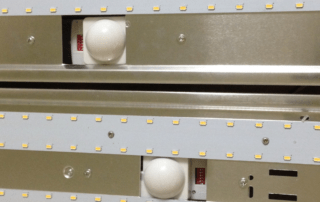
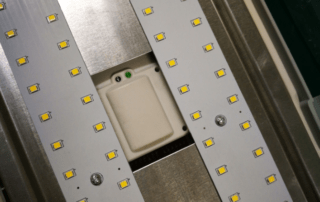
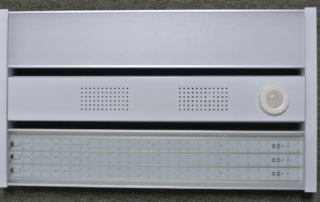

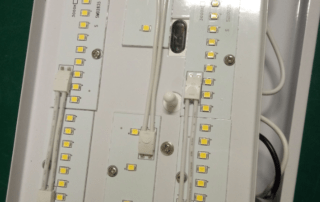
A microwave sensor is an electronic device that detects motion, and can be used to control luminaires. Microwaves operate differently to PIR sensors, by projecting microwaves, which bounce off surfaces and return to a sensor within the detector. By analysing this information the sensor can detect any movements within its range and do all this in less than a microsecond.
FAQs About LED Lighting Sensors & Solutions
Q1: What is a microwave sensor and how does it work? A microwave sensor is an electronic device that detects motion by projecting high-frequency waves that bounce off surfaces and return to the detector. It is highly sensitive and can detect movement through walls or barriers, making it ideal for integrated lighting control in large commercial and industrial spaces.
Q2: Can Brandon Lighting fixtures be customized with specific sensors? Yes. Most of our commercial and industrial LED fixtures—including Linear High Bays, Vapor Tights, and Troffers—can be equipped with PIR, Microwave, or Daylight Harvesting sensors. We support customized settings for multi-level dimming to help your project qualify for maximum utility rebates in the USA and Canada.
Q3: Does Brandon Lighting provide pre-installed sensors for large-scale projects? Yes. To save on-site labor costs for contractors, we offer factory-integrated occupancy sensors. Our engineering team can pre-set the detection range, hold-time, and dimming levels according to your project specifications, ensuring a “plug-and-play” installation for your fixtures.
Q4: Are your sensor-equipped fixtures compliant with California Title 24? Absolutely. Our LED fixtures with integrated PIR and Microwave sensors support bi-level dimming and daylight harvesting, which are essential for meeting California Title 24 and IECC building codes. This compliance ensures safety and helps your project qualify for the highest available energy-saving rebates.
Q5: Which sensor is best for cold storage or high-vibration industrial areas? For cold storage and high-vibration environments, we typically recommend our specialized microwave sensors integrated into IP65-rated Vapor Tight fixtures. Unlike PIR sensors, microwave technology is not affected by ambient temperature fluctuations, ensuring reliable motion detection even in extreme cold.
Q6: Do you support 347V sensors for Canadian industrial projects? Yes, we specialize in the Canadian market. We offer 120-347V multi-voltage sensors that are fully compatible with our industrial LED fixtures, ensuring robust performance in Canadian warehouses and manufacturing plants without the need for additional transformers.



















You certainly understand what you’re referring to, thanks for the info.