
Key Highlights
- Strong ceiling design improves acoustics, lighting quality, and employee comfort.
- The best office ceiling design ideas balance visual interest with daily function.
- Acoustic systems help control noise in open offices and meeting areas.
- Smart LED solutions support energy efficiency and a cleaner lighting plan.
- Material choice affects durability, maintenance, and indoor air quality.
- Modern ceilings can shape brand image while improving focus and workspace performance.
Introduction
In modern offices, the ceiling is the fifth wall. Yet it often gets the least design attention. That is a mistake, because ceiling design directly affects lighting, acoustics, comfort, and the mood of a workspace. Sterile layouts and poor illumination can make teams feel tired and disconnected. The strongest office ceiling design ideas solve that problem by combining materials, form, and smart lighting. When planned well, a ceiling becomes a performance tool, not just a finishing layer.
Creative Office Ceiling Design Solutions for Modern Workspaces
What are the most popular types of office ceiling designs for modern workplaces? Many teams now favor drywall lines, baffle ceilings, wood slats, exposed systems, stretch ceilings, coffered layouts, and open cell grids. Each option brings a different level of creativity, acoustic value, and visual interest.
Can creative ceilings enhance productivity? Yes, when ceiling design supports glare control, sound management, and flexible lighting. The following modern office ceiling designs show how Brandon Lighting can pair materials and smart LED systems to create comfort, design flexibility, and stronger day-to-day performance.
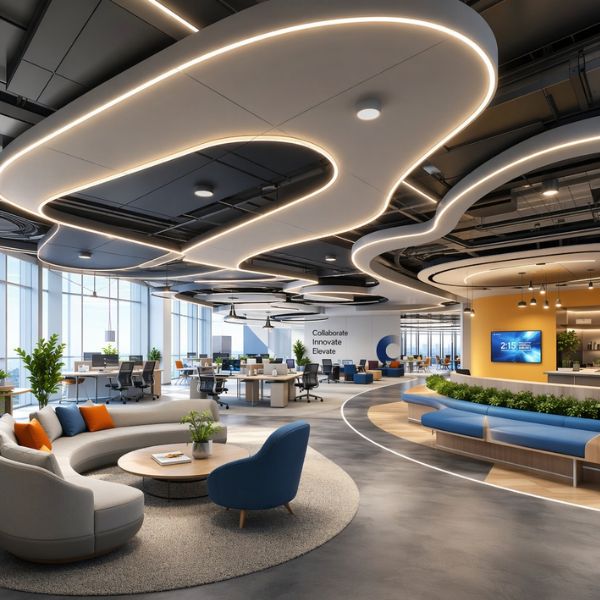
1. Drywall Ceilings with Recessed Linear Lighting Profiles
For a clean and minimal office design, drywall ceilings remain one of the strongest choices. They hide services, create a refined plane, and give architects control over proportion. This approach works especially well when office ceiling design needs quiet elegance without visual clutter. Recessed linear lighting adds sharp architectural lines that guide movement and create subtle visual interest.
- Use trimless recessed lights for a flush finish across ceiling panels.
- Add L-shaped or geometric connectors to continue lines across walls.
- Specify 4000K and CRI 90+ for focus zones and accurate color rendering.
What are the best lighting options for office ceilings to improve comfort and focus? In task areas, recessed linear lighting with UGR < 19 is highly effective. It reduces glare on screens, supports eye comfort, and works well with DALI-2, 0-10V, or Zigbee/Casambi controls for a smarter lighting plan.

2. Acoustic Baffle Ceilings with Integrated Pendant Lighting
Open offices often struggle with rising noise levels. That is where baffle ceilings stand out. Their suspended vertical elements soften reverberation while keeping the room visually open. For teams asking whether there are unique office ceiling designs that also improve acoustics, this is one of the most effective answers. It combines sound control, acoustic performance, and strong architectural rhythm.
- Install micro-linear pendants between baffles for clean integration.
- Use Acoustic Pendant Lights with PET felt where collaboration is constant.
- Prioritize UGR < 19 to limit glare on monitors below.
Lighting should support the acoustic strategy, not fight it. Acoustic pendant solutions bring both functions together, reducing visual clutter and improving employee comfort. In shared work areas, tunable white lighting can also adjust the atmosphere through the day, while wireless control keeps the layout responsive as teams change.

3. Wooden Slat Ceilings Paired with Suspended Linear Pendant Lights
A wood slat ceiling introduces warmth, texture, and a more human feel into the workplace. In reception areas, boardrooms, and creative studios, it softens hard surfaces and adds visual interest without losing professionalism. If you want office ceiling ideas that pair well with stylish finishes, wooden systems also work nicely beside tile-led interior design strategies because they balance polished surfaces with natural character.
- Choose suspended linear pendant lights with direct and indirect output.
- Use the uplight to reveal wood texture and ceiling depth.
- Calibrate the downlight to support about 500 Lux on desks.
This lighting approach keeps the slatted surface visible while delivering practical task light. For focus zones, 4000K works best. Breakrooms or hospitality corners benefit from 3000K for a softer tone. With CRI 90+ and smart dimming, these ceiling lights create a refined office ceiling design that feels both stylish and functional.

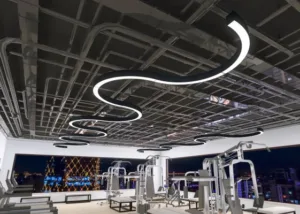
4. Exposed Industrial Ceilings Featuring Modular Magnetic Track Lighting
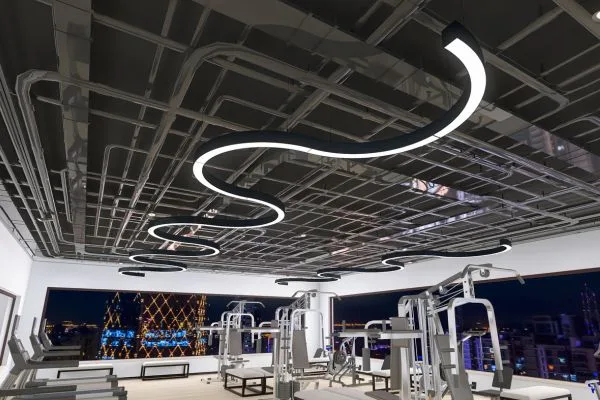
An exposed ceiling gives office space an honest, industrial character. Concrete slabs, ducts, and structural elements stay visible, which creates height and a strong sense of openness. This look is common in modern offices that want flexibility and lower finishing complexity. The challenge is keeping the result purposeful rather than unfinished.
- Use Magnetic Track Lighting on concrete or suspend it on cables.
- Mix spot, flood, and linear modules within one track run.
- Reconfigure fittings without tools as layouts evolve.
How do modular ceiling systems benefit modern office spaces? They adapt quickly. Magnetic track systems support design flexibility when departments move, collaboration zones expand, or a former office room becomes a meeting room. This solution also keeps the lighting plan consistent. With CRI 90+, UGR-conscious module selection, and smart controls, exposed ceilings can feel disciplined, not chaotic.
5. Stretch Ceiling LED Lightbox (Soft Sky Effect) for Conference Rooms and Lobbies
Some spaces need a stronger first impression. A stretch ceiling LED lightbox creates a soft sky effect that makes lobbies and the conference room feel brighter, calmer, and more premium. It produces broad, shadowless illumination, which helps people feel comfortable the moment they enter. Among office ceiling design ideas, this is one of the most effective for client-facing areas.
- Use a large-format luminous panel to mimic skylight conditions.
- Specify CRI 90+ to improve skin tones and video call appearance.
- Connect dimming controls for scene changes during presentations.
What are the best office ceiling ideas to enhance productivity and comfort in formal spaces? Soft sky ceilings are excellent where visual fatigue and presentation quality matter. They also support energy efficiency by distributing light evenly across the room. For executive settings, tunable white control can shift from focused daytime scenes to warmer hospitality lighting later on.
6. Coffered Ceilings Highlighted with Smart LED Fixtures
A coffered ceiling brings order, depth, and elegance to offices that need a more formal identity. Executive areas, boardrooms, and reception spaces often benefit from this structure because it frames the ceiling plane and creates hierarchy. When paired with smart LED lighting, the result blends functionality with a premium architectural look rather than feeling decorative for its own sake.
- Place linear or compact fixtures within coffers for balanced illumination.
- Use zoning to separate presentation, meeting, and ambient scenes.
- Combine polished insets or tiles with glare-controlled fixtures.
How can you choose between different types of panels for your office ceiling? Start with function. If you need sophistication, coffered layouts work well. If you also want stylish solutions, tile insets can add contrast and brightness. Smart controls through DALI-2 or 0-10V then make the system practical, not just attractive.
7. Open Cell Ceilings with Versatile Lighting Modules
An open cell ceiling is ideal when you want airflow, access, and visual lightness. Its grid structure supports a strong sense of openness, especially in high ceilings, coworking areas, and transition zones. This type of ceiling design works well in spaces that need a technical look without closing off the volume above.
- Match lighting modules to grid spacing for a clean composition.
- Use different beam types for circulation, desks, and feature zones.
- Keep fixture selection aligned with ceiling height and viewing angles.
What should you consider when selecting ceiling lights for an office environment? Start with use, ceiling height, and comfort. In open cell systems, modules should deliver even light without harsh brightness. UGR < 19, CRI 90+, and flexible controls help maintain performance. That makes this one of the most adaptable office ceiling ideas for evolving workplaces.

Essential Factors for Selecting Office Ceiling Ideas and Lighting Fixtures
Choosing between office ceiling design ideas starts with function. Ask what the space needs most: acoustic control, easier maintenance, stronger branding, or better light distribution. Ceiling panels and ceiling lights should support the daily rhythm of each zone, from focused work areas to collaborative settings.
Modern office ceiling designs improve acoustics and visual appeal by combining better materials with intentional lighting. For inspiration, review completed projects across boardrooms, reception areas, and open offices, then compare how each solution handles durability, indoor air quality, and user comfort before moving into material and technical decisions.
Material Choices: Panels, Tiles, and Sustainable Options
Material selection shapes performance as much as appearance. Ceiling panels, tiles, wood systems, metal options, and acoustic elements all answer different project needs. If you are choosing between different types of panels for your office ceiling, compare maintenance, sound behavior, lifespan, and how the finish supports the brand image.
For small businesses, budget-friendly office ceiling design ideas often include simple suspended systems, monochrome tile ceilings, or selective acoustic zones instead of full custom builds. These options can still look polished while protecting durability and indoor air quality.
| Material/System | Best Use | Key Benefit |
|---|---|---|
| Commercial tiles | General offices, reception | Easy maintenance and aesthetic flexibility |
| Acoustic tiles or baffles | Open offices, call zones | Better sound absorption |
| Wood slats | Meeting rooms, hospitality-led spaces | Warmth and visual texture |
| Metal or open cell systems | High-traffic or industrial spaces | Long-term durability and access |
| Drywall | Minimalist workplaces | Seamless sustainable ceiling design potential |
Technical Performance: UGR, CRI, Color Temperature, and Controls
Good design needs measurable technical performance. In office space, the lighting plan should protect visual comfort, support the task, and align with the ceiling system. This matters just as much as acoustic strategy. The best lighting options for comfort and focus are not simply bright fixtures. They are controlled, glare-aware, and matched to how people work.
- Specify UGR < 19 in task areas to reduce screen glare and eye strain.
- Use CRI 90+ for accurate color, materials, and video conferencing quality.
- Select 4000K for focus, 3000K for break zones, and tunable white for HCL.
Controls complete the system. DALI-2, 0-10V dimming, and wireless platforms such as Zigbee or Casambi allow zoning, dimming, and scene changes without overcomplicating operation. When technical performance is right, the ceiling and lighting work as one coordinated system rather than two separate design decisions.
Conclusion
In conclusion, innovative office ceiling designs play a pivotal role in shaping modern workspaces that prioritize both aesthetics and functionality. By thoughtfully integrating various lighting solutions, such as recessed linear profiles, acoustic pendant lights, and modular magnetic tracks, you can create environments that enhance productivity and comfort. These designs not only offer visual appeal but also address essential factors like acoustics and glare reduction, ensuring a pleasant atmosphere for employees. As you explore and implement these creative ideas, remember that the right ceiling design paired with advanced lighting technology can transform an ordinary workspace into an inspiring hub of collaboration and efficiency. If you’re ready to elevate your office’s design and lighting, reach out for a consultation to discover tailored solutions that meet your unique needs.
Frequently Asked Questions
What are the best office ceiling ideas to enhance productivity and comfort?
The best office ceiling ideas for productivity and employee comfort combine acoustic control, glare-managed lighting, and a layout suited to the office space. Drywall with recessed linear lighting, acoustic baffles, wood slats with pendants, and soft sky ceilings are strong options because each ceiling design supports focus and visual ease.
Which office lighting fixtures should I consider for different ceiling types?
Match ceiling lights to the ceiling system and task. Recessed linear fixtures suit drywall, suspended pendants suit slatted or high ceilings, magnetic tracks fit exposed structures, and luminous lightboxes fit formal zones. A strong office design also considers ceiling panels, durability, maintenance access, and the long-term lighting plan.
How do modern office ceiling designs improve acoustics and visual appeal?
Modern office ceiling designs improve acoustic performance by reducing echo and managing sound control through baffles, acoustic tiles, and integrated systems. At the same time, ceiling panels, lighting, and material texture add visual interest. That balance is why well-planned office ceiling design ideas feel calmer, sharper, and more professional.


Request Factory-Direct Quotes & Spec-Grade Pricing
Supplying Premium UL-Listed Linear Fixtures Since 2010






Leave A Comment