
Key Highlights
- The main difference is simple: a constant current led driver controls current, while a constant voltage driver maintains a fixed voltage.
- LED fixtures must match the correct led driver to avoid unstable performance or potential damage.
- Constant current setups are often used where consistent brightness and longer life matter most.
- Constant voltage systems are common in lighting systems that use LED strips or similar products.
- Choosing between them depends on fixture design, voltage needs, and built-in current regulation.
Introduction
Choosing the right power method for LED lights affects performance, lifespan, and safety. In many lighting systems, the decision comes down to whether your fixture needs a constant current or constant voltage led driver. That choice is not just technical. It determines how power is delivered, how stable the light output stays, and how well the system handles heat and load changes. If you want reliable results, you need to understand how each driver type supports different fixture designs.
Understanding LED Fixtures and Drivers
LED fixtures need a reliable power supply to operate correctly. A led driver works between the power source and the fixture, converting power supplies from AC to DC and delivering the required output voltage and current for the load.
Your decision depends on the fixture design. Some lighting systems need a fixed current, while others need a fixed voltage because regulation is already built in. Before you choose, look at the fixture’s input voltage needs and rated electrical requirements. That makes the next details easier to understand.
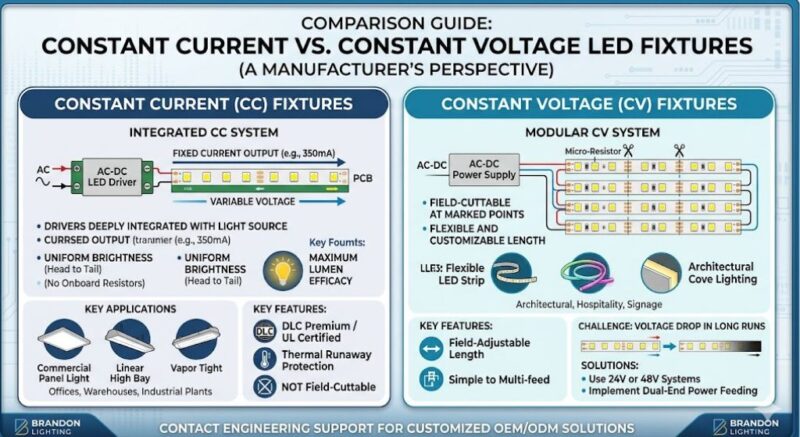
Most led fixtures cannot run directly from a standard ac outlet. Wall power usually provides higher-voltage AC, while many LED products need lower-voltage DC. That is why the power source must pass through a driver before reaching the fixture.
The driver converts the incoming supply into usable power output for the light. It manages input voltage and delivers the required output voltage to the fixture or led strip. In larger lighting products, this control helps the system stay stable during normal operation and temperature changes.
If you use the wrong driver type, the fixture may flicker, overheat, or fail early. In some cases, the LED can draw too much current or receive the wrong voltage. That mismatch can reduce performance, shorten service life, or cause potential damage to the lighting system.
Key Functions of LED Drivers in Lighting Systems
A led driver does more than turn power on and off. It regulates current output or voltage output so LEDs receive the correct amount of power. That matters because LEDs are sensitive electronic devices, and small electrical changes can affect brightness, color, and life.
In practical led lighting applications, the driver also protects performance as conditions shift. It can respond to temperature changes and changing load demands so lighting systems remain safer and more consistent over time.
Key functions include:
- Converting AC supply into usable DC power for LED operation.
- Controlling current output or voltage output based on fixture requirements.
- Helping reduce overheating, flicker, and unstable light behavior.
Compared with constant voltage options, constant current units offer stronger current control, better brightness consistency, and improved protection against thermal issues in many applications.
Exploring Constant Current LED Fixtures
Constant current LED fixtures are built to work with current drivers that supply a fixed output current. Instead of holding voltage steady, the driver adjusts voltage as needed so the led system receives the correct electrical flow. This helps protect LEDs from overdriving.
For many commercial spaces, that control can be a strong advantage. Where steady performance, reliable dc power delivery, and long operating life are important, a constant current led driver is often the better fit. The next sections explain how these fixtures operate and where they work best.
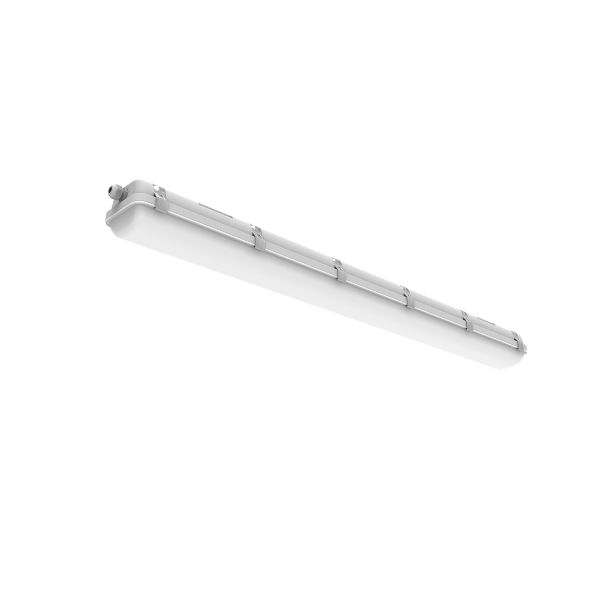
How Constant Current LED Fixtures Operate
A constant current driver is designed to deliver a fixed output current across the circuit. It changes voltage as needed so the connected led fixtures receive the intended operating current, even when input conditions or temperature shift during use.
This matters because an LED or an array of leds reacts strongly to current changes. Even small changes can create noticeable differences in light intensity and can push the device beyond its rated level. By keeping current stable, the driver helps the fixture perform as designed.
Yes, this approach can help LEDs last longer. When a constant current driver prevents overdriving, it lowers the risk of excess heat and thermal runaway. That means better brightness consistency, fewer premature failures, and more dependable long-term operation in demanding installations.
Benefits and Typical Applications of Constant Current Setups
Constant current setups are valued for control and protection. In many led lighting applications, they provide consistent brightness because the driver keeps current stable instead of letting it rise with changing conditions. That makes them a preferred option for higher-power LED products.
They also support better energy efficiency over time. While current drivers may cost more and involve more setup planning, they can reduce burnout risk and help maintain a more stable system. That benefit becomes important where long service life matters more than simple installation.
Common advantages and uses include:
- Better consistent brightness across connected LEDs.
- Reduced risk of thermal runaway and early failure.
- Strong fit for high-power and larger-scale lighting projects.
- Useful where dimming options like DALI or Triac dimming are required.
- Less common for basic led strip lights that already include current limiting components.
Exploring Constant Voltage LED Fixtures
Constant voltage LED fixtures use a constant voltage driver that delivers a fixed output voltage, most often 12VDC or 24VDC. The driver converts standard line voltage into low-voltage DC and keeps that stable voltage supply available as long as the current demand stays within its rated limit.
This design is common with products such as led strip systems that already manage current through built-in resistors or onboard circuitry. In these fixtures, keeping the correct voltage steady is the priority. To choose wisely, it helps to see exactly how this type of setup works.
How Constant Voltage LED Fixtures Operate
A constant voltage driver provides a stable voltage supply to the connected load. It takes AC input and converts it to a fixed low-voltage DC output. The most common examples are 12VDC and 24VDC supplies used for many led fixtures and strip lights.
This works well when the product is designed for a specific voltage and already includes current control. Many led strip lights are built with groups of LEDs in series plus resistors, so the fixture expects fixed voltage rather than external current regulation.
Voltage drop issues in constant voltage systems are tied to the way power is distributed across the circuit. Because the driver holds voltage steady while current demand varies, performance depends on staying within the system’s rated limits and using the correct voltage for the fixture. If not, light output can become uneven across strip lights.
Benefits and Typical Applications of Constant Voltage Setups
Constant voltage setups are popular because they are easy to install and familiar to many contractors and designers. If a product is labeled for a specific voltage, such as 12V or 24V, it is generally intended to work with a constant voltage driver and matching led power supplies.
This approach is often more cost-effective, especially in larger runs of preconfigured products. Still, the driver must be sized so the connected load does not exceed its maximum current rating. If you are selecting a driver, start by checking whether the fixture already regulates current internally.
Typical benefits and uses include:
- Simple installation for products built around a specific voltage.
- Common use with led strip, bars, and under-cabinet lighting.
- Lower system cost in many standard layouts.
- Good light output when matched with the correct constant voltage driver.
- Best choice when the fixture manufacturer specifies fixed-voltage operation.
Main Differences Between Constant Current and Constant Voltage LED Fixtures
The main difference is the electrical value being controlled. A constant current led driver keeps output current fixed and adjusts voltage as needed. A constant voltage driver keeps voltage fixed and allows current draw to vary within its rated range. That difference shapes how led fixtures perform.
In real lighting systems, the right option depends on fixture design. High-power LEDs often need constant current control, while LED strips and similar assembled products often need fixed voltage. A side-by-side comparison makes the selection process much clearer.
Comparison of Features, Performance, and Use Cases
Both driver types can power LEDs safely when matched correctly. The difference is in regulation. A constant current driver focuses on controlled current output, while a constant voltage driver provides stable voltage for products designed around fixed-voltage input. That affects brightness control, protection, and ideal use cases.
In general, constant current units offer better protection against overdriving and support more consistent brightness. Constant voltage units are simpler and widely used with strip lights and other pre-engineered products. The table below summarizes the key differences for lighting systems.
| Feature | Constant Current Driver | Constant Voltage Driver |
|---|---|---|
| Controlled value | Fixed current output | Stable voltage |
| Voltage behavior | Adjusts as needed | Stays fixed |
| Best use | High-power LEDs | Strip lights, bars, prebuilt arrays |
| Brightness stability | Strong | Depends on fixture design |
| Thermal runaway protection | Better | Lower without added protection |
| Installation | More specialized | Simpler |
Common Challenges When Selecting the Right LED Fixture Type
One of the biggest challenges is assuming all LED products use power the same way. They do not. Some fixtures need fixed current, others need fixed voltage, and using the wrong power source can create mismatch problems immediately or over time.
You also need to check the electrical details carefully. The fixture rating, input voltage, required output voltage, and current limits must all align. If they do not, the result may be poor performance, overheating, or premature failure within the lighting systems.
Watch for these common issues:
- Choosing a driver based on convenience instead of fixture specifications.
- Ignoring current limits or voltage requirements from the manufacturer.
- Overlooking the risk of potential damage or thermal runaway in high-power LEDs.
If the wrong driver is used, the fixture may flicker, draw excess current, lose brightness consistency, or fail early.
Conclusion
In conclusion, selecting between constant current and constant voltage LED fixtures is a crucial decision that can significantly impact your lighting system’s efficiency and performance. Understanding the operational principles, benefits, and ideal applications of each type will help you make an informed choice that meets your specific needs. Whether you’re looking to optimize power usage, achieve desired brightness levels, or ensure compatibility with existing systems, taking a thoughtful approach will yield the best results. If you’re ready to enhance your lighting setup, don’t hesitate to get quotes from professionals who can guide you in selecting the right fixtures for your projects.
Frequently Asked Questions
What should I consider when choosing between constant current and constant voltage LED drivers?
Check how the led lights are designed to receive power. If the fixture calls for regulated output current, use a constant current led driver. If it specifies a fixed voltage, use a constant voltage driver. Matching the driver to the fixture is the key step in safe, reliable lighting systems.
Can you mix constant current and constant voltage LEDs in the same installation?
It is not a good idea to mix them on the same led driver because each electrical device has different power needs. A constant current driver and a constant voltage driver regulate power differently. In one installation, separate power supplies may be used, but each load must match its proper driver type.
Is it possible to upgrade from constant voltage to constant current LED fixtures?
Yes, but only if the new led fixtures are designed for a constant current led driver. You cannot simply swap a constant voltage driver without checking fixture requirements and power output needs. In lighting systems, the driver and fixture must be electrically compatible to operate safely and correctly.





Leave A Comment