
Key Highlights
- High bay lights are essential in large facilities with tall mounting heights.
- UFO high bay lights work well in open areas that need a circular beam pattern.
- Linear high bay lights fit warehouse aisles better because they provide longer, more even coverage.
- Both options support strong energy efficiency and lower energy costs than older systems.
- Light distribution is the main factor when choosing between these commercial lighting types.
- Your floor plan, ceiling height, and work zones should guide the final fixture choice.
Introduction
Choosing between high bay lights can affect safety, visibility, and operating costs in your facility. The two most common options are ufo high bay lights and linear high bay lights. Both use LED technology, both can reduce energy bills, and both are used in commercial spaces with high ceilings. The difference comes down to how they are built and how they spread light. If you are planning warehouse lighting, understanding those differences will help you make a practical decision.
Understanding Warehouse Lighting Types
Warehouse lighting needs to do more than make a space look bright. In buildings with high ceilings, the fixture type affects coverage, worker comfort, and how well each zone is lit. That is why high bay lighting is selected based on layout, mounting style, and the work happening below.
Some facilities need broad coverage across open floor space, while others need light directed along long paths. Linear fixtures and round fixtures handle those needs differently. To choose the right lighting, it helps to start with a clear overview of both styles.
Overview of UFO High Bay and Linear High Bay Lights
At the most basic level, the main difference between ufo high bay lights and linear high bay lights is shape and light pattern. UFO models are round and compact, while linear models are long and rectangular. That design difference changes how each fixture fits your space.
With led technology, both options offer strong performance and lower energy use than older systems. UFO fixtures usually hang from a single point and send light in a circular pattern. Many also come with different beam angle options, which lets you choose narrower or wider coverage.
Linear high bay lights create a longer, rectangular spread of light. That makes them a better match for spaces that need even illumination from one end to another. In short, UFO lights suit open areas, and linear lights suit structured layouts like aisles and work lines.
Typical Applications in U.S. Warehouses
In U.S. warehouses, the better choice depends on the job. If your building has open areas with fewer obstructions, UFO fixtures often make sense. If your building is arranged around warehouse aisles, linear lighting usually provides better light distribution and more consistent visibility.
You can see the difference in common applications:
- UFO fixtures are often used in open areas with wide floor space.
- Linear fixtures are a strong fit for warehouse aisles that need even coverage.
- Linear models also work well above assembly lines and narrow work zones.
- Both types are used in retail stores, depending on layout and ceiling height.
So which is better for warehouses, UFO high bay or linear high bay lighting? There is no single answer for every site. Open floor plans usually favor UFO lights, while long, organized spaces usually benefit more from linear fixtures.

What is a UFO High Bay Light?
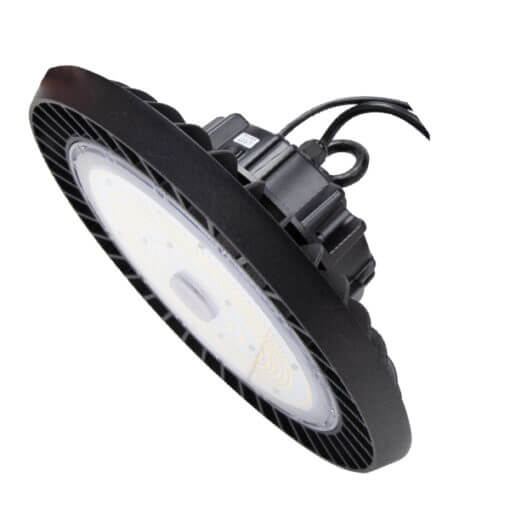
UFO high bay lights are round, compact high bay fixtures designed for large indoor spaces with tall ceilings. Their shape gives them the look of a flying saucer, which is where the name comes from. These fixtures usually hang from a hook or pendant mount at a single point, making them a simple option for open environments.
In practical use, ufo high bay lights are often chosen for warehouses, factories, gyms, and large retail spaces. They deliver a circular beam of light and come in different output levels for different mounting heights. They also support strong energy efficiency, which helps reduce operating costs when replacing older lighting systems. To understand whether they fit your facility, it helps to look at their design details and tradeoffs.
Design Features of UFO High Bay Lights
The first thing most people notice about UFO fixtures is their modern design. Their compact, round body resembles a flying saucer, and that shape supports a small footprint overhead. In busy ceilings with ducts or cranes, that can be a real advantage.
Their basic design features usually include:
- A round housing that supports a circular beam of light
- A hook or pendant mount for single-point hanging
- Multiple lumen output choices for different ceiling heights
- Compact sizing that takes up less overhead space
Because of this design, UFO lights are often easier to place in large, open zones. Their shape also supports different beam options, which can help you focus or widen the light. The tradeoff is that their coverage pattern is less tailored to long, narrow spaces than a linear fixture.
Pros and Cons of Using UFO High Bay Lighting
UFO high bay lighting is a strong choice when you need focused performance in open floor areas. It offers energy savings, a compact form, and flexible beam angle options. If your layout is wide and unobstructed, these fixtures can deliver efficient lighting with a straightforward installation approach.
Key pros and cons include:
- Good fit for open spaces with high mounting points
- Flexible beam angle options for narrow or wide coverage
- Potential for fewer shadows in broad areas
- Lower maintenance costs than older lighting systems
- Possible glare concerns without the right accessory choices
When should you use UFO high bay lights instead of linear high bay lights? Choose them when your space is open, your ceiling is high, and you want strong output from a compact fixture. If worker visual comfort in narrow aisles is the priority, linear may be the better route.
What is a Linear High Bay Light?
Linear high bay lights are long, rectangular fixtures designed for large indoor areas that need extended, even coverage. Their shape looks familiar because they were commonly developed as replacements for older fluorescent lights in warehouses and other commercial settings. That makes them a practical option for retrofits.
Unlike round fixtures, linear fixtures spread light in a longer pattern that works well over aisles, corridors, and production zones. They can be suspended from two points or mounted close to the ceiling, depending on the building setup. Linear high bay lights are often selected when you need more consistent light across narrow or elongated spaces. To judge whether they fit your warehouse, it is worth looking at their structure and the practical advantages and limits they bring.

Design Features of Linear High Bay Lights
Linear fixtures stand out because of their rectangular shape. That form helps them match the layout of your space when the area is built around rows, lanes, or workstations. In a long aisle, that matters because fixture shape influences how evenly light reaches the floor.
Common design features include:
- A long body that creates a stretched light pattern
- A rectangular shape suited for organized layouts
- Several brightness options for different mounting heights
- Mounting styles that may use chains or direct ceiling attachment
Yes, UFO and linear high bay lights do have different mounting requirements. Linear fixtures are often installed from two points or mounted directly, while UFO lights usually use a single-point hook or pendant method. That gives linear models extra flexibility in retrofit situations where old fluorescent layouts already exist.
Pros and Cons of Using Linear High Bay Lighting
Linear high bay lighting is often selected because it provides uniform light distribution across long work zones. In industrial spaces, that means fewer dark spots and a more controlled lighting pattern. If your operation depends on aisle visibility or line-based tasks, this fixture type usually performs well.
Its main pros and cons include:
- Strong uniform light distribution for aisles and work lines
- Familiar design for buildings replacing older strip-style lights
- Easy installation in some retrofit settings
- Fewer replacements than aging fluorescent systems
- Less ideal than round fixtures for a very wide open floor
Which high bay light type offers better light distribution for industrial spaces? For narrow or structured areas, linear lights usually win because they create consistent light along the full length of the space. In broad, open zones, the answer may shift toward UFO fixtures.
Key Differences Between UFO High Bay and Linear High Bay for Warehouse Lighting
When comparing these two options, the biggest differences come down to shape, mounting method, and light distribution. UFO fixtures are compact and round, while linear models are longer and built to cover narrow paths more evenly. In warehouse high bay lighting, that distinction affects both performance and fixture spacing.
Your commercial space should guide the decision. Open floor plans often benefit from circular coverage, while aisle-based layouts need a more directional spread. The next sections break down those differences in practical terms, starting with coverage and installation needs.
Light Distribution and Coverage Comparison
Light distribution is where the contrast becomes clear. UFO fixtures project light in a circular pattern, and their beam angle can be narrow or wide depending on the model. That makes them useful in open areas where you want coverage to spread outward from a central point.
Linear fixtures create a longer pattern that is better for uniform lighting across warehouse aisles. Because the light follows the shape of the fixture, it covers narrow spaces more evenly and helps reduce patchy brightness along walls and floors.
| Feature | UFO High Bay | Linear High Bay |
|---|---|---|
| Basic light pattern | Circular beam of light | |
| Coverage style | Best for open areas | |
| Beam angle options | Often available in different beam angles | |
| Aisle performance | Less ideal for long warehouse aisles | |
| Uniform lighting | Good in wide spaces, less directional |
| Feature | Linear High Bay |
|---|---|
| Basic light pattern | Long, rectangular spread |
| Coverage style | Best for warehouse aisles and work lines |
| Beam angle options | Shape naturally directs light lengthwise |
| Aisle performance | Strong for consistent aisle coverage |
| Uniform lighting | Better for narrow industrial layouts |
Mounting Requirements and Ceiling Height Considerations
Mounting requirements are another key difference. UFO fixtures usually hang from a single point using a hook or pendant mount. That simple setup can support easy installation, especially when the fixture is being placed in a large, open zone with minimal interference overhead.
Linear fixtures offer more than one mounting approach, which can be useful depending on your floor plan. Typical considerations include:
- UFO lights commonly use single-point hanging
- Linear fixtures may use two-point chain suspension
- Linear models can also mount directly to the ceiling
- Both types are used in buildings with high ceilings
Are there specific ceiling heights where one type is preferred over the other? The compiled information shows both are made for tall spaces, but the stronger deciding factor is not ceiling height alone. It is how the fixture matches the building layout and coverage goal.
Energy Efficiency and Cost Factors
Energy performance matters because lighting affects daily operating expense. The good news is that both fixture types support strong energy efficiency when compared with older systems. That means either option can help lower energy costs in a warehouse, factory, or retail setting.
Still, energy bills are only part of the picture. Purchase price, installation labor, fixture quantity, and long-term service needs all shape total value. To compare them properly, you need to look at both power use and the cost of keeping the system running.
Energy Usage Comparisons for Each Warehouse Lighting Type
Are UFO high bay lights more energy efficient than linear high bay lights? Based on the compiled information, both perform very well. Each uses led technology and each can cut energy costs when replacing older fluorescent lights or metal halide fixtures.
What matters most is that both options support lower electricity bills through efficient operation. Key points include:
- Both types are described as highly efficient
- Both can reduce energy costs compared with older lighting
- Both offer a range of wattages and outputs
- Both support meaningful energy savings over time
So if you are choosing only on energy use, there is no major gap presented here. The stronger difference is how each light fits the space. In real projects, the better layout match often has a bigger effect on results than fixture shape alone.
Installation and Maintenance Cost Considerations
Cost is not just about the fixture price on day one. In commercial lighting, labor and upkeep also matter. UFO lights can sometimes be a little less expensive to buy because the design is simpler, and they may offer easy installation through a single mounting point.
Here is how the cost picture usually compares:
- UFO fixtures may have a slightly lower purchase price
- UFO units can be quicker to install in open spaces
- Linear fixtures may reduce fixture count in aisle layouts
- Both options offer fewer replacements than old metal halide systems
- Both can lower maintenance costs over the long term
How do the installation costs compare for UFO high bay and linear high bay fixtures? UFO lighting may save labor in some setups, but long aisles may need more round fixtures. In those cases, linear systems can balance out the total installed cost.
Conclusion
In conclusion, choosing between UFO and Linear High Bay lights ultimately depends on your specific warehouse needs and layout. Both lighting types offer unique advantages, such as energy efficiency and effective light distribution. Understanding their design features, applications, and cost implications will empower you to make the right decision for your facility. Remember that the right lighting not only enhances visibility but also contributes to a safer and more productive work environment. If you’re ready to optimize your warehouse lighting, contact us for a consultation to explore the best options tailored to your needs.
Frequently Asked Questions
Can UFO High Bay Lights Replace Linear High Bays in Existing Facilities?
Yes, high bay lights can be swapped in some existing buildings, but the layout matters. UFO high bay lights may offer easy installation, yet linear high bay lights usually suit aisle-based spaces better. If replacement changes coverage quality, any savings in energy costs may not offset the lighting mismatch.
Which High Bay Light is Better Suited for Warehouse Aisles?
Linear high bay lights are usually better for warehouse aisles because they deliver uniform illumination along the full length of the space. That improves visual comfort and reduces uneven bright spots. UFO fixtures are generally a better choice for open areas rather than narrow, structured paths.
When Should You Choose UFO High Bays Over Linear High Bay Lighting?
Choose ufo high bay lights when the layout of your space is open and wide rather than aisle-based. They are a strong option in retail spaces, warehouses, and factories with tall mounting points. They also offer solid energy efficiency, especially when replacing older lighting systems.


Leave A Comment