
Key Highlights
- The choice between surface mount lighting and recessed lighting depends heavily on your project’s ceiling types.
- Recessed lighting is ideal for T-bar grid ceilings, offering a clean, modern design.
- Surface mount lighting is the primary solution for solid concrete or open ceilings where cutting is not an option.
- Installation efficiency varies, with recessed fixtures in T-grids often saving on labor and man-hours.
- Consider total project cost, including hardware and ceiling prep, not just the fixture price.
- Both options offer high energy efficiency, but light distribution and maintenance access differ significantly for any lighting project.
Introduction
As a contractor or developer, choosing the right ceiling lighting options is a critical decision that impacts budget, aesthetics, and project timelines. The debate between surface mount and recessed lighting fixtures goes beyond simple looks; it involves structural realities, installation efficiency, and long-term maintenance. This guide provides a technical breakdown of these two primary lighting solutions to help you select the most effective and cost-efficient option for your next commercial project.
Understanding Surface Mount and Recessed Lighting in Commercial Applications
Before diving into a direct comparison, it’s essential to understand the fundamental characteristics of both types of lighting. Each serves a distinct purpose in a commercial lighting plan and is suited for different architectural environments.
Your choice will influence everything from the installation process to the final visual impact of the space. Whether you need broad illumination, accent lighting, or an architectural statement piece, knowing these basics is the first step.
Defining Surface Mount Lighting: Features and Typical Use Cases
Surface mount lighting involves fixtures that are installed directly onto a flat surface, such as a concrete slab, a drywall ceiling, or a structural beam. Unlike recessed fixtures, the entire body of a surface-mounted light is visible. This makes it the go-to choice for solid ceilings where there is no cavity or plenum space to hide the fixture housing.
These fixtures attach to a junction box and are bolted or screwed into the ceiling. They come in various forms, from functional linear strips and round “puck” lights to bold, decorative lighting options that contribute to a stylish lighting layout.
Their primary function is to provide direct light in spaces where recessed installation is impossible or impractical. This includes parking garages, industrial facilities with open ceilings, and modern offices with exposed concrete designs. Surface mounting is valued for its straightforward application on otherwise challenging surfaces.

Defining Recessed Lighting: Features and Typical Use Cases
Recessed lighting, often called troffers or can lights in commercial settings, is installed into a hollow opening in the ceiling. The main body of the fixture is hidden within the ceiling structure, with only the trim and lens visible from below. This creates a clean, unobtrusive look, making the lights appear flush with the ceiling plane, much like flush mount lights.
This installation method is standard in commercial spaces with suspended T-bar grid ceilings, which provide the necessary cavity (plenum space) to house the fixture. It’s also used in drywall ceilings, though this requires more intensive installation work. You cannot install traditional recessed fixtures into solid concrete ceilings.
Recessed fixtures are perfect for providing broad overhead illumination in offices, retail stores, classrooms, and healthcare facilities. Their low-profile design is ideal for spaces with standard or low ceiling heights, where they deliver ambient and task lighting without visually cluttering the space.

Structural Constraints: Navigating Ceilings and Building Types
The single most important factor in choosing between surface and recessed lighting is the building’s structure. The type of ceiling surface you are working with will often make the decision for you, as not all fixtures are compatible with all ceiling types.
Understanding the ceiling depth and what lies above it is critical. Whether you have a lot of space in a plenum or a solid slab directly overhead dictates the feasible lighting solutions. Below, we’ll examine how specific ceiling types align with each mounting option.
T-bar Grid Ceilings, Plenum Space, and Recessed Lighting Compatibility
Suspended T-bar grid ceilings, or T-grid systems, are practically designed for recessed lighting. These ceilings, common in offices, schools, and hospitals, create a cavity known as the plenum space between the grid and the structural deck above. This space is perfect for housing the body of a recessed fixture, its integral driver, and all the necessary wiring.
For recessed lighting to be a viable option, you must have sufficient ceiling depth. The fixture’s housing needs to fit comfortably in the plenum without conflicting with HVAC ducts, pipes, or other infrastructure. Standard 2×4 or 2×2 troffers are designed to simply drop into the grid, making installation efficient.
Because of this seamless integration, recessed lighting is the overwhelmingly preferable choice for any area with a T-grid ceiling. It provides clean, even illumination for general-purpose lighting in large open-plan offices, hallways, and conference rooms, delivering one of the most cost-effective lighting solutions available.

Concrete and Open Ceilings: Leveraging Surface Mount Solutions
When your project involves solid concrete ceilings, historic buildings with plaster, or modern designs with open joists, recessed lighting is not a practical choice. Cutting large openings into these surfaces is structurally invasive and expensive. This is where surface mount fixtures become the default and often best solution.
Surface mount fixtures are designed to be installed directly onto the ceiling surface. This makes them a good option for basements, parking garages, warehouses, and architecturally-driven spaces that expose fixtures as part of the design. The installation is straightforward: a junction box provides power, and the fixture is anchored directly to the ceiling.
This method allows you to bring high-quality lighting to spaces without a traditional ceiling cavity. For industrial applications or basements with low clearance, low-profile surface mount linear lights or round fixtures provide excellent illumination without requiring major structural modifications, making them a versatile and necessary tool for contractors.
Installation Efficiency and Labor Considerations
Beyond structural compatibility, the speed and complexity of installation directly impact your project’s bottom line. The required electrical work, ceiling prep, and mounting hardware for each fixture type can significantly alter labor costs and the overall construction period.
Choosing a C-suite lighting solution that minimizes man-hours without compromising quality is key to a profitable project. Let’s compare the installation process for both mounting types and analyze their effect on labor.
Comparing Installation Steps: J-boxes, T-grid, and Ceiling Prep
The installation process differs significantly between recessed and surface mounted lights, primarily due to ceiling prep and mounting methods. For recessed lighting in a T-grid system, the process is streamlined. The grid itself provides the opening, so no cutting is needed.
In contrast, surface mount installation requires mounting directly to the ceiling plane. While it avoids cutting large holes, it does require careful placement of a junction box and secure anchoring.
- Recessed (T-Grid): The installer places the fixture into the grid opening, secures it with safety clips, and connects the wiring to the integral driver, often using a quick-connect system.
- Surface Mount (Concrete): The installer must first run conduit to a surface-mounted J-box, drill into the concrete to place anchors, and then mount a bracket before attaching and wiring the fixture.
- Recessed (Drywall): This is the most labor-intensive option, requiring precise cutting of the drywall, installation of a frame, and then wiring and fitting the fixture.
Impact on Labor Costs and Man-hours for Contractors
The difference in installation steps has a direct relationship with labor costs. For large-scale projects, even a few minutes saved per fixture can add up to hundreds of saved man-hours. Installing recessed troffers into a pre-existing T-bar grid is typically the fastest and most cost-effective method. Electricians can move from one fixture to the next quickly, minimizing the installation phase of the construction period.
Surface mounting fixtures onto a concrete or open ceiling can be more time-consuming. It involves more steps—drilling, anchoring, and potentially managing conduit—which increases the time required per fixture. This can lead to higher labor costs, especially if the ceiling surface is uneven or difficult to drill into.
However, if the alternative is cutting into a drywall ceiling for recessed lights, surface mounting becomes the more efficient choice. The key is to match the fixture type to the path of least resistance offered by the building’s structure. Properly planning your lighting project around the existing ceiling will always yield the best results for your budget.
Aesthetic Intent and Light Distribution
The visual goal of your space is another key factor. Do you want the lighting to disappear into the ceiling, or do you want it to be a visible part of the modern design? Recessed and surface mount fixtures create vastly different aesthetic outcomes.
Beyond looks, how the light is distributed is critical for the room’s function. Your lighting plan must consider whether you need soft ambient light or a more directed, architectural effect.
Achieving a Clean Architectural Look with Recessed Fixtures
Recessed fixtures are the champion of minimalist and clean architectural design. Because the housing is hidden, they blend seamlessly into the ceiling plane. This creates an uncluttered, spacious feeling, making them a good option for corporate offices, high-end retail, and any space aiming for a sophisticated, unobtrusive look.
This “disappearing act” allows architects and designers to focus on other elements in the room. The light source itself isn’t a focal point; instead, the focus is on the light it produces. This makes recessed fixtures extremely versatile for providing ambient or task lighting without interfering with the overall design narrative.
For a layered design, recessed lights provide an excellent base layer of general illumination. You can then add decorative pendants or wall sconces for accent and style. This approach is one of the most common stylish decisions in modern commercial interiors, offering both function and flexibility.
Making an Architectural Statement with Surface Mounted Linear Lights
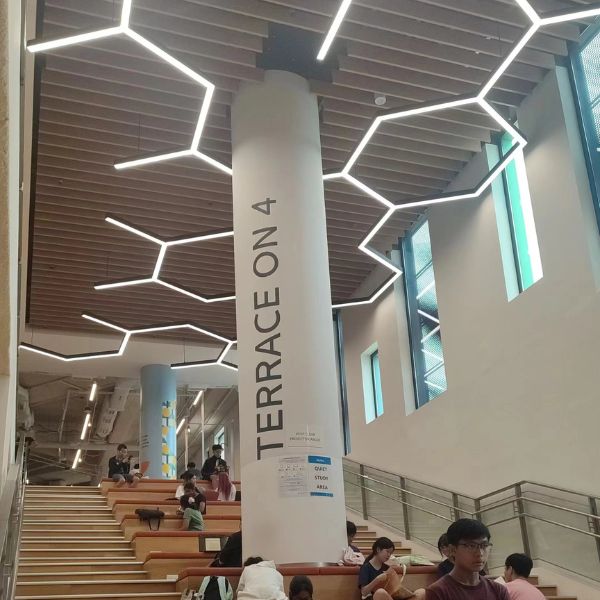
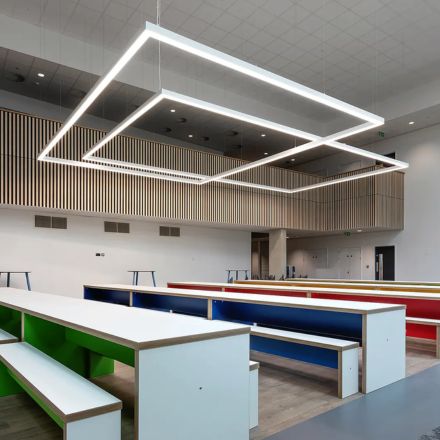
In contrast to the subtlety of recessed fixtures, surface mount lighting can be used to make a bold architectural statement. This is especially true with modern surface mounted linear lights, which can be arranged in geometric patterns, long continuous runs, or creative grids. They become a deliberate part of the design, not just a source of light.
This approach works exceptionally well in spaces with high or open ceilings, such as lobbies, creative offices, and retail showrooms. The fixtures themselves act as decorative lighting, drawing the eye upward and adding visual interest. A stylish lighting layout using surface mount fixtures can define zones, guide foot traffic, or simply add a dynamic, industrial-chic aesthetic.
While they can provide general illumination, surface mount fixtures are also excellent for accent lighting. You can use them to highlight architectural features or create a dramatic effect that recessed lighting cannot achieve. For industrial, minimalist, or Brutalist design styles, surface fixtures are often the superior choice.
UGR (Unified Glare Rating) and Visual Comfort for Workspaces
In commercial environments like offices, visual comfort is not a luxury—it’s a necessity for productivity and employee well-being. The Unified Glare Rating (UGR) is a critical metric used to measure the amount of discomfort glare produced by light fixtures. A lower UGR value indicates better visual comfort.
Both recessed and surface mount fixtures can be specified with low-glare optics. For recessed troffers, this is often achieved with specialized lenses or baffles that soften and distribute the direct light. For workspaces, a UGR of <19 is the recommended standard to reduce eye strain and headaches.
When selecting fixtures for your project, always check the UGR rating on the spec sheet. Whether you choose recessed for broad ambient lighting or surface mount for zone lighting, prioritizing a low UGR ensures the space will be comfortable and functional for its occupants. High-quality fixtures from either category can meet these stringent visual comfort requirements.
Maintenance and Accessibility
Long-term serviceability is a practical concern that every contractor and facility manager must consider. When a fixture fails, how easy is it to access the drivers or an emergency battery backup? The mounting style directly influences the ease and cost of maintenance.
Thinking about future upgrade paths is also important. Your choice today can either simplify or complicate technological updates down the road, so accessibility of the fixture body and its components is a key consideration.
Accessing Drivers and Emergency Battery Backups in Surface vs. Recessed Lights
In a T-bar grid ceiling, accessing a recessed fixture’s driver or emergency battery is incredibly simple. A maintenance worker can just lift the ceiling tile next to the fixture or, in many cases, pop the fixture itself out of the grid to reach the components. This makes serviceability quick and easy, with minimal disruption.
For surface mounting, access is also straightforward. The driver is typically housed within the fixture body. Maintenance involves removing a lens or cover plate to get to the internal components. Since the entire fixture is exposed, there’s no need to cut into a ceiling or work in a tight plenum space.
The real challenge comes with recessed lighting fixtures installed in a hard-lid drywall ceiling. In this scenario, accessing the driver or junction box may require cutting a hole in the ceiling, making maintenance a much more involved and costly repair. For this reason, serviceability in T-grid ceilings is far superior.
Long-Term Serviceability and Upgrade Paths
When planning a lighting project, thinking about future maintenance and upgrades can save significant costs. Recessed fixtures in standard sizes (2×4, 2×2) offer the easiest upgrade paths. As LED technology improves, you can easily swap an old troffer for a new one of the same dimension with minimal effort. This standardization is a major advantage.
Surface mount fixtures offer good serviceability, but upgrade paths can be more complex. Since fixtures come in many different shapes and sizes, replacing one may require a new fixture with an identical mounting footprint to avoid drilling new holes and patching old ones. This can sometimes limit your choices for future upgrades.
Ultimately, the pros of recessed lighting in a T-grid system include standardized sizes and simple access, making long-term maintenance very efficient. The pros of surface mount fixtures include direct access to components, but the lack of standardization in shape and mounting points can be a con during future retrofits.
Cost Analysis for Commercial Installations
For any commercial project, budget is a primary driver of decisions. However, a true cost analysis goes beyond just the fixture price. You must account for installation hardware, labor, and any required ceiling prep to understand the total project cost.
While both modern recessed and surface mount LEDs offer high energy efficiency, their upfront and installation costs can vary significantly. Let’s break down the financial implications to help you make a fully informed decision.
Fixture Price Comparison and Budget Implications
When comparing the fixture price alone, costs can be misleading. A standard-grade recessed troffer is often one of the most budget-friendly types of lighting due to high-volume manufacturing. Architecturally styled surface mount linear fixtures may come with a higher price tag. However, a basic surface mount “wrap” fixture can be very economical.
The key is to compare fixtures with similar performance metrics (lumens, color temperature, UGR). Choosing the right ceiling lighting for your budget involves looking at comparable products.
Here’s a general cost comparison for standard commercial fixtures:
| Fixture Type | Typical Price Range (Per Fixture) | Best For |
|---|---|---|
| 2×4 Recessed LED Troffer | $70 – $150 | T-grid ceilings, large open offices |
| 4-ft Surface Mount LED Linear | $90 – $200+ | Concrete/open ceilings, corridors |
| Basic 4-ft Surface Wrap | $50 – $100 | Utility spaces, back-of-house |
This table shows that while there are cost differences, the overlap is significant. Your choice should be guided by application and total installed cost, not just the initial fixture price.
Installation Hardware, Ceiling Prep, and Total Project Cost
The total project cost is where the real financial picture emerges. Recessed lighting in a new T-grid ceiling has minimal extra costs; the grid itself is the primary installation hardware. The labor costs are low because the process is repetitive and fast.
Surface mount installations on concrete require additional hardware, such as anchors, mounting brackets, and potentially surface-run conduit, which adds to the material bill. The labor costs are also higher due to the need for drilling and more complex mounting. If you are installing recessed lights into an existing drywall ceiling, however, the ceiling prep costs (cutting, patching, painting) will make it the most expensive option by far.
To accurately estimate your project cost, you must factor in these variables. A lower fixture price can be quickly offset by high labor costs or expensive ceiling prep. Smart lighting solutions consider every element, from the fixture itself to the final coat of paint, to determine the most economical path forward.
Conclusion
In conclusion, selecting between surface mount and recessed lighting is crucial for the success of your commercial projects. Each option presents unique advantages tailored to specific structural constraints, aesthetic preferences, and budget considerations. Surface mount fixtures can make a strong architectural statement while ensuring accessibility for maintenance, whereas recessed lights offer a clean, streamlined look that fits perfectly within various ceiling types. By thoroughly analyzing installation efficiency, labor costs, and total project expenditures, you can make an informed decision that aligns with both functionality and design intent. For a tailored lighting layout or a bulk project quote, reach out to Brandon Lighting today.
Frequently Asked Questions
Can I switch from recessed to surface mounted fixtures in existing offices?
Yes, you can switch from recessed to surface mount fixtures in existing offices. An electrician can disconnect the old recessed light, and a new surface mounted fixture can be installed over the existing opening using a cover plate or a custom mounting bracket to hide the hole. This often requires minimal electrical work.
Are there energy efficiency differences between surface mount and recessed lighting?
Today, there are no significant energy efficiency differences between the two. Both surface mount and recessed lighting solutions leverage advanced LED technology and high-performance drivers. The efficiency (lumens per watt) depends on the quality of the specific fixture you choose, not the mounting style itself.
Which mounting method is best for retail spaces with limited plenum space?
For retail spaces with limited or no plenum space, surface mounting is the best method. You can use stylish linear fixtures, track lights, or low-profile flush mount lighting to achieve the desired aesthetic and illumination without needing a ceiling cavity. This provides design flexibility while accommodating structural constraints.


Leave A Comment