
Key Highlights
- Reliable emergency lighting is crucial for safety during power outages, illuminating escape routes effectively.
- Compliance with safety standards like NFPA 101 and UL 924 is mandatory for all commercial emergency lighting solutions.
- A 90-minute battery backup is a non-negotiable requirement to ensure sufficient illumination during power failures.
- Choosing between standalone and integrated fixtures depends on aesthetic, installation, and maintenance considerations.
- Regular testing, including 30-day and annual checks, is essential for maintaining compliance and ensuring peace of mind.
- Features like self-diagnostics can simplify maintenance and guarantee your system is always ready.
Introduction
Ensuring safety in commercial spaces during a power failure is a responsibility that cannot be overlooked. The penalties for non-compliance, from failed inspections to significant liabilities, underscore the importance of proper emergency lighting. Reliable emergency lighting is not just a recommendation; it’s a mandate governed by strict safety standards. The two foundational pillars guiding these requirements in North America are the NFPA 101 Life Safety Code and UL 924. These codes define what a modern commercial emergency lighting luminaire must be to protect occupants.
Core Standards in Commercial Emergency Lighting Luminaires
Adhering to core safety standards is fundamental when selecting and installing emergency lighting. Reputable emergency lighting manufacturers design products to undergo rigorous testing, ensuring they perform flawlessly when needed most. These standards are not arbitrary; they are developed to save lives.
Understanding these regulations is the first step toward compliance. They dictate every aspect of emergency lighting, from placement and duration to performance characteristics. The following sections will explore the specifics of the NFPA and UL standards.
NFPA 101 Life Safety Code and Its Influence on Emergency Egress Lighting
The National Fire Protection Association’s NFPA 101, also known as the Life Safety Code, provides the essential framework for “where” and “how long” emergency lighting solutions must function. Its primary goal is to ensure a clear and illuminated path of egress, allowing occupants to exit a building safely during an emergency. This path includes all corridors, stairwells, and doorways leading to an exit.
One of the code’s most critical mandates is the 90-minute rule. This requires that all emergency lighting remains fully functional for at least 90 minutes after a power failure, providing a sufficient window for safe egress.
Furthermore, NFPA 101 specifies the required illumination levels. The code mandates an initial average of 1 foot-candle of light along the entire path of egress. This level of brightness is crucial for preventing trips and falls and helping people navigate unfamiliar surroundings in a high-stress situation. Compliance with these safety standards is non-negotiable for building owners and managers.
UL 924 Listed Emergency Light Requirements for North America
While NFPA 101 dictates the application of emergency lighting, UL 924 focuses on the “how” of the equipment itself. This standard, developed by Underwriters Laboratories, guarantees the safety and reliability of emergency lighting fixtures and power equipment. When a product is UL 924 listed, it means it has passed rigorous testing for performance under emergency conditions.
This testing verifies several key functions. It ensures the unit will switch to battery power automatically and instantly upon power loss. It also confirms the reliability of the battery charging system and the overall durability of the fixture’s construction, ensuring it can withstand the demands of an emergency.
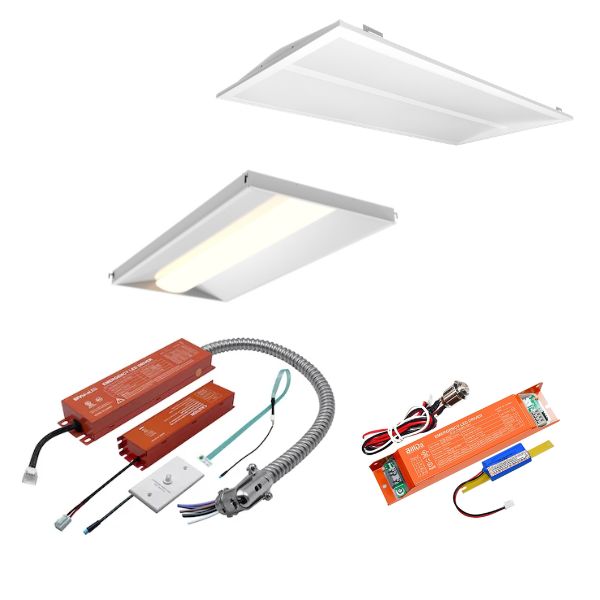
UL 924 distinguishes between two primary types of certified equipment: standalone emergency units, like the classic “bug-eye” lights, and integrated emergency luminaires. The latter involves standard light fixtures equipped with factory-installed battery backup drivers, offering a more streamlined and aesthetic solution while lowering long-term maintenance costs.
The 90-Minute Battery Backup Mandate
A cornerstone of emergency lighting compliance is the 90-minute battery backup mandate. During a power failure, it is critical that occupants have enough time to evacuate a building safely. This rule ensures that all emergency lights and exit signs remain illuminated using battery power for a minimum of an hour and a half.
This requirement is not a suggestion but a strict code enforced across North America. Emergency lighting manufacturers design their products specifically to meet this standard, providing reliable performance when it is needed most. We will now examine the specifics of this duration and the technology that makes it possible.
Minimum Illumination Duration and Path of Egress Compliance
The 90-minute illumination requirement is directly tied to providing enough time for safe egress from a building during a power failure. This duration is considered the minimum time necessary for occupants, including those with mobility challenges, to navigate the path of egress and reach safety. It also allows first responders to enter and operate within the building if required.
Compliance involves more than just duration; it also concerns the quality of light. The fixtures must provide sufficient lumens of light to maintain an average of one foot-candle along the floor of the designated egress path. This ensures that obstacles are visible and that exit routes can be clearly identified.
Ultimately, this combination of duration and brightness is what makes the path of egress truly safe. A fixture that dies after 10 minutes or one that provides only a faint glow is non-compliant and, more importantly, ineffective in a real emergency. Meeting the 90-minute rule is a fundamental aspect of life safety.
Battery Backup Technology in Integrated Emergency LED Fixtures
Modern integrated emergency LED fixtures rely on sophisticated battery backup technology to meet the 90-minute mandate. These systems typically use a compact, rechargeable battery paired with an emergency driver. Under normal conditions, the building’s AC power keeps the battery charged and ready while powering the LED lights. The charging circuitry is designed to prevent overcharging and maintain the battery’s health.
When a power outage occurs, the emergency driver automatically senses the loss of AC power and instantly switches to the rechargeable battery. This battery power is then used to operate the LED lights, often at a reduced light output, to conserve energy and ensure the fixture can last the full 90 minutes.
This integration delivers significant energy savings and reliability. LED lights are inherently efficient, which helps extend the battery’s runtime. The seamless switchover ensures there is no period of darkness, providing continuous, reliable illumination from the moment the power fails.
Types of Commercial Emergency Lighting Luminaires
There are several types of emergency lighting available for commercial spaces, each suited for different applications and aesthetic requirements. The choice of luminaire depends on factors such as the building’s design, code requirements, and budget. From traditional standalone units to modern integrated systems, the options cater to various environments.
Understanding the differences between these types of emergency lighting is crucial for specifiers and contractors. The following sections will compare the most common options and discuss their specific uses, helping you make an informed decision for your project.
Standalone Emergency Units vs. Integrated LED Emergency Luminaires
The two primary categories of emergency lighting fixtures are standalone units and integrated LED luminaires. Standalone units, often called “bug-eyes,” are self-contained devices with their own adjustable heads, batteries, and charging circuits. They are mounted separately from the general lighting. In contrast, integrated led emergency lighting incorporates the battery backup system directly into a standard architectural fixture.
Integrated solutions are rapidly becoming the preferred choice for new construction and major renovations. They offer a clean, unobtrusive appearance that doesn’t disrupt the architectural design. By combining general and emergency lighting into a single fixture, they also reduce installation labor costs and simplify wiring.
Below is a comparison of these two approaches:
| Feature | Traditional Standalone Units | Integrated LED Luminaires |
|---|---|---|
| Aesthetic Integration | Poor; often bulky and visually disruptive. | Excellent; hidden within the primary light fixture. |
| Maintenance & Testing | Requires testing of individual, separate units. | Can be tested with the main fixture; self-diagnostic options are common. |
| Installation Labor Costs | Higher; requires separate wiring and mounting for each unit. | Lower; installed as part of the general lighting circuit. |
| Longevity | Varies; components may age at different rates. | Typically high, sharing the long life of the LED fixture. |
Emergency Exit Signs and Remote Head Emergency Lights
Emergency exit signs are a specialized type of luminaire designed to clearly mark the path to safety. These signs must be internally or externally illuminated and remain lit for the full 90-minute duration during a power outage. They are a critical component of any egress system and work in tandem with other emergency lights.
Remote head emergency lights offer a flexible solution for illuminating specific areas. These are essentially lamp heads that are powered by a central battery system, often housed within a larger emergency light or exit sign combo unit. This allows for precise placement of light without needing a separate battery and charger at each location.
This approach is particularly useful for:
- Illuminating tight corners or stairwell landings.
- Providing coverage in long corridors.
- Adding light to areas where a full wall mount unit would be impractical.
By using remote heads, you can ensure that all parts of the egress path, including challenging spots, are properly lit, enhancing overall safety.
Key Features to Consider for Business Premises
When selecting emergency lighting for your business, several key factors beyond basic compliance should be considered. These features can impact long-term reliability, reduce maintenance costs, and simplify compliance management. Thinking about these aspects during the specification process can save significant time and money over the life of the building.
From automated testing capabilities to the quality of construction, the right choices will ensure your system is not only compliant but also robust and dependable. Let’s look at some of the most important features to evaluate.
Self-Diagnostic and Self-Testing Capabilities
One of the most valuable features in modern commercial emergency lighting is self-diagnostic and self-testing capability. These intelligent systems automatically perform the monthly and annual tests required by NFPA and OSHA, eliminating the need for labor-intensive manual testing. This feature significantly reduces maintenance costs and the risk of human error.
A fixture with self-diagnostic capabilities will typically use an LED indicator to show its status. A green light indicates normal operation, while a flashing or red light can signal a problem with the battery, charger, or lamp. This allows maintenance staff to identify and fix issues proactively, ensuring the system is always ready.
The benefits of using fixtures with these capabilities are clear:
- Reduced Labor Costs: Eliminates the need for a technician to physically test each light every month.
- Improved Reliability: Ensures tests are performed on schedule without fail.
- Simplified Compliance: Provides an easy visual check for building inspectors.
- Peace of Mind: Guarantees that the emergency system is functional when it’s needed most.
Construction Quality, Illumination Levels, and Code Compliance
The construction quality of an emergency luminaire is a direct indicator of its long-term reliability. Fixtures made from durable, flame-retardant materials like injection-molded thermoplastic are designed to withstand impacts and harsh conditions. High-quality construction ensures the fixture will perform as expected during an emergency and reduces the need for premature replacement.
Illumination levels are another critical consideration. The fixture must produce enough lumens of light to meet the one-foot-candle average required by code along the path of egress. Always check the manufacturer’s photometric data to confirm the fixture’s light output and distribution pattern are suitable for your specific installation height and spacing.
Ultimately, code compliance is the most important feature. Ensure that any luminaire you specify is explicitly listed as UL 924 compliant. This certification is your guarantee that the product has undergone rigorous testing and meets the strict safety and performance standards required for life safety equipment in North America.
Installation, Testing, and Maintenance for Safety Regulation Compliance
Proper installation and ongoing maintenance are just as important as selecting the right hardware. A correctly installed and regularly tested emergency lighting system ensures reliable performance and compliance with safety regulations. Neglecting these steps can lead to system failure, failed inspections, and severe liability.
Following a structured testing and maintenance plan reduces long-term maintenance costs and provides confidence that the system will function during an actual emergency. The following sections detail the requirements set by OSHA and the standard testing protocols you must follow.
OSHA Emergency Lighting Requirements and Best Practices
The Occupational Safety and Health Administration (OSHA) mandates that employers provide adequate and reliable emergency lighting in workplaces to ensure employees can exit safely during a power failure. While OSHA’s standards often reference codes like NFPA 101, they place direct legal responsibility on the employer to maintain a safe environment.
OSHA’s requirements emphasize that emergency lighting systems must be kept in a condition that ensures they will operate when needed. This includes proper installation, regular inspection, and functional testing. Following best practices recommended by emergency lighting manufacturers is key to meeting these obligations.
Key OSHA-aligned best practices include:
- Ensuring all exit routes are adequately illuminated.
- Maintaining clear and unobstructed paths to all exits.
- Keeping written records of all monthly and annual tests.
- Training relevant personnel on testing procedures and how to identify system faults.
Adhering to these practices is not just about compliance; it’s about protecting the lives of everyone in your building, from employees to visitors in public places.
Routine Monthly and Annual Testing Protocols
To ensure ongoing compliance and reliability, NFPA and OSHA require a strict regimen of routine testing. These protocols are divided into monthly and annual tests, each serving a distinct purpose. Failure to perform and document these tests can result in significant penalties.
The monthly test is a quick functional check. It requires activating the emergency lights for a minimum of 30 seconds to verify that they turn on and the lamps are working. This can be done through manual testing via a test button on the fixture or automatically by fixtures with self-testing capabilities.
The annual test is a full-duration test. For this, the emergency lighting system must be operated for the full 90-minute required runtime to ensure the batteries have enough capacity to last through a prolonged outage. This critical test confirms the health of the entire system. While it can be done manually, this is where self-testing fixtures provide the most value, drastically reducing labor and maintenance costs while providing complete peace of mind.
Conclusion
In summary, understanding the critical aspects of commercial emergency lighting luminaires—including compliance with NFPA 101 and UL 924 standards—is essential for ensuring safety and regulatory adherence in any commercial environment. By implementing systems that meet the 90-minute battery backup requirement and recognizing the benefits of integrated emergency LED luminaires, contractors and facility managers can significantly enhance their project outcomes. Prioritizing high-quality, compliant lighting solutions not only mitigates legal risks but also fosters confidence in your establishment’s safety measures. To explore how our engineering team can support your projects with UL 924 compliant OEM/ODM lighting solutions, bulk project quotes, or detailed spec sheets, don’t hesitate to reach out.
Frequently Asked Questions
How does emergency lighting with battery backup operate during a power outage?
When the main power fails during a power outage, an emergency lighting system senses the loss of electricity. This triggers an automatic activation of the internal battery. The system immediately switches to battery power, illuminating the fixtures to ensure escape routes are visible and safe without any manual intervention.
What is the difference between integrated LED emergency lights and traditional emergency luminaires?
Integrated LED emergency lighting incorporates the battery backup into a standard architectural light fixture for a seamless look and lower installation costs. Traditional luminaires, like “bug-eye” units, are separate, dedicated fixtures mounted solely for emergency use, making them more visually obtrusive than the integrated types of emergency lighting.
Are there commercial emergency lighting luminaires with self-diagnostic capabilities?
Yes, many modern commercial emergency lighting solutions feature self-diagnostic capabilities. These advanced fixtures automatically perform the required monthly and annual tests, significantly reducing maintenance costs associated with manual testing. They use indicator lights to signal their status, ensuring reliable performance and simplifying compliance checks.


Leave A Comment