
Key Highlights
- The right warehouse lighting supports safety, output, and lower operational expenses.
- Your layout, ceiling height, and shift schedule should guide fixture placement and fixture selection.
- LED lighting improves energy efficiency and can cut power use and maintenance demands.
- High bay, linear, and vapor tight fixtures each fit different warehouse conditions.
- Moisture, dust, and chemical exposure call for sealed lighting solutions.
- Reliable suppliers help you compare product quality, certifications, warranty terms, and long-term support.
Introduction
Warehouse lights do far more than brighten a large room. The right lighting fixtures affect how safely people move, how accurately tasks get done, and how much your facility spends on electricity and upkeep. If you manage new construction or plan a retrofit, you need a practical way to compare options. This guide explains how to assess your space, choose suitable LED warehouse lighting, and avoid costly mistakes in commercial and industrial environments.
Why Choosing the Right Warehouse Lighting Matters
Poor warehouse lighting creates problems you feel every day. It can reduce visibility in aisles, make picking harder, and increase strain in active work zones. In industrial facilities, weak light levels often lead to avoidable errors and slower movement.
Good lighting solutions improve worker safety while helping control energy costs. You also reduce disruption when fixtures last longer and need less service. The next sections explain how safety, productivity, and operating expense are shaped by your lighting choices.

The Impact of Lighting on Warehouse Safety
Safety starts with visibility. In busy industrial facilities, warehouse lights must help people see aisles, rack faces, floor changes, and equipment paths clearly. When lighting fixtures leave dark spots or heavy glare, the risk of collisions and missteps rises.
That is why sealed lighting solutions matter in harsh zones. Vapor tight LED fixtures contribute to worker safety by keeping moisture, dust, and chemical vapors away from the electrical components. In wet or dirty areas, that protection helps fixtures keep working instead of failing early.
You also gain a stronger safety profile in locations exposed to washdowns or humidity. A sealed housing, impact-resistant lens, and stable output support safer movement and more dependable light. In spaces where standard fixtures often break down, vapor tight units help maintain consistent conditions.
Lighting’s Role in Productivity and Accuracy
Productivity depends on how well your team can see. In warehouse aisles, clear lighting options help workers read labels, scan barcodes, and move goods with fewer delays. Stronger light levels also support better focus in shipping, staging, and inspection zones.
Accuracy improves when the light matches the task. Daylight-style output is often preferred in industrial environments where precise visibility matters. For example, 5000K can help with detail work, while 4000K suits many general commercial applications without feeling harsh.
The main benefits of installing vapor tight LED fixtures in a warehouse setting include dependable output, lower maintenance, and stronger protection in difficult areas. If your site has dust, moisture, or frequent cleaning, these lighting solutions help avoid outages that interrupt work and reduce throughput.
Energy Costs and Operational Expenses
Lighting can account for a large share of a commercial building’s power use, so fixture choice has a direct effect on warehouse lighting budgets. Traditional lighting such as fluorescent or metal halide systems uses more energy and usually demands more upkeep over time.
Vapor tight LED fixtures are energy efficient compared to traditional lighting options. Many retrofit projects reduce energy consumption by 50% to 75%, while also cutting service calls. In a warehouse, that changes both monthly bills and long-term maintenance costs.
- LED systems lower energy use during long operating hours.
- Sealed fixtures often reduce labor tied to bulb, ballast, or driver failures.
- Longer service life helps control operational expenses in hard-to-reach areas.
Assessing Your Facility’s Warehouse Lighting Requirements
Before you compare products, study how your building actually operates. Warehouse lighting works best when lighting fixtures match the room size, rack layout, and the conditions in each zone. A fixture that performs well in open floor space may fail in a narrow aisle or washdown area.
You should also think about fixture placement, operating hours, and the type of work performed under the lights. These factors shape the lighting solutions that make sense for your facility and set up the design choices covered below.
Evaluating Ceiling Height and Clearance for Lighting Placement
Ceiling height is one of the first things to measure. Warehouse lights in spaces with high ceilings need enough output to reach the floor effectively, while lower mounting heights need careful control so the light does not feel harsh or uneven.
The compiled guidance ties wattage to mounting range. Around 8 to 10 feet, many applications use 30W to 40W fixtures. At 10 to 14 feet, 40W to 60W is common. For 14 to 20 feet, 60W to 80W often fits, while higher ceilings may need 80W to 100W or more.
Typical installation requirements for vapor tight LED fixtures include a sound mounting surface, proper hardware, and correctly seated gaskets. Surface mount, wall, pendant, or canopy applications are possible, but the housing must stay sealed. Following manufacturer torque guidance matters because a poor seal can let moisture in.
Understanding Storage Rack Configuration and Obstructions
Racks and obstructions can block light long before it reaches the work surface. In warehouse aisles, tall storage racks create shadows that make lower shelves harder to see. That is why fixture spacing and beam direction need close attention.
Linear fixtures are often a strong fit for long runs between racks. They distribute illumination along the aisle length and can reduce gaps between pools of light. In contrast, open floor zones may be better served by broader warehouse lighting strategies.
To choose the right vapor tight LED fixture for a commercial storage area, start with the environment and layout. If the area has dust, moisture, or cleaning exposure, sealed lighting fixtures make sense. Then compare 4-foot and 8-foot options based on aisle length, needed coverage, and how many units you want to install.
Considering Operational Hours and Warehouse Shift Patterns
Some facilities run one shift. Others stay active around the clock. Your operational hours should shape warehouse lighting choices because long burn times magnify both energy use and maintenance demands. A fixture that looks affordable upfront may cost more over years of constant operation.
LED systems help most in buildings with extended schedules. They reach full brightness quickly and support controls that reduce waste when zones are empty. Occupancy sensors are useful in storage sections, secondary aisles, and support rooms where activity changes through the day.
Vapor tight LED fixtures improve workplace safety in industrial facilities by staying reliable in dirty or humid areas during long schedules. When lights remain stable through repeated shifts, employees can move more safely and avoid darkened zones caused by early fixture failure or contamination inside the housing.
Analyzing Typical Activities and Task Zones
Not every part of your building needs the same output. Shipping, picking, storage, inspection, and equipment areas all have different visual demands. Good warehouse lighting starts by separating these task zones instead of treating the whole facility as one uniform space.
This is also where fixture type matters. There are different types and sizes of vapor tight LED fixtures for various applications. Smaller 4-foot models fit tighter rooms and corridors, while 8-foot versions cover longer warehouse runs with fewer units and less wiring.
- Use compact fixtures in smaller production rooms, stairwells, or utility spaces.
- Use longer fixtures for loading docks, shipping areas, and extended aisles.
- Match color temperature to the task, with 4000K or 5000K commonly used.
Determining Appropriate Light Levels for Warehouses
Once you understand the building, the next step is setting practical light levels. Warehouse lights should support movement, storage, scanning, and more detailed tasks without creating heavy contrast. That means choosing lighting fixtures with the right lumen output, color temperature, and distribution for each zone.
Because tasks vary, there is no single setting for every facility. Instead, use lumen calculations and zone planning to compare lighting solutions across general storage, aisle lighting, inspection work, and shipping areas.
Warehouse Lux and Foot-Candle Recommendations
Project-specific lux and foot-candle targets should be based on your tasks, mounting height, and fixture spacing. The compiled guidance emphasizes using lumen calculations rather than guessing. That is especially important in warehouse lighting, where storage, shipping, and inspection areas often need different results.
Color temperature also plays a role. Neutral white 4000K works well for many indoor commercial applications, while 5000K is often preferred where detail visibility matters. In colder or specialized spaces, the right lighting fixtures should deliver full brightness quickly and remain stable.
| Ceiling Height | Recommended Wattage | Typical Lumen Output |
|---|---|---|
| 8-10 ft | 30W-40W | 3,600-4,800 lm |
| 10-14 ft | 40W-60W | 4,800-7,200 lm |
| 14-20 ft | 60W-80W | 7,200-9,600 lm |
| 20+ ft | 80W-100W+ | 9,600-12,000+ lm |
Vapor tight LED fixtures protect against moisture and dust through sealed gaskets and enclosed housings that keep contaminants away from the LEDs and driver.
Ensuring Proper Lighting Uniformity Across Work Areas
Uniformity is what keeps one section from feeling bright while the next feels dim. In warehouse aisles and open floor areas, that balance depends on fixture placement, spacing, mounting height, and the way the beam is distributed across the work surface.
Linear runs can help create a more even pattern in long aisles because the light extends along the path instead of concentrating in isolated circles. In targeted areas, ceiling-mounted fixtures may be better if you need stronger downward focus rather than long continuous coverage.
Vapor tight LED fixtures help create uniform lighting when you choose the correct size, output, and mounting pattern for the space. Clean lenses and sealed housings also help. Since dirt and moisture stay out, the fixture maintains more consistent performance over time than many standard fixtures in difficult conditions.
Addressing Specialized Requirements for Inspection and Shipping Zones
Inspection zones and shipping zones usually demand clearer visibility than bulk storage areas. If workers need to verify labels, sort products, or check packaging quality, the lighting fixtures should support contrast and detail without excessive glare.
Color temperature can help here. In industrial spaces, 5000K is often chosen for better visual clarity, while 4000K works well for many general operations. In food processing and cold storage, LEDs are also useful because they reach full brightness instantly, even in low temperatures.
- Choose sealed fixtures if the area faces moisture, dust, or washdowns.
- Use longer fixtures in extended shipping lanes to reduce fixture count.
- Match output and spacing to the work being done, not just the room size.
Types of LED Fixtures for Warehouse Applications
You have several LED lighting categories to consider for a warehouse. The main options include high bay units for open space, linear systems for aisles, vapor tight lighting for demanding conditions, and tube-ready products for simpler replacement projects.
Each style solves a different problem. The best choice depends on your layout, exposure to dust or water, mounting height, and maintenance goals. The following sections compare where these lighting fixtures work best and what tradeoffs come with each option.
LED High Bay Fixtures for Large, Open Spaces
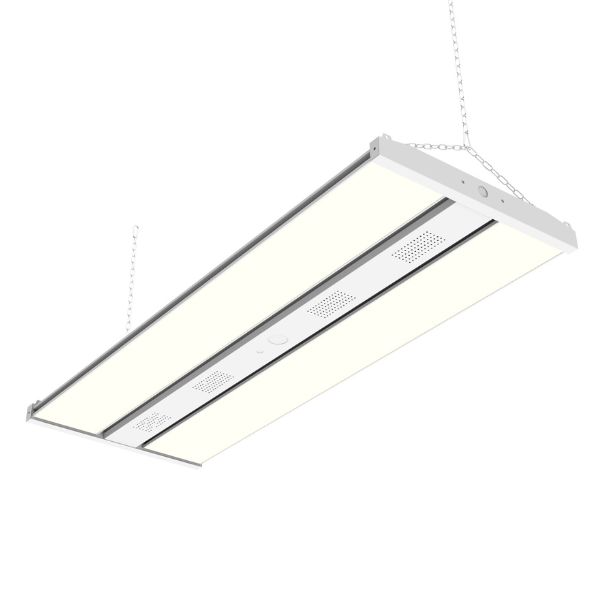
A high bay light is designed for large, open interiors with high ceilings. In warehouses with broad floor areas and fewer obstructions, these lighting fixtures can deliver strong output from above and cover significant square footage with fewer units.
This option is often preferred where you need concentrated illumination from greater mounting heights. If your facility has open staging areas or large production floors, LED lighting in a high bay form can be an efficient approach. It is less suitable for narrow aisles where rack rows block the beam.
Installation still matters. Even though this section focuses on high bays, the same discipline applies in sealed environments. Fixtures need the correct mounting hardware, sound structure, and proper placement. In spaces with moisture or contamination, vapor tight alternatives may be the better fit than a standard high bay light.
Linear LED Fixtures for Racked Aisles
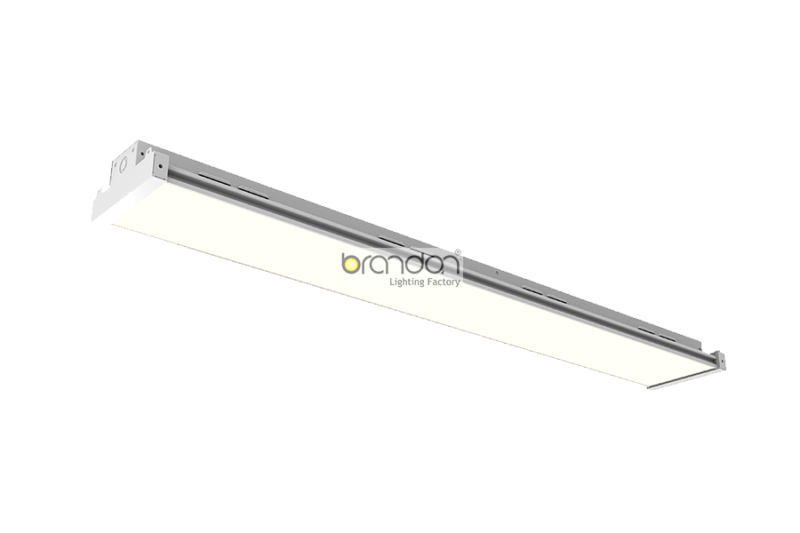
Linear fixtures are a practical answer for long warehouse aisles. Their shape supports continuous runs and helps spread light along rack rows, which makes them useful where visibility needs to stay consistent from one end of the aisle to the other.
Linear high bay lights can also serve taller aisle configurations, especially when racks create shadows that broad-beam fixtures struggle to overcome. These lighting solutions work well where you want a more elongated distribution rather than a single concentrated pool of light.
There are also different vapor tight sizes for these kinds of runs. A 4-foot fixture fits shorter sections and tighter layouts, while an 8-foot unit can cover more distance with fewer housings. That flexibility is helpful when you are balancing coverage, labor, and fixture count.
Vapor Tight LED Fixtures for Harsh or Moist Environments
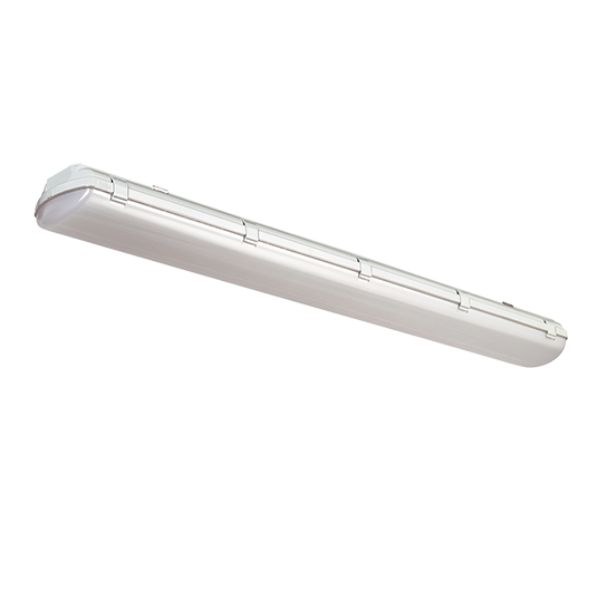
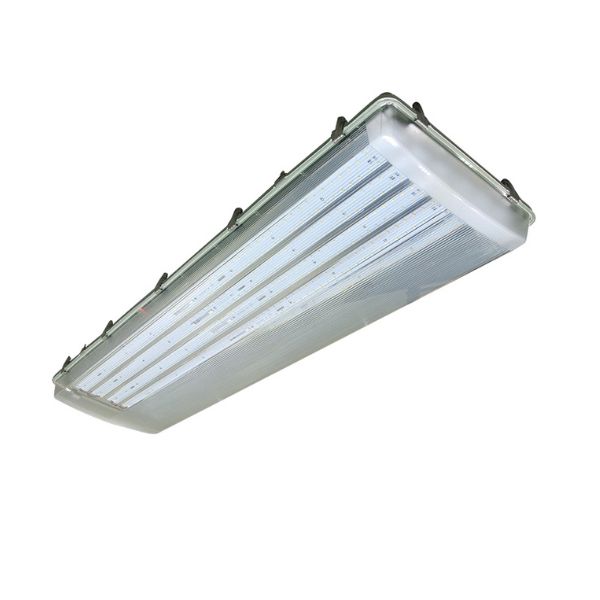
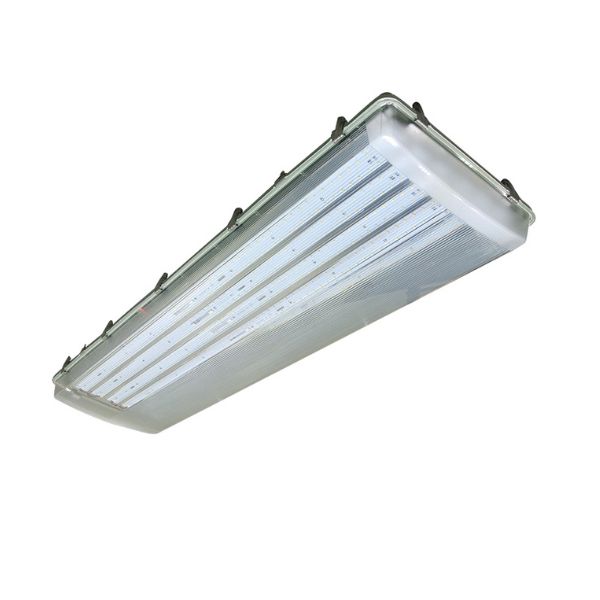
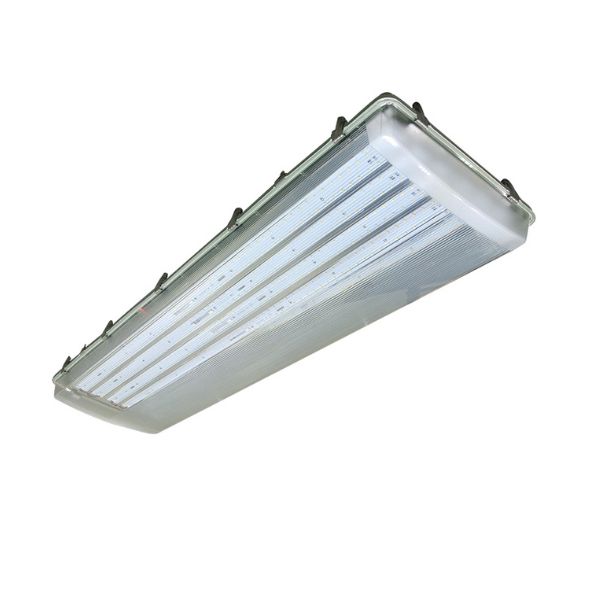
Vapor tight fixtures are sealed LED units built to resist moisture, dust, debris, and chemical vapors. They use compression gaskets and durable housings, often polycarbonate or fiberglass, to protect the LEDs and driver from contamination that would quickly damage standard fixtures.
These products are commonly used in harsh environments such as warehouses, parking garages, car washes, food processing plants, cold storage rooms, tunnels, coastal facilities, agricultural buildings, gyms, and pool areas. In washdown zones, IP66 is often preferred, while many other sites perform well with IP65.
- Choose vapor proof fixtures where water jets or heavy humidity are present.
- Use them in wet environments that would shorten the life of open fixtures.
- Consider sealed units when cleaning chemicals or airborne dust are common.
Tube-Ready LED Fixtures and Their Advantages
Tube-ready fixtures can make sense when you want a familiar form factor for upgrades. In some projects, they offer a simpler path from older fluorescent layouts to LED lighting without a full redesign of every mounting location.
Their advantage is often project convenience. For buyers comparing lighting fixtures, this can help limit disruption during a retrofit. Still, you should weigh that convenience against environmental conditions, expected service life, and future maintenance costs in the space.
When buying vapor tight LED products online, do not focus on price alone. Check the housing quality, the protection rating, certifications, mounting options, and warranty support. If your building faces moisture or dust, a true sealed fixture may be a better long-term choice than a basic tube-ready approach.

Comparing LED Fixture Types: Pros and Cons
No single fixture solves every warehouse problem. The best LED lighting decision comes from comparing each product against your layout, mounting height, work tasks, and environmental exposure. That is where fixture selection becomes more than a catalog exercise.
Some lighting solutions reduce energy use best in open areas. Others are built for aisle coverage or moisture resistance. Looking at both strengths and limits will help you choose equipment that performs well now and remains practical to maintain later.
Where and When to Install High Bay and Linear Fixtures
Use a high bay light where you have open floor space and enough mounting height to take advantage of its wider coverage. These warehouse lights are commonly suited to broad industrial applications such as staging areas, large manufacturing floors, and general storage without tight rack rows.
By contrast, linear fixtures work better where the room is organized into long paths. In aisles, corridors, and loading lanes, their shape supports more controlled fixture placement and a steadier spread of illumination over distance.
You can also choose different vapor tight sizes for similar layouts. A 4-foot sealed fixture fits narrower or shorter sections, while an 8-foot version covers long runs more efficiently. That makes size selection an important part of both layout planning and labor control.
Benefits of Vapor Tight LED Fixtures Over Other Options
Vapor tight lighting stands out when your space is dirty, damp, or exposed to cleaning chemicals. Compared with many standard fixtures, these products are built with robust construction that helps prevent premature failure and protects internal components over long operating periods.
They also support strong energy efficiency. In many retrofit cases, switching to sealed LED units cuts electricity use significantly while reducing service interruptions. That combination makes fixture selection easier when you expect long hours, harsh conditions, or difficult access for repairs.
- Sealed housings reduce contamination-related failures.
- LED operation lowers energy use compared with older systems.
- Longer life helps shrink maintenance costs in active warehouse settings.
Limitations or Special Considerations for Each Fixture Type
Every option has tradeoffs. High bay products may not be ideal for very narrow aisles, while linear systems may not be the best answer for every open-floor design. Tube-ready products can simplify upgrades, but they are not automatically the strongest choice for difficult environmental conditions.
Vapor tight fixtures also have limits. They usually cost more upfront than standard lighting fixtures because of their sealed build and corrosion-resistant materials. They are also industrial in appearance, so they are not intended for decorative spaces such as lobbies or retail settings.
When reviewing lighting options online, check IP rating, housing material, certifications, warranty, and installation details. Fixture selection should also reflect cleaning methods, water exposure, and whether the area needs surface mount, pendant, or other mounting methods to maintain the seal.
Energy Efficiency Factors for Warehouse Lighting
Energy performance is one of the biggest reasons facilities move to LED lighting. Better energy efficiency means lower utility bills, but it also affects cooling load, replacement cycles, and how well your project qualifies for incentives or controls.
To compare lighting fixtures properly, look beyond wattage alone. You should consider lumens per watt, expected service life, product listings, and whether controls such as sensors can reduce waste when areas are not in use.
Understanding Lumens Per Watt and Lighting Efficacy
Lumens per watt tells you how much light a fixture produces for the power it uses. That makes it one of the clearest ways to compare energy efficiency across LED lighting products serving the same purpose.
A fixture with better efficacy can support the same task while using less electricity. In warehouses with long operating schedules, that difference adds up quickly. It is one reason retrofits from fluorescent or other traditional systems often produce major energy savings.
Vapor tight LED fixtures are energy efficient compared to traditional lighting options because they combine lower power demand with long service life. In many facilities, sealed LED upgrades reduce electricity use by 50% to 75%. If you add controls, the savings can be even stronger.
The Value of DLC-Qualified Products and Rebates
Product qualification matters because it can affect both confidence and project economics. DLC-qualified products are often tied to utility rebate programs, which can improve payback when you upgrade warehouse or industrial lighting.
For buyers, that means LED lighting is not only about lower monthly bills. Qualified products may open access to rebates that reduce upfront cost. In larger facilities, this can make a meaningful difference in budgeting and project approval.
Because efficient vapor tight fixtures and other LED lighting solutions often meet these program requirements, they can support both energy savings and better return on investment. It is worth confirming eligibility before purchasing, especially for broad retrofit work or multi-zone upgrades.
Maximizing Savings with Occupancy Sensors and Smart Controls
Controls help you avoid burning light where no one is working. In storage sections, utility rooms, and less active aisles, occupancy sensors can reduce unnecessary runtime and lower energy costs without sacrificing needed visibility when people enter the area.
Smart controls also pair well with long-life LED systems because they extend the benefit beyond fixture efficiency alone. When lights operate only when needed, you reduce both electricity use and wear on the components.
- Occupancy sensors cut waste in intermittently used zones.
- Smart controls support better scheduling across large facilities.
- Reliable lighting activation helps maintain safer visibility in industrial facilities.
Cost Analysis: Installation and Maintenance
Budget planning should include more than fixture price. Installation costs, service requirements, lift access, and downtime all influence the real value of warehouse lighting. A lower-cost fixture may become expensive if it fails often or is hard to replace.
That is why commercial buyers often compare projects on total cost over time. The next sections look at new construction, retrofit decisions, long-term energy savings, and hidden expenses that are easy to miss during planning.
New Construction vs Retrofit LED Lighting Installation
New construction gives you more freedom. You can plan wiring, mounting points, and fixture spacing around the building from the start. That often helps control installation costs and lets you choose the best LED lighting layout for each zone.
A retrofit is different. Existing conduit, old fixture locations, and production schedules may limit your options. In these projects, buyers often weigh the speed of replacement against long-term performance, especially in areas that already suffer from dust or moisture.
Vapor tight LED fixtures are commonly used in retrofit and new-build applications where harsh conditions are expected. Warehouses, parking garages, food processing spaces, cold storage, tunnels, and loading areas often benefit because sealed lighting fixtures reduce future service problems after installation.
Projecting Long-Term Maintenance and Energy Savings
Long-term value comes from fewer failures and lower power use. LED lighting with a long lifespan can operate for 50,000 hours or more, which greatly reduces replacement cycles compared with older fluorescent systems in hard-working facilities.
That matters even more in high or difficult areas where every service call needs labor, access equipment, and time. Sealed fixtures also help prevent corrosion and internal damage, which means the light output remains stable for longer in rough conditions.
The main benefits of vapor tight LED fixtures in a warehouse setting are reduced maintenance costs, stronger reliability, and significant energy savings. For facilities with wet or dusty zones, those savings are not just electrical. They also come from fewer interruptions and less labor.
Hidden Costs to Consider When Upgrading Warehouse Lighting
Many upgrade plans focus on fixture price and miss the items that affect total ownership cost. If a product is poorly matched to the space, you may face early failures, extra labor, and uneven results that require changes after the first installation.
Installation costs can also rise when fixture selection does not fit the building. Fewer, longer fixtures may reduce wiring and junction boxes in aisle runs, while a poor match can increase labor. Online purchases should be checked carefully before approval.
- Confirm the IP rating and build quality for the actual environment.
- Review warranty coverage and supplier support before ordering.
- Check mounting compatibility so your lighting solutions install correctly.
Safety Enhancements with Modern Warehouse Lighting
Modern warehouse lighting supports more than visibility. It can strengthen worker safety through steadier illumination, better zone coverage, and equipment suited to demanding conditions. In active facilities, those factors help reduce risk in traffic lanes, stairwells, and service areas.
Emergency lighting and sealed products also matter when conditions are difficult. The next sections cover how better lighting solutions improve movement, support backup needs, and hold up in dusty, wet, or hazardous environments.
How Lighting Improves Visibility and Navigability
People move faster and more safely when they can read the space clearly. Warehouse lights should make aisle edges, rack openings, dock areas, and floor transitions easy to see. Good visibility supports smoother travel for both workers and equipment.
Lighting fixtures that maintain steady output are especially important in high-traffic zones. Dark patches or heavy contrast can slow movement and increase confusion. In large buildings, well-planned lighting solutions also help staff orient themselves from one zone to another.
Vapor tight LED fixtures contribute to workplace safety in industrial spaces because they keep performing in conditions that often damage standard products. When moisture, dust, or fumes are present, sealed housings help preserve dependable light in warehouse aisles and other critical pathways.
Emergency and Backup Lighting Requirements
Emergency lighting should not be treated as an afterthought. If normal power is interrupted, backup lighting helps people exit, pause equipment safely, and avoid panic in dark interior areas. That is especially important in large warehouses and service corridors.
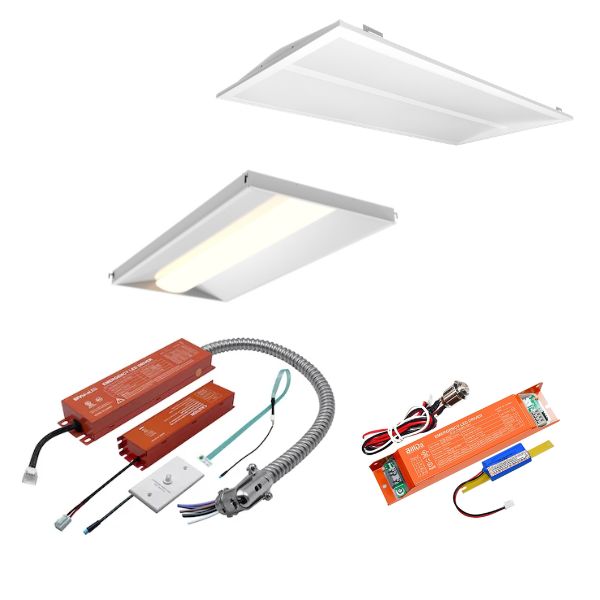
Some sealed products are available with emergency battery backup options. This can be useful when the same area also faces moisture or dirt that could shorten the life of open emergency units. In those cases, matching lighting fixtures to the environment is a practical safety step.
Vapor tight fixtures are suitable for both indoor and outdoor warehouses when the rating and mounting method match the conditions. Covered outdoor areas, canopies, and damp service locations can all benefit from LED lighting that resists water and dust exposure.
Lighting Choices for Wet, Dusty, or Hazardous Environments
Wet and dirty locations need more than ordinary shop lights. In harsh environments, dust, humidity, cleaning spray, and airborne residue can quickly damage open housings. That is why vapor proof or tight lighting is often the safer and more durable option.
The protection comes from sealed gaskets, enclosed housings, and durable lenses that block contaminants from reaching the electronics. IP65 works for many areas, while IP66 is better where water jets, heavy washdown routines, or direct spray are part of normal operation.
- Food processing zones often need sealed, easy-to-clean fixtures.
- Dust-heavy areas benefit from housings that block particle entry.
- Washdown areas require fixtures built to resist repeated water exposure.
Selecting a Reliable Commercial Lighting Supplier
Choosing the right product is only part of the job. Your lighting supplier also affects performance, support, and the ease of managing a project from first quote to final installation. That is true for standard warehouse fixtures and sealed industrial products alike.
A strong supplier helps you verify product quality, compare lighting solutions, and understand what is covered after the sale. For buyers working on complex facilities, that guidance can prevent expensive missteps and delays.
Verifying Product Quality and Certifications
Start with the basics. Product quality should be visible in the housing, lens, seals, and published protection rating. In demanding spaces, cheap materials can lead to cracking, corrosion, or early failure that wipes out any initial savings.
Certifications matter as well. Depending on your market and project type, buyers should confirm the relevant listings and compliance details before ordering. For sealed products, the protection rating is especially important because it tells you how the fixture handles dust and water exposure.
If you are buying online, review the lighting supplier’s specifications closely. Check IP rating, certifications, housing material, mounting options, and intended use. A reliable LED lighting supplier should provide clear documentation, not vague claims about performance in harsh conditions.
Warranty, Support, and Supplier Track Record
Support after purchase can be just as important as the fixture itself. If you are planning a large warehouse job, you may need help with layout planning, lumen calculations, rebate paperwork, or confirming which product fits each zone.
A dependable lighting supplier should also stand behind product quality with a clear warranty and responsive service. This becomes critical when you are ordering LED lighting for demanding applications where replacing the wrong fixture is costly.
- Review the warranty length and what failures it actually covers.
- Ask whether the supplier can help with layout and product matching.
- Look for a track record with commercial or industrial projects.
Conclusion
In conclusion, choosing the right warehouse lighting is crucial for enhancing safety, productivity, and energy efficiency. By thoroughly assessing your facility’s specific needs—such as ceiling height, storage configurations, and operational hours—you can determine the appropriate lighting levels and fixture types. Evaluating options like LED high bay, linear, and vapor tight fixtures will help you find the best fit for your environment. Additionally, considering energy efficiency and installation costs will ultimately lead to long-term savings. By selecting a reliable supplier and avoiding common mistakes, you will ensure that your warehouse lighting not only meets regulatory standards but also creates a safer and more productive workspace. If you have any questions or need assistance in your lighting project, get in touch!
Frequently Asked Questions
Are vapor tight LED fixtures suitable for both indoor and outdoor warehouses?
Yes. Vapor tight fixtures work in both indoor and outdoor areas when the rating matches the environment. For warehouses, they are a strong LED lighting choice in damp interiors, covered loading zones, canopies, and other industrial applications where dust or water exposure can damage standard lighting solutions.
What should I consider when buying vapor tight LED fixtures online?
Check product quality first. Review the housing material, IP rating, certifications, mounting method, and intended use. You should also compare warranty terms and supplier support. When buying vapor tight fixtures online, clear technical details matter more than low price because good LED lighting depends on the right sealed lighting solutions.
How do vapor tight LED fixtures improve workplace safety in industrial facilities?
Vapor tight fixtures improve worker safety by maintaining dependable light in harsh environments where moisture, dust, or fumes can cause early failure. In industrial facilities, that means fewer dark zones, steadier visibility, and more reliable LED lighting for aisles, work areas, and service spaces.


Request Factory-Direct Quotes & Spec-Grade Pricing
Supplying Premium UL-Listed Linear Fixtures Since 2010




Leave A Comment