
Key Highlights
- LED linear strip fixtures offer significant energy savings and superior energy efficiency compared to traditional fluorescent lighting.
- Available in 4ft and 8ft lengths, these fixtures provide versatile solutions for both task lighting in smaller areas and uniform illumination in large commercial settings.
- Modern features like selectable wattage and color temperature allow for on-site customization, reducing SKU complexity for distributors.
- Contractor-friendly designs, including tool-less entry and continuous row mounting, accelerate installation and lower labor costs.
- DLC Premium 5.1 and UL certifications ensure compliance and maximize utility rebate opportunities for businesses.
Introduction
Welcome to a practical guide on leveraging LED linear strip lights for maximum return on investment in your commercial projects. When outfitting large spaces like warehouses, supermarkets, or industrial facilities, the choice of lighting is critical. It impacts everything from installation timelines to long-term operational costs. This article explores the strategic advantages of using 4ft and 8ft rigid LED linear strip fixtures, focusing on the features that matter most to contractors, brand owners, and facility managers in modern commercial settings.
Commercial-Grade LED Linear Strip Fixtures: Defining the Standard
In commercial settings, a linear strip fixture is not a decorative accessory; it’s a workhorse. These robust lighting solutions are designed for performance, durability, and efficiency. Unlike lighting designed for residential use, commercial-grade fixtures prioritize lumen output, structural integrity, and ease of maintenance to withstand the demands of high-traffic environments.
One of the most significant advantages over traditional lighting is their superior energy efficiency and long lifespan. This combination dramatically reduces both electricity bills and replacement costs over the fixture’s life, delivering a lower total cost of ownership that facility owners value. We will explore what sets these fixtures apart and their ideal applications.
What Sets Rigid LED Batten Fixtures Apart from Flexible Tape Lights?
It is crucial to distinguish between the industrial-grade fixtures discussed here and flexible LED tape lights. Flexible tape is essentially a circuit board with LEDs, often used for accent lighting, under-cabinet tasks, or creating specific lighting effects. While versatile for decorative purposes, it lacks the structural integrity and high-lumen output required for primary illumination in a commercial space.
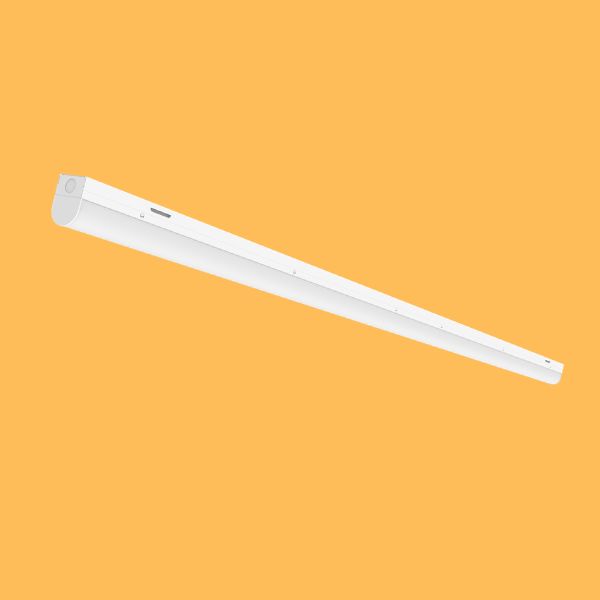
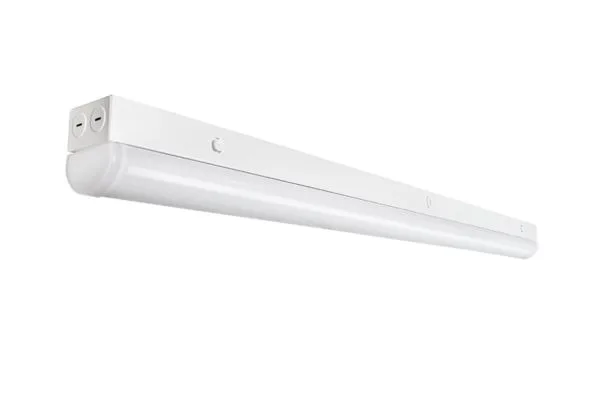
Rigid industrial batten fixtures, often called LED strip lights or shop lights, are entirely different. These are self-contained light fixtures built with durability in mind. Key differentiators include:
- A protective housing, typically made of cold-rolled steel.
- A diffuser lens (often PMMA or PC) to ensure even light distribution and protect the LEDs.
- Integrated drivers and wiring access for direct connection to building mains.
These fixtures are designed for surface mounting or suspension, providing powerful, reliable illumination for large-scale projects. Their construction is focused on longevity and performance, not just aesthetic appeal, making them the standard for warehouses, retail aisles, and utility areas.
Key Applications for 4ft and 8 Foot LED Strip Lights in Large Commercial Spaces
The functional design of LED linear strip fixtures makes them suitable for a wide range of applications in commercial and industrial environments. Their ability to deliver bright, uniform light is essential for safety and productivity. Unlike lighting focused on ambient or decorative lighting effects, these fixtures are built for clear, functional illumination across large areas.
Their versatility allows them to be the primary lighting solution in various zones within a single facility. You will find these fixtures deployed in numerous commercial settings, including:
- Retail and Supermarkets: Illuminating long grocery aisles and back-of-house storage areas.
- Warehouses and Distribution Centers: Providing clear visibility in high-ceiling racking aisles and packing stations.
- Utility and Service Areas: Lighting stairwells, corridors, workshops, and parking garages.
The choice between a 4ft and 8ft fixture often depends on the specific layout and operational needs of the space, allowing for a tailored approach to lighting design that maximizes efficiency.


4ft vs. 8 Foot LED Strip Lights: Functional Versatility for Facility Layouts
Choosing between 4ft and 8ft linear lights is a strategic decision that directly impacts installation efficiency and lighting performance in different facility layouts. While both provide excellent illumination, their sizes are optimized for distinct applications within a commercial project. Understanding this functional versatility is key to efficient project planning.
For electrical contractors and lighting designers, selecting the right length can streamline installation and reduce the total number of fixtures required. Let’s examine why each length has become a standard for specific use cases in commercial settings.
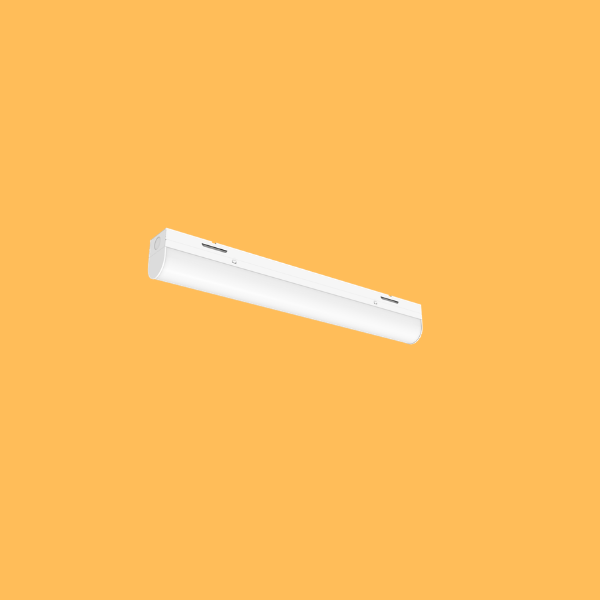
Why the 4ft Industrial LED Batten Is the Gold Standard for All-Purpose Use
The 4ft industrial LED batten is widely considered the “gold standard” for its exceptional versatility. Its compact size makes it the perfect choice for spaces where longer fixtures would be impractical or inefficient. Think of stairwells, small storage closets, mechanical rooms, and workshops. In these areas, a 4ft fixture provides ample illumination without overkill. When choosing the right LED linear strip light for your commercial space, consider the dimensions and purpose of the area first.
For contractors, the 4ft fixture is a go-to for its adaptability. It can be installed as a standalone unit for task lighting or mounted in continuous rows for shorter hallways and corridors. This flexibility simplifies inventory for electrical distributors and ensures contractors have a reliable solution for the varied spaces within a single large-scale project.
From a facility owner’s perspective, using a standard 4ft fixture in these smaller, essential areas simplifies maintenance. Reducing the variety of fixtures and lamps on-site lowers long-term maintenance costs and streamlines the replacement process, contributing to a lower total cost of ownership.
Project Acceleration with 8ft (Tandem) LED Strip Lights in Aisle and Warehouse Design
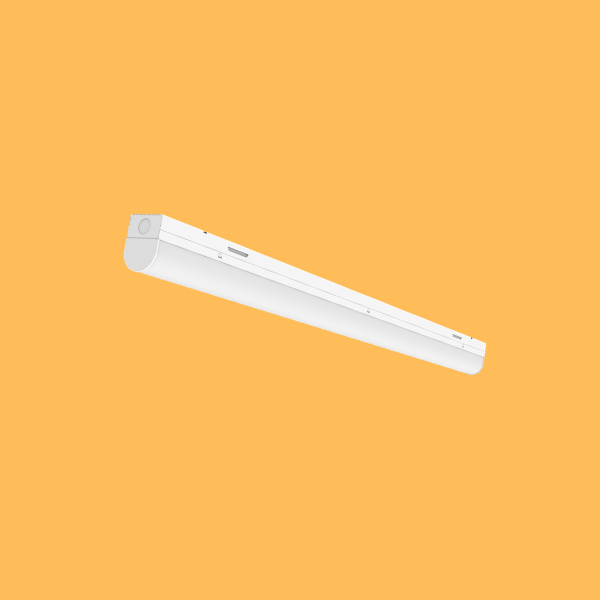
For long, uninterrupted spaces like supermarket aisles and warehouse racking, the 8ft LED strip light is a project accelerator. Its primary advantage is reducing the number of fixtures an electrical contractor needs to install, which translates directly into labor savings. Answering the question “Can LED linear strip lights be linked?”, yes, these fixtures are specifically designed for this purpose.
By using an 8ft fixture, you can cover the same distance with half the units compared to a 4ft model. This offers several key benefits for installers:
- Fewer mounting points to drill and secure.
- Fewer electrical connections to make.
- Faster alignment for continuous row mounting.
This efficiency is critical in large-scale warehouse lighting projects or retail rollouts where time is money. For a facility owner, the cleaner look of fewer fixtures and seams is an added aesthetic benefit. The 8ft tandem fixture is the ultimate lighting solution for achieving uniform, high-efficiency illumination in expansive areas quickly and cost-effectively.
Contractor-Friendly Innovation in LED Linear Strip Fixtures
Modern LED linear strip fixtures are engineered with the electrical contractor in mind. Manufacturers understand that labor is one of the most significant costs in any lighting project, so contractor-friendly features are no longer a luxury—they are a necessity. These innovations are focused on making installation faster, simpler, and safer.
These design improvements lead to tangible cost savings by reducing on-site hours and minimizing the potential for installation errors. Below, we’ll examine the specific features that make these lighting solutions a preferred choice for professionals aiming for project efficiency.
Tool-less Entry, Knockouts, and Continuous Row Mounting Features for Speedy Installations
When it comes to installation, every second saved on each fixture adds up to significant labor savings across a large project. That’s why modern linear strip fixtures incorporate features designed for project acceleration. Tool-less entry, for example, allows contractors to access the wiring compartment without fumbling for screws. A simple press-release button or latch opens the fixture, streamlining the connection process.
Strategically placed knockouts on the ends and back of the fixture are also essential. This feature answers a key part of how to install LED linear strip lights efficiently. These knockouts enable:
- Easy pass-through of wiring for continuous row mounting.
- Flexible entry points for power feeds, accommodating various junction box locations.
- Quick connection of multiple fixtures in a line.
Together with aligner brackets or end caps designed for continuous row mounting, these features create a seamless installation workflow. The contractor can quickly mount, connect, and move to the next fixture, turning a tedious task into a rapid, repeatable process.
How Labor-Saving Design Reduces Site Hours and Project Overheads
The impact of labor-saving design goes straight to the project’s bottom line. For an electrical contractor, reducing site hours means you can complete jobs faster, take on more projects, and submit more competitive bids. Features like tool-less wiring access and pre-installed mounting brackets can cut installation time per fixture by several minutes. In a warehouse with 500 fixtures, this translates into days of saved labor.
This efficiency also benefits the facility owner by minimizing disruption to business operations. In a retail environment, faster installation means aisles can reopen to customers sooner. In an industrial setting, it reduces downtime in production or utility areas. The initial investment in fixtures with smart, labor-saving designs pays for itself through direct cost savings on labor.
Ultimately, these features lower project overhead for everyone involved. They reduce the chances of installation errors that require costly rework and ensure the project stays on schedule and within budget. This focus on practical, real-world efficiency is what sets professional-grade lighting solutions apart.
Selectable CCT & Wattage: SKU Reduction and On-Site Customization
One of the most impactful innovations in commercial lighting is the introduction of selectable color temperature (CCT) and wattage. This technology embeds multiple options into a single fixture, controlled by a simple switch on the housing. For distributors and contractors, this means fewer SKUs to manage and stock.
This on-the-fly flexibility allows for on-site customization, ensuring the lighting meets the precise needs of different zones within commercial settings. We’ll look at how this feature directly benefits OEMs, supermarkets, and other large-scale operations.
The Benefits of CCT & Wattage Selectable LED Strip Lights for Supermarkets and OEMs
Selectable CCT and wattage mean that a single LED linear strip light can be adjusted to meet different requirements. For supermarkets, this is a game-changer. The produce section may require a different color temperature to make fresh food look appealing, while the main aisles need bright, clear light for navigation. A selectable fixture allows facility managers to fine-tune the lighting without needing to order different products.
For lighting brand owners (OEMs) and electrical distributors, the benefits are primarily operational. Stocking a single, versatile fixture instead of multiple variations simplifies inventory management and reduces carrying costs. The advantages include:
- SKU Reduction: One product can replace up to nine different fixed-wattage/CCT models.
- Increased Flexibility: Contractors can order one fixture type for a whole project and make adjustments on-site.
- Reduced Risk: Eliminates the problem of ordering the wrong color temperature or brightness level for a specific area.
This technology empowers installers to make final decisions on the job site, ensuring the lighting solution perfectly matches the client’s expectations while streamlining the supply chain for OEMs.
Case Example: Tailoring Brightness and Energy Use in Retail and Storage Environments
Consider a large retail store with both a main sales floor and a back-of-house storage area. On the sales floor, high brightness is needed to attract customers and showcase products effectively. In the storage area, the primary need is for safe navigation, so a lower brightness level is sufficient and more energy-efficient. With selectable wattage, a single fixture model can be used for both zones.
The installer can set the fixtures on the sales floor to their highest wattage for maximum lumen output. In the storage room, the same fixtures can be switched to a lower wattage setting. This simple adjustment provides tailor-made lighting that optimizes both visibility and energy consumption.
This approach delivers significant energy savings compared to using high-output fixtures everywhere. LED linear strip lights are already far more energy efficient than fluorescent fixtures, and selectable technology enhances this advantage. It allows facility managers to avoid over-lighting spaces, reducing energy bills without compromising safety or function.
Compliance, Longevity, and Utility Rebate Optimization
In the world of commercial lighting, certifications are not just stamps of approval; they are critical tools for ensuring safety, performance, and financial return. Compliance with standards from organizations like DesignLights Consortium (DLC) and Underwriters Laboratories (UL) is non-negotiable for professional-grade lighting solutions.
These certifications directly impact a project’s bottom line by unlocking access to utility rebate programs and guaranteeing the fixture’s longevity and reliability. Understanding these standards is essential for contractors and facility owners looking to maximize their investment.
DLC Premium 5.1, UL Listing, and Lumen-Per-Watt Efficacy: What Electrical Contractors and OEMs Need to Know
When sourcing LED lighting, especially when buying LED linear strip lights online, certifications are the first thing to verify. For business owners, the DLC Premium 5.1 listing is particularly important. This certification signifies that a fixture meets the highest standards for energy efficiency and quality.
Fixtures with a DLC Premium 5.1 rating typically qualify for the largest possible utility rebates offered by power companies across the U.S. This can significantly reduce the upfront cost of a lighting upgrade, accelerating the return on investment. Key compliance markers to look for include:
- DLC Premium 5.1: Ensures top-tier energy efficiency (lumen-per-watt efficacy) and quality.
- UL Listed: Certifies that the fixture has been tested and meets national safety standards, crucial for electrical inspections and insurance purposes.
- High Lumen-Per-Watt (LPW): This metric, a key part of DLC evaluation, proves the fixture’s high performance in converting power into light.
For electrical contractors, specifying compliant products avoids project delays during inspection. For OEMs, these certifications are a mark of brand reputation and quality assurance.
Built for the Demands of High-Traffic Commercial Environments
Commercial environments are tough on fixtures. From potential impacts in a busy warehouse to the constant operation in a 24/7 retail store, durability is paramount. Professional-grade LED strip lights are engineered with robust materials to ensure high performance and a long service life, even under demanding conditions.
This focus on durability ensures reliable illumination and protects the owner’s investment by minimizing maintenance and replacement needs. Let’s examine the specific materials and design choices that contribute to the resilience of these fixtures in commercial settings.
Cold-Rolled Steel Housings and Anti-Yellowing Lenses for Maximum Durability
The backbone of a durable linear strip fixture is its housing. Most high-quality commercial fixtures are made from cold-rolled steel, which provides excellent structural rigidity and impact resistance. This protects the internal components—the LEDs and driver—from damage in busy environments like workshops or loading docks. The steel is typically finished with a powder coat to prevent corrosion.
Equally important is the lens or diffuser. Lower-quality fixtures often use materials that can yellow and become brittle over time when exposed to UV light and heat from the LEDs. This not only looks bad but also reduces light output. Premium lighting solutions use high-transmittance PMMA (acrylic) or PC (polycarbonate) lenses. These materials are chosen for their anti-yellowing properties, ensuring consistent light quality and aesthetic appeal for years.
While these industrial-grade fixtures are exceptionally durable for indoor use, their suitability for outdoor applications depends on their IP (Ingress Protection) rating. Most are designed for dry or damp indoor locations, not direct exposure to weather unless specified.
Maintenance and Total Cost of Ownership Benefits for Retail and Industrial Operations
For retail and industrial operations, the total cost of ownership (TCO) is a far more important metric than the initial purchase price. The main benefits of using LED linear strip lights over traditional lighting, like fluorescent tubes, become clear when looking at TCO. The long lifespan of LEDs, often exceeding 50,000 hours, drastically reduces maintenance costs.
Think about the operational disruption of replacing burnt-out fluorescent tubes in a high-ceiling warehouse or a busy retail aisle. It requires lifts, labor, and downtime. With long-lasting LEDs, these replacement cycles are extended from every 1-2 years to once a decade or more. The cost savings are compounded through:
- Reduced Labor: Fewer man-hours spent on replacing bulbs.
- Lower Material Costs: No need for frequent purchases of replacement tubes.
- Superior Energy Efficiency: Continuous energy savings that lower monthly electricity bills.
This combination of durability, longevity, and high energy efficiency makes LED linear fixtures a financially sound investment for any large-scale commercial operation, delivering predictable performance and lower operational expenditures.
Spec Comparison: 4ft vs. 8 Foot LED Strip Lights at a Glance
When planning a project, a direct comparison of specifications is essential for making informed decisions. Both 4ft and 8ft LED linear strip lights offer excellent performance, including 0-10V dimming capabilities, but their typical wattage ranges and lumen outputs are scaled for their intended applications. Understanding these differences helps in creating an effective lighting plan.
The following table provides a quick overview of the key specifications for standard 4ft and 8ft fixtures. Note that these values can vary by manufacturer, but this represents a typical industry standard. This comparison highlights how mounting methods are consistent while performance metrics are adapted to the fixture’s size.
Quick Reference Table: Wattage, Lumens, Mounting Methods, and Dimming Capabilities
To simplify the selection process, here is a breakdown of the typical attributes for each fixture length. This table serves as a quick reference for designers and contractors when specifying products for a project layout.
| Feature | 4ft LED Linear Strip Light | 8ft LED Linear Strip Light |
|---|---|---|
| Typical Wattage | 25W – 50W (Selectable) | 50W – 100W (Selectable) |
| Typical Lumens | 3,000 – 6,500 lm | 6,500 – 13,000 lm |
| Mounting Methods | Surface Mount, Suspended | Surface Mount, Suspended |
| Dimming Capabilities | 0-10V Dimming Standard | 0-10V Dimming Standard |
| Best Application | Versatile use in stairwells, workshops, corridors | Long aisles in warehouses, retail, and supermarkets |
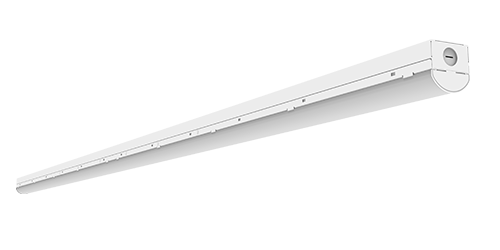

As shown, while both strip lights share core features like mounting methods and standard 0-10V dimming, their wattage and lumen outputs are doubled for the 8ft version. This scaling ensures that the 8ft fixture can efficiently illuminate large, open areas, while the 4ft provides targeted, powerful light for smaller or more complex spaces.
Contractor’s Checklist for Sourcing Commercial LED Linear Strip Lights
For electrical contractors, sourcing the right products for a bulk purchase is a critical step that impacts project profitability and client satisfaction. A simple contractor checklist can help ensure that all key criteria are met before placing a large order for LED lighting. This goes beyond just price and includes certifications, installation features, and warranty coverage.
Using a standardized checklist helps mitigate risks, such as receiving non-compliant products or fixtures that are difficult to install. The following questions provide a solid framework for evaluating potential suppliers and making a sound bulk purchase decision for lighting utility areas and primary commercial spaces.
Key Questions for Bulk Purchase Decisions: From Certifications to Warranty Coverage
When considering a bulk purchase of strip LEDs, especially when buying online, asking the right questions is vital. Before you commit, ensure you have clear answers from the supplier on several key points. This diligence protects your business and ensures a smooth project execution.
Use this checklist to guide your conversations with suppliers:
- Certifications: Are the fixtures UL or ETL Listed for safety compliance in the US? Are they listed on the DLC Qualified Products List (ideally Premium 5.1) to ensure eligibility for maximum utility rebates?
- Installation Features: Do the fixtures feature tool-less entry? Are knockouts conveniently placed for continuous row mounting? Are all necessary mounting accessories included or readily available?
- Warranty and Support: What is the warranty period, and what does it cover (parts, labor, lumens depreciation)? Is technical support readily available from the manufacturer?
Getting these confirmations in writing before a bulk purchase protects you from unforeseen costs and project delays. A reliable supplier will have no issue providing this information, reaffirming their commitment to quality and professional partnership.
Conclusion
In conclusion, the versatility and efficiency of 4ft and 8ft LED linear strip fixtures make them essential components in optimizing lighting solutions for large-scale commercial spaces. With features designed for contractor-friendly installations, such as tool-less entry and continuous row mounting, these fixtures not only save time but also reduce overall project costs. Compliance with standards like DLC Premium 5.1 ensures that businesses can take advantage of significant utility rebates, adding to the financial benefits of choosing these durable, energy-efficient options.
Streamline your next large-scale project—Contact Brandon Lighting for bulk pricing and IES files today.
Frequently Asked Questions
Can LED linear strip lights be linked for continuous long runs in large commercial spaces?
Yes, absolutely. Commercial-grade LED linear strip lights are designed for continuous runs. They feature end-to-end knockouts and specialized aligner brackets that allow installers to easily link multiple fixtures together. This creates a seamless, uniform line of light, perfect for long aisles in commercial settings and warehouses.
What are the main things to consider when buying 8 foot LED strip lights online?
When buying 8 foot LED strip lights online, prioritize three things: certifications (UL Listed and DLC Premium), installation features (tool-less access and knockouts), and the warranty. These ensure the product is safe, qualifies for rebates, is easy to install, and is backed by the manufacturer for long-term reliability.
Are these industrial-grade LED strip lights suitable for both indoor and outdoor use?
Most industrial-grade LED strip lights are designed and rated for indoor use, including dry or damp locations like parking garages. For direct outdoor exposure to rain and the elements, you must select a fixture with a specific “wet location” or high IP rating (e.g., IP65 or higher).







Leave A Comment