
Types of Commercial Lighting by Technology
Understanding the underlying technology behind different types of commercial lighting fixtures is essential for optimizing facility operations and controlling overhead costs. The shift from legacy bulbs to modern solid-state lighting has completely transformed how businesses illuminate their spaces.
Traditional Fluorescent and Halogen Bulbs
For decades, legacy fluorescent tubes and halogen bulbs dominated commercial spaces. They served as the primary source for general lighting in offices, schools, and retail environments.
- Fluorescent: Commonly utilized in older shop lights, linear wraparound fixtures, and troffers. They contain mercury, require ballasts to operate, and are prone to flickering as they age.
- Halogen: Known for excellent color rendering in early task lighting and accent lighting, but notorious for generating excessive heat and burning out rapidly.
- The Bottom Line: Both technologies are largely obsolete today, suffering from short lifespans and high energy consumption.
High-Intensity Discharge (HID) and Metal Halide
Historically, metal halide and High-Intensity Discharge (HID) lamps were the go-to solutions for large-scale, high-ceiling illumination.
- Primary Applications: Industrial manufacturing, gymnasiums, and outdoor facilities relying on older high bay fixtures and heavy-duty flood lights.
- The Drawbacks: These fixtures require significant warm-up and restrike times. Worse, they suffer from severe lumen depreciation—meaning they lose a massive portion of their visible light output long before the bulb actually fails.
Commercial LED Lighting Advantages
Today, energy-efficient lighting powered by Light Emitting Diodes (LEDs) is the undisputed industry standard. Upgrading to commercial LED technology is a strategic business investment that delivers an immediate return on investment.
Core Advantages of LED Commercial Lighting:
- Massive Energy Savings: Uses up to 80% less electricity than legacy lighting systems.
- Unmatched Lifespan: Operates reliably for 50,000 to 100,000+ hours with virtually zero maintenance.
- Instant-On Performance: No warm-up time or flickering, even in extreme cold or industrial environments.
- Extreme Versatility: Perfectly adaptable for everything from sleek LED panels and LED troffers to rugged LED warehouse lighting and advanced smart fixtures.
| Feature | Legacy Lighting (Fluorescent/HID) | Modern Commercial LED |
|---|---|---|
| Energy Efficiency | Low to Moderate | Extremely High |
| Maintenance Costs | High (Frequent bulb and ballast replacements) | Near Zero |
| Durability | Fragile (Glass and gas) | Highly Durable (Solid-state) |
| Design Flexibility | Limited | Exceptional (Linear lighting, modular designs) |
Most Common Commercial Lighting Fixture Types
When upgrading or outfitting a commercial space in the US, knowing the right types of commercial lighting fixtures to use makes a massive difference in energy costs and productivity. Here is a breakdown of the core fixtures we supply for modern commercial buildings.
LED Panels and Troffers for Drop Ceilings
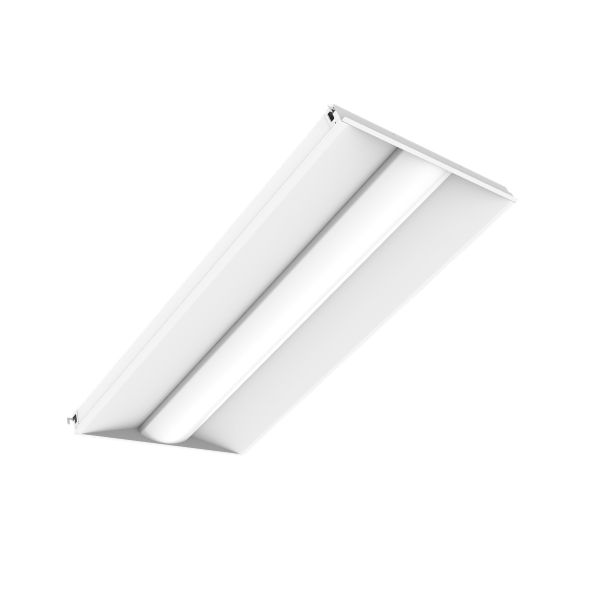
For standard office spaces and retail layouts with T-bar grid ceilings, LED panels and LED troffers are the undisputed workhorses for general lighting. They are lightweight, slot easily into standard ceiling grids, and replace outdated fluorescent tubes instantly.
If you are looking to elevate your architectural aesthetic while maintaining excellent light distribution, we often recommend integrating a drop lens LED office pendant light. This acts as exceptional modular lighting, reducing glare on computer screens while keeping the workspace bright and inviting.
High Bay and UFO Fixtures for Tall Ceilings
If you are dealing with ceilings above 15 feet—common in industrial facilities, big box stores, and gyms—you need fixtures that punch light all the way to the floor.
- High bay fixtures: Available in linear or circular “UFO” styles. These are the gold standard for LED warehouse lighting, offering powerful, wide-spread illumination.
- Low bay fixtures: Designed for ceilings in the 12 to 15-foot range, preventing the glare that a high bay might cause in a lower space.
- Shop lights: Often hung by chains or cables, these provide localized, heavy-duty lighting for workbenches and aisles.
Recessed Downlights and Task Lighting
A well-designed space layers light rather than relying entirely on overhead grids.
- Recessed down lights: Installed seamlessly flush with the ceiling. These are perfect for creating clean architectural lines, providing both general and accent lighting in lobbies, hallways, and boardrooms.
- Task lighting: Targeted illumination designed for specific work areas. Installing under cabinet lights or dedicated desk fixtures prevents eye strain during detailed work and drastically improves employee comfort.
Outdoor and Exterior Commercial Lighting
Building security and curb appeal require rugged, weather-resistant fixtures.
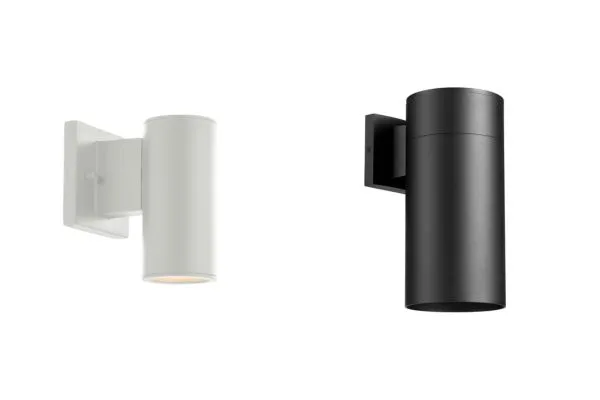
- Wall packs: Mounted directly to the building’s exterior. They cast a wide, bright pool of light to secure perimeters, loading docks, and walkways.
- Flood lights: Highly adjustable fixtures used to spotlight signage, illuminate parking lots, or highlight architectural features at night. Both options offer incredibly energy-efficient lighting solutions that cut down on nighttime running costs.
Best Commercial Lighting Applications by Industry
We know that a one-size-fits-all approach doesn’t work for modern commercial spaces. Different industries across the US require specifically tailored types of commercial lighting fixtures to maximize productivity, highlight merchandise, and ensure workplace safety. Here is how we match the right fixtures to the right job.
Retail and Shelf-Mounted Display Lighting
In the retail sector, lighting directly impacts customer behavior and sales. You need to make your products stand out while keeping the overall store environment inviting.
- Accent lighting: Strategically place recessed down lights to draw the customer’s eye toward high-margin merchandise and promotional displays.
- Shelf illumination: Compact puck lights and under cabinet lights are ideal for lighting up tight, shadowed shelf spaces and premium glass display cases.
- Store navigation: Keep your main aisles bright and welcoming using sleek linear lighting to guide foot traffic seamlessly through the store.

Office Workspace and Conference Room Illumination
Modern corporate workspaces demand lighting setups that prevent eye strain, eliminate screen glare, and keep teams energized throughout the workday.
- General lighting: We recommend swapping out outdated fluorescent fixtures for crisp, low-glare LED panels and LED troffers that drop right into standard ceiling grids.
- Open-plan layouts: To create a highly comfortable and productive environment, upgrading to direct indirect office lighting is the smartest move. It balances the light distribution perfectly, bouncing light off the ceiling while illuminating the desks below.
- Individual focus: Add dedicated task lighting to individual workstations so employees can control their immediate environment.

Warehouse and Horticulture Lighting Solutions
Industrial and agricultural facilities push lighting hardware to its limits. These spaces require durable, high-output fixtures that can operate 24/7 without hiking up energy costs.
- LED warehouse lighting: For vast facilities with ceilings soaring over 20 feet, powerful high bay fixtures are essential. They drive intense, focused light all the way down to the floor, even between narrow storage racks.
- Lower industrial ceilings: For packing stations, assembly lines, or areas with ceilings under 20 feet, we rely on low bay fixtures and heavy-duty shop lights to provide bright, even coverage.
- Horticulture: Indoor farming operations utilize highly specialized, energy-efficient LED modules tuned to specific light spectrums to accelerate plant growth and maximize crop yields.

Key Factors When Choosing Commercial Light Fixtures
When evaluating different types of commercial lighting fixtures, making the right choice goes beyond just picking a design. You need fixtures that handle the daily demands of US business environments while keeping overhead costs down. Here are the core factors we always assess before mapping out a new lighting system.
Color Temperature (Kelvin) and Color Rendering Index (CRI)
Lighting directly impacts how your space looks and how people perform in it. We measure light quality using two main metrics:
- Color Temperature (Kelvin): This indicates how warm or cool the light appears. A lower Kelvin (2700K-3000K) provides a warm, inviting glow ideal for restaurants and lobbies. For office workspaces or industrial settings, we use cooler temperatures (4000K-5000K) to keep employees alert and maximize visibility.
- Color Rendering Index (CRI): This measures how accurately a light source reveals true colors compared to natural sunlight. If you run a retail store or a car showroom, a high CRI (90+) is mandatory to ensure your products look authentic and appealing.
Energy Efficiency and Maximizing Retrofit ROI
Upgrading your commercial lighting is an investment that pays for itself. Swapping outdated fluorescent tubes for modern, energy-efficient lighting immediately drives down monthly utility bills.
- Utility Rebates: Many local US energy providers offer substantial cash rebates for businesses upgrading to qualified LED systems.
- Operational Savings: LED technology significantly outlasts traditional metal halide or halogen bulbs, aggressively cutting down your routine maintenance and replacement costs.
- Dimming and Controls: Incorporating smart fixtures or utilizing dimmable recessed lighting allows you to dial back power consumption based on room occupancy or available natural daylight. This directly accelerates your Return on Investment (ROI).
Lighting Layout and Installation Considerations
Even the highest-quality fixtures will underperform if the layout is poorly planned. A solid installation strategy balances general lighting to illuminate the entire space with targeted task lighting for specific work zones.
- Ceiling Height and Fixture Type: High bay fixtures are built to push light down from 20-foot warehouse ceilings, whereas slim LED troffers are designed to drop seamlessly into standard 9-foot office grid ceilings.
- Spacing and Glare: You must carefully map out fixture spacing to eliminate dangerous dark spots on the floor and prevent harsh glare on computer screens.
- Existing Infrastructure: Evaluate if your current electrical wiring can handle the new setup. Whenever possible, retrofitting your existing housings is faster and more cost-effective than executing a complete tear-out.
Commercial Lighting Trends and Maintenance
Keeping your facility well-lit goes beyond just selecting the right types of commercial lighting fixtures. Staying on top of current industry trends and performing routine maintenance ensures your energy-efficient lighting setup performs reliably for years, protecting your bottom line.
Smart Controls and Automated Lighting Systems
The biggest shift we see in the US market right now is the rapid adoption of smart fixtures. Businesses are moving past simple on/off switches to systems that actively drive down utility costs. Integrating automation into your commercial building lighting strategy is now the standard for modern facility management.
Here is how smart controls maximize your lighting investment:
- Occupancy and Vacancy Sensors: These automatically power down general lighting and task lighting when offices, restrooms, or warehouse aisles are empty, eliminating wasted energy.
- Daylight Harvesting: Photo-sensors measure natural sunlight coming through windows and automatically dim interior LED panels and linear lighting to maintain a consistent, comfortable light level.
- Networked Controls: Facility managers can monitor real-time energy consumption and schedule lighting zones for everything from indoor LED troffers to exterior flood lights via a centralized dashboard.
Troubleshooting Common Commercial Lighting Issues
Even top-tier systems need occasional attention. Whether you are phasing out old fluorescent setups or maintaining modern LED arrays, knowing how to spot and fix minor issues prevents costly electrical repairs down the road.
Watch out for these routine maintenance flags:
- Flickering or Buzzing: This is typically a symptom of a failing ballast in older metal halide units or a bad driver in LED fixtures. If constant maintenance is dragging you down, upgrading to a tube ready pendant simplifies upkeep by bypassing the ballast and running directly on line voltage.
- Diminished Brightness: Dust and factory grime quickly build up on fixture lenses. Setting a routine cleaning schedule for your high bay fixtures and recessed down lights restores optimal light output without requiring new parts.
- Premature Burnouts: If your bulbs or drivers are failing faster than their rated lifespan, check for voltage spikes or excessive heat buildup. Proper ventilation is critical, especially when mounting shop lights or wraparound lights in tight, enclosed spaces.
Tips for Sourcing Commercial Lighting from China Suppliers
When you need to bulk-order various types of commercial lighting fixtures for a US facility, sourcing directly from overseas factories can significantly cut your project costs. Having navigated this industry for years, I’ve learned exactly what separates a reliable manufacturing partner from a risky one.
Here are my top recommendations for a smooth and profitable sourcing process:
- Verify US Certifications: This is completely non-negotiable. Ensure every product, from heavy-duty LED warehouse lighting to standard office fixtures, carries valid UL or ETL listings required by American building codes and local inspectors.
- Always Test Samples: Never place a massive container order blind. I always recommend requesting physical samples of items like 2×4 air-handling recessed troffers or LED panels to inspect the build quality, heat dissipation, and actual light output firsthand before committing.
- Check the Internal Components: Ask the supplier exactly what brand of LED drivers and chips they use. High-quality internal components dictate whether your high bay fixtures and linear lighting will actually last their stated lifespan.
- Demand Clear Warranties: A reputable manufacturer will confidently offer at least a 5-year warranty on commercial-grade products. Get the replacement and shipping terms in writing before you pay any deposit.
- Account for Lead Times: Ocean freight, port congestion, and US customs take time. Always pad your construction schedule by a few weeks to accommodate potential shipping delays.
Working with a vetted, experienced factory ensures you get the exact specifications you need without sacrificing the quality your local projects demand.


Leave A Comment