
Key Highlights
- Drop ceiling lighting offers versatile solutions for both commercial settings and residential spaces, enhancing the aesthetic and function of any room.
- The most popular types of lighting for drop ceilings include LED flat panels, troffer lights, and recessed fixtures, each providing a unique look.
- LED lights are a popular choice due to their superior energy efficiency, longer lifespan, and lower maintenance costs compared to traditional fluorescent options.
- Choosing the right lighting involves considering factors like color temperature, brightness (lumens), and the specific needs of the space.
- Modern LED fixtures provide a sleek look and are available in various sizes to fit standard ceiling grid systems, simplifying the installation process.
Introduction
Choosing the right drop ceiling lighting can transform a space, whether it’s a bustling office or a comfortable home. Suspended ceilings, with their grid-based structure, offer unique opportunities for sleek and effective illumination. From traditional fluorescent fixtures to modern LED lights, the types of lighting available can significantly impact a room’s ambiance and functionality. This guide will walk you through the various options, helping you select the perfect lighting solution to brighten your room or workspace with style and efficiency.
Understanding Drop Ceiling Lighting Systems
Drop ceiling lighting systems are specifically designed to integrate seamlessly into a suspended ceiling grid. These systems are popular in both commercial and residential buildings because they conceal wiring, plumbing, and ductwork while providing easy access for maintenance.
Understanding how these systems work is the first step toward choosing the best lighting solutions for your needs. The installation process often involves placing fixtures directly into the ceiling grid, which requires careful consideration of fixture type, size, and weight. The following sections will explore what makes these ceilings unique and the components involved.
What Makes Drop Ceilings Unique for Lighting Solutions?
Drop ceilings, or suspended ceilings, present a distinct platform for lighting solutions because of their construction. They consist of a metal grid suspended from the structural ceiling, with lightweight ceiling tiles placed within the grid. This design creates a space, or plenum, above the tiles, which is perfect for hiding electrical wiring, and other utilities.
This characteristic provides incredible flexibility. The grid structure makes it simple to install or reposition lighting fixtures by swapping a standard ceiling tile with a light panel. This modularity is a significant advantage over solid ceilings, where moving a light fixture is a major renovation project.
Furthermore, the easy access to the plenum space simplifies installation, maintenance, and repairs. You can simply lift a tile to get to the wiring and fixtures above. This convenience is a key reason why drop ceiling lighting is a practical choice for environments that may require frequent updates or maintenance.
Core Components of a Grid-Based Drop Ceiling Lighting Setup
A grid-based drop ceiling lighting setup consists of several essential parts that work together to create a functional and aesthetically pleasing system. At its heart is the ceiling grid itself, which provides the structural support for both the ceiling tiles and the drop ceiling lights.
The electrical wiring is another critical component, running through the space above the grid to power the fixtures. This wiring must be installed correctly to meet safety codes and ensure reliable performance. For existing setups, retrofit kits are often used to upgrade older, less efficient lights to modern LED technology without replacing the entire fixture.
The core components you will typically encounter include:
- The Light Fixture: The main unit, such as an LED panel or troffer, that produces light.
- The Ceiling Grid: The metal framework that holds the ceiling tiles and light fixtures in place.
- Electrical Wiring and Junction Box: These connect the fixture to the building’s power supply.
- Mounting Hardware: Clips, screws, or cables used to secure the fixture within the grid.
Overview of the Most Common Types of Lighting for Drop Ceilings
When it comes to drop ceiling lighting, you have several types of lighting to choose from, each with distinct features. Traditionally, fluorescent lights were the standard, but LED drop ceiling lights have become the preferred option due to their efficiency and longevity. The most common fixtures are troffer lights and LED flat panels.
These options are designed to fit perfectly into standard ceiling grids, making installation straightforward. Understanding the differences between these primary types will help you determine the best fit for your space’s functional needs and desired aesthetic. We will now look closer at LED flat panels and troffer lights.
LED Flat Panel Lights for Suspended Ceilings
LED flat panel lights are a modern and popular choice for drop ceiling lights, designed specifically to replace outdated fluorescent fixtures. A key feature of an LED panel light is its incredibly slim profile, which creates a clean, minimalist, and unobtrusive appearance. This sleek design is made possible by compact LED technology.
The primary benefit of these lights is their exceptional energy efficiency. LED lights consume significantly less power than their fluorescent counterparts, leading to lower electricity bills. They also provide an even, glare-free illumination that is comfortable for the eyes, making them ideal for offices, schools, and healthcare facilities.
This consistent light distribution eliminates the harsh spots and flickering associated with older lighting technologies. Whether built-in or surface-mounted, LED flat panel lights offer a neat and effective lighting solution, especially in spaces where a streamlined look is desired.

Troffer Lights: Traditional and Modern Options
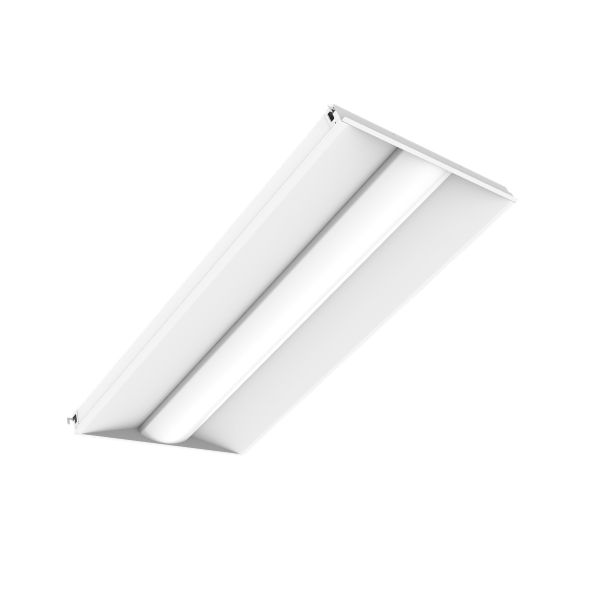
Troffer lights are rectangular light fixtures that fit into a modular drop ceiling grid. Traditionally, these fixtures housed fluorescent tubes and were a staple in commercial buildings for decades. They are designed to be recessed, providing bright, widespread illumination for large areas like offices, retail stores, and classrooms.
While the classic design is still in use, modern troffers have evolved. Today, you can find LED troffers that offer a contemporary look and much better performance. These newer versions eliminate the need for fluorescent tubes, providing better energy efficiency and a longer lifespan.
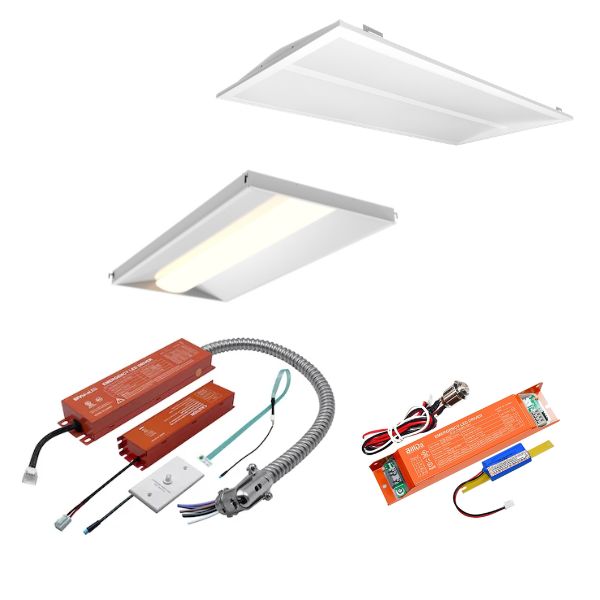
For those with existing fluorescent troffers, retrofit kits offer a convenient upgrade path. These kits allow you to convert your old fixtures to LED technology without the expense and hassle of a full replacement. This brings the benefits of LED lighting—like reduced energy costs and improved light quality—to an existing setup, giving it a modern look and feel.
Exploring the Range of LED Lighting Options for Drop Ceilings
The advancements in LED technology have greatly expanded the options for drop ceiling lights. Beyond the standard panel light, you can find a variety of LED lighting fixtures designed to meet different aesthetic and functional needs. These solutions leverage the benefits of LEDs, including high energy efficiency, long life, and superior light quality.
From recessed panels that offer a seamless look to surface-mounted fixtures for specific applications, there is an LED solution for virtually any suspended ceiling project. Let’s explore some of these innovative LED options in more detail below.
Recessed LED Panel Lights
Recessed LED panel lights, also known as can lights or downlights, are designed to sit flush with the ceiling tile. This creates a clean, sleek look that is perfect for modern interiors with limited ceiling height. These fixtures are an excellent alternative to larger fluorescent panels, offering a more refined and architectural appearance.
Because they are recessed, these LED drop ceiling lights provide directed light downwards, which can be used to highlight specific areas or provide general ambient illumination. While the installation can be more involved than a simple drop-in panel, the sophisticated result is often worth the effort. LED technology ensures these recessed lights run cool, making them safe for installation within a drop ceiling.
Choosing the right recessed light depends on your specific needs. Key differences are outlined below.
| Feature | New Construction Housing | Remodel Housing |
|---|---|---|
| Installation Time | Installed before the ceiling is put up. | Designed for installation into an existing ceiling. |
| Best Use Case | Ideal for new builds or major renovations. | Perfect for upgrading or adding lights to a finished room. |
| Structure | Fixture is attached directly to ceiling joists. | Fixture is secured with clips to the ceiling material. |
Surface-Mounted and Flush-Mount LED Fixtures
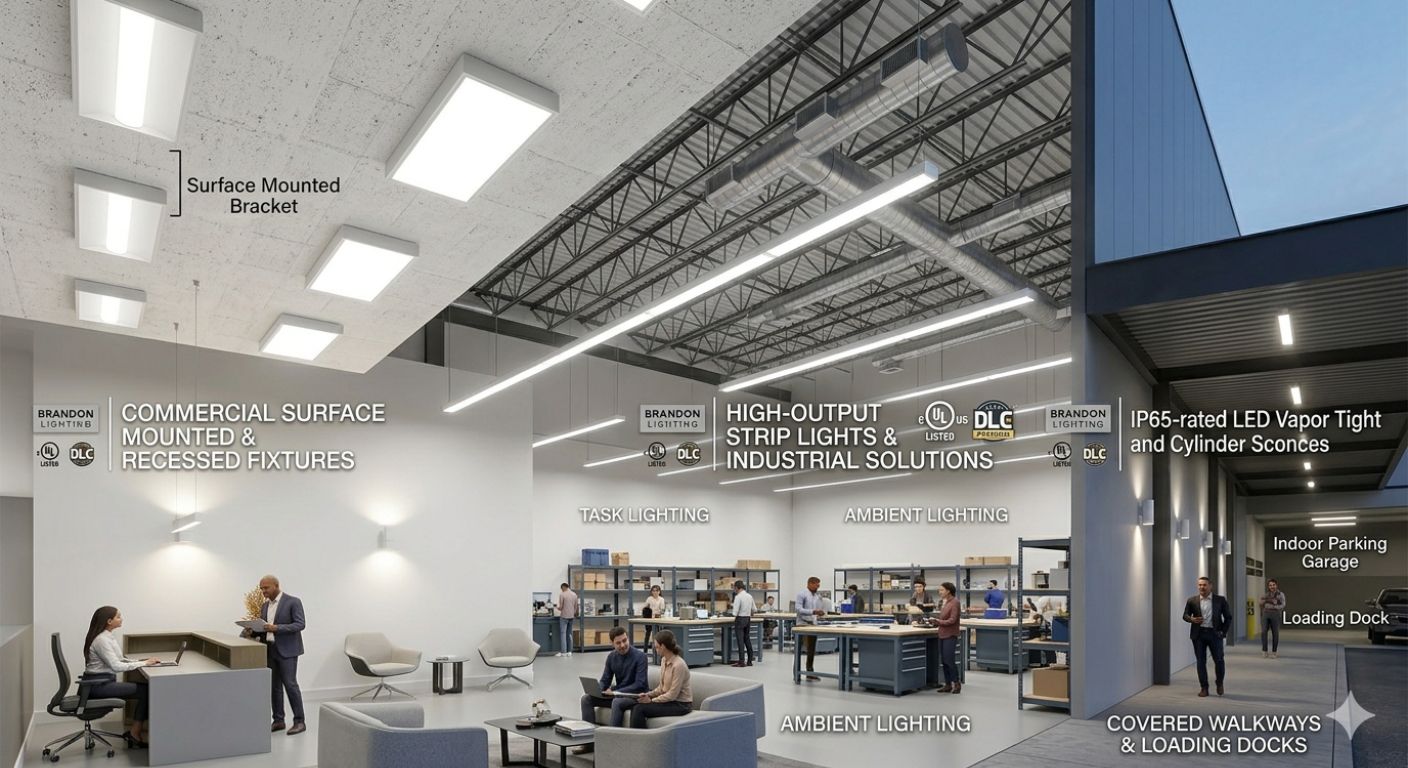
Surface-mounted LED fixtures are installed on the ceiling surface rather than recessed within it. These lighting solutions are versatile and can be used with drop ceilings when a fixture needs to be attached directly to a ceiling joist or support bar, not the lightweight tile itself. This is achieved using a separate support system of metal bars, cables, or chains.
These fixtures are available in various styles and are particularly useful when the space above the drop ceiling is insufficient for a recessed housing. Many modern surface-mounted LED fixtures feature a slim profile, offering a clean and unobtrusive look that complements the aesthetic of drop ceiling lights.
Flush-mount fixtures are a type of surface-mounted light that sits directly against the ceiling with no gap. They provide a low-profile lighting solution that is ideal for rooms with lower ceilings, ensuring ample headroom while delivering bright and even illumination.

Choosing the Best Fixtures for Residential and Commercial Spaces
Selecting the right lighting fixtures is crucial for achieving the desired atmosphere and functionality in both residential spaces and commercial spaces. The needs of a home office or basement are different from those of a large retail store or warehouse. Consulting with lighting experts can help you navigate the options.
Factors such as the room’s purpose, ceiling height, and overall design scheme all play a role in the decision-making process. The following sections will provide guidance on what to consider for illumination and design, as well as specific solutions for challenging spaces like low basements.
Factors to Consider for Illumination and Design Compatibility
When selecting drop ceiling lights, it’s essential to look beyond just the fixture’s appearance. Proper illumination and design compatibility are key to creating a space that is both functional and visually appealing. The right lighting performance depends on several factors that influence the room’s mood and usability.
One of the most important considerations is the amount of brightness, measured in lumens. The size of the space and the tasks performed within it will determine how many lumens you need. Equally important is the color temperature, measured in Kelvins (K), which affects the ambiance. Warmer tones create a cozy feel, while cooler tones are better for task-oriented environments.
Consider these factors to make the best choice:
- Lumens (Brightness): Ensure the light output is adequate for the room’s size and function.
- Color Temperature (Kelvin): Choose warm colors (lower K) for a welcoming vibe in homes and cool colors (higher K) for clarity in commercial settings.
- Ceiling Height: Taller ceilings may require more powerful fixtures or a higher number of lights to illuminate the space effectively.
- Architectural Lighting Goals: Determine if the lighting should be purely functional or also serve as a design element.
Space-Saving Lighting for Low Basement Drop Ceilings
Basements often have limited ceiling height, which makes choosing the right drop ceiling lighting particularly important. In these small spaces, bulky lighting fixtures can make the room feel even more cramped. The goal is to maximize headroom while providing sufficient, welcoming light.
The ideal solution for low basement drop ceilings is lighting fixtures with a slim profile. This is where modern LED options excel. Flat panel LEDs and recessed can lights are excellent choices because they sit flush with or just below the ceiling grid, taking up minimal vertical space.
Here are some top choices for basements with low ceilings:
- LED Flat Panel Lights: Their ultra-thin design integrates seamlessly into the ceiling grid.
- Recessed LED Lights (Can Lights): These are completely flush with the ceiling, offering a clean look and no loss of headroom.
- Wafer Lights: These are extremely thin, surface-mounted LEDs that can be installed almost anywhere.
Energy Efficiency and Maintenance in Drop Ceiling Lighting
Beyond aesthetics, energy efficiency and maintenance are critical factors when selecting drop ceiling lighting. The right choice can lead to significant savings on energy costs and reduce the frequency of repairs and replacements. LED ceiling lights are leaders in this regard, consuming a smaller amount of energy compared to older technologies.
This efficiency not only lowers your utility bills but also contributes to a more sustainable building. Furthermore, reduced maintenance costs are a direct benefit of longer-lasting bulbs and fixtures. We will now compare different lighting types and discuss sustainable choices.
Comparing Lifespan and Care Across Lighting Types
The lifespan and maintenance requirements of drop ceiling light fixtures vary significantly between technologies. Traditional fluorescent bulbs have a much shorter operational life compared to modern LEDs. This means more frequent replacements, leading to higher long-term maintenance costs and more hassle.
LEDs, on the other hand, are renowned for their longer lifespan. An LED fixture can last for tens of thousands of hours, often functioning for years without needing any attention. This translates to less maintenance, which is a major advantage, especially in commercial settings where changing bulbs in high ceilings can be disruptive and costly.
Here’s a quick comparison:
- LED Lights: Offer the longest lifespan and require the least maintenance.
- Fluorescent Bulbs: Need to be replaced more often and can flicker or fail over time.
- Overall Costs: While LEDs may have a higher initial cost, their longevity and low maintenance needs make them more cost-effective in the long run.
Sustainable and Cost-Effective Lighting Choices
Choosing sustainable lighting is not just good for the environment; it’s also a smart financial decision. Energy efficiency is the cornerstone of both sustainability and cost-effectiveness in lighting. Fixtures that consume less energy directly translate to lower electricity bills and a reduced carbon footprint.
LED technology is the clear winner in this category. LEDs use up to 75% less energy than incandescent lighting and have a much lower energy consumption rate than fluorescent lights. This efficiency results in significant savings over the lifetime of the fixture, quickly offsetting any higher initial purchase price.
By upgrading to LED drop ceiling lights, you are making a cost-effective and environmentally responsible choice. The combination of reduced energy use, lower maintenance needs, and long lifespan makes LED lighting a truly sustainable lighting solution for any home or business.
Conclusion
In conclusion, selecting the right lighting for drop ceilings can significantly enhance both the aesthetic and functional aspects of any space. From understanding the unique characteristics of drop ceiling systems to exploring various lighting options like LED flat panels and troffer lights, this guide has walked you through essential considerations. Energy efficiency and maintenance should also play a crucial role in your decision-making process. By taking these factors into account, you can create well-lit environments that are not only visually appealing but also cost-effective. If you’re ready to elevate your space with the perfect lighting solutions, don’t hesitate to get quotes tailored to your commercial needs.
Frequently Asked Questions
Can I install recessed LED panel lights in any suspended ceiling?
Yes, you can install recessed LED panel lights in most suspended ceilings. The installation process typically involves cutting a hole in a ceiling tile and securing the fixture. Ensure there is enough clearance in the plenum for the housing and electrical wiring, and always follow manufacturer instructions for a safe and secure fit.
What are the main differences between troffers and LED flat panels?
The main difference is design and technology. Troffers are recessed lighting fixtures, traditionally designed for fluorescent tubes but now available with integrated LEDs or retrofit kits. LED flat panels are inherently slimmer, edge-lit, and provide more even light distribution, offering a more modern look for commercial applications.
How do I choose energy-efficient drop ceiling lighting for my space?
To choose energy-efficient drop ceiling lighting, opt for LED lights. Compare the lumens (brightness) to the wattage (energy use) to find the most efficient models. LEDs offer the best energy efficiency, which significantly lowers long-term energy costs while providing a clean, modern look for your space.

Leave A Comment